


Walnut
Green Black Walnut Hull & Extract (Juglans nigra): Benefits, Uses & How It Differs
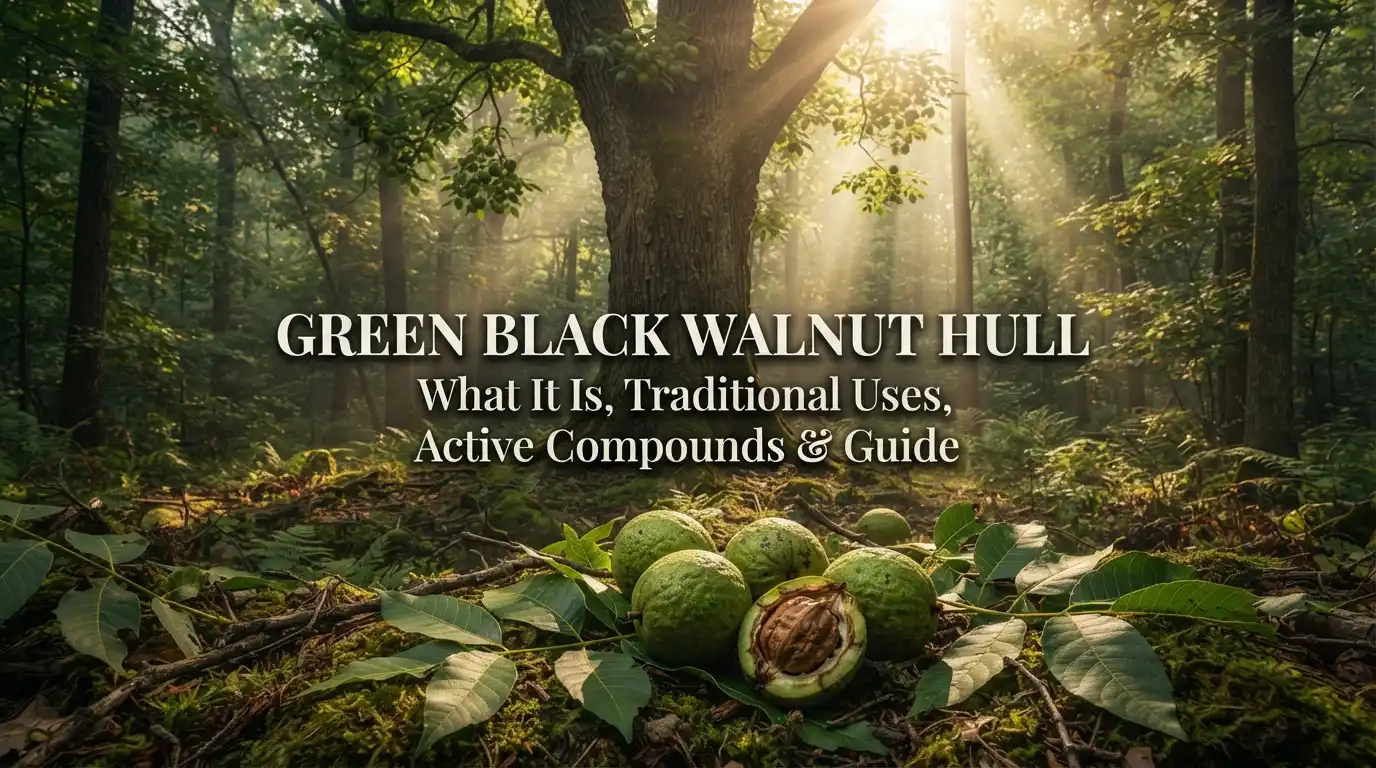
When you’re looking for black walnut hull, you quickly notice two very different products. One is dark and dried. The other is picked while the husk is still green. People often ask which one they actually want, and why some tincture makers insist on the green kind. This guide answers that.
Green black walnut hull is the unripe outer husk of the black walnut tree, Juglans nigra. The plant part matters here: you are using the hull, also called the husk, not the nut, the shell, or the leaf. Harvested in late summer or early fall while the husk is still green, it carries a compound called juglone that gives the whole plant its character.
What Is Green Black Walnut Hull?
Green black walnut hull is the fresh, unripe husk of Juglans nigra, collected before it turns black. At that green stage its juglone precursor has not yet oxidized, which is why traditional herbalists prefer it for tinctures. It has a long history of use in traditional herbal preparations, including topical preparations.
History of Green Black Walnut Hull
The black walnut, Juglans nigra, is a large hardwood tree native to eastern North America and part of the walnut family, Juglandaceae. Each nut grows inside a thick outer husk. That husk is the hull. Herbalists collect it, and the timing of the harvest is the whole point.
A quick note on names, because they cause real confusion. Juglans nigra is the black walnut. It is not the same as the English or Persian walnut, Juglans regia, the one sold as a snack.
When a formula calls for “black walnut hull,” it means Juglans nigra. The hull is also different from black walnut leaf, which is sold separately as black walnut leaf powder and has its own uses.
For the wider picture of the mature husk, its history, and its traditional profile, see the main guide to black walnut hull (Juglans nigra).
Traditional Use Across Cultures
People have used walnut hulls for a very long time. European herbal writers referenced walnut preparations, and in North America, ethnobotanical records describe several Indigenous nations using Juglans nigra hulls in traditional herbal preparations, including topical preparations. None of this is modern medical proof. It simply shows a long, cross-cultural record of traditional use, which is the honest frame for everything that follows.
Green Hull vs Mature Hull (Black) – How It Differs?
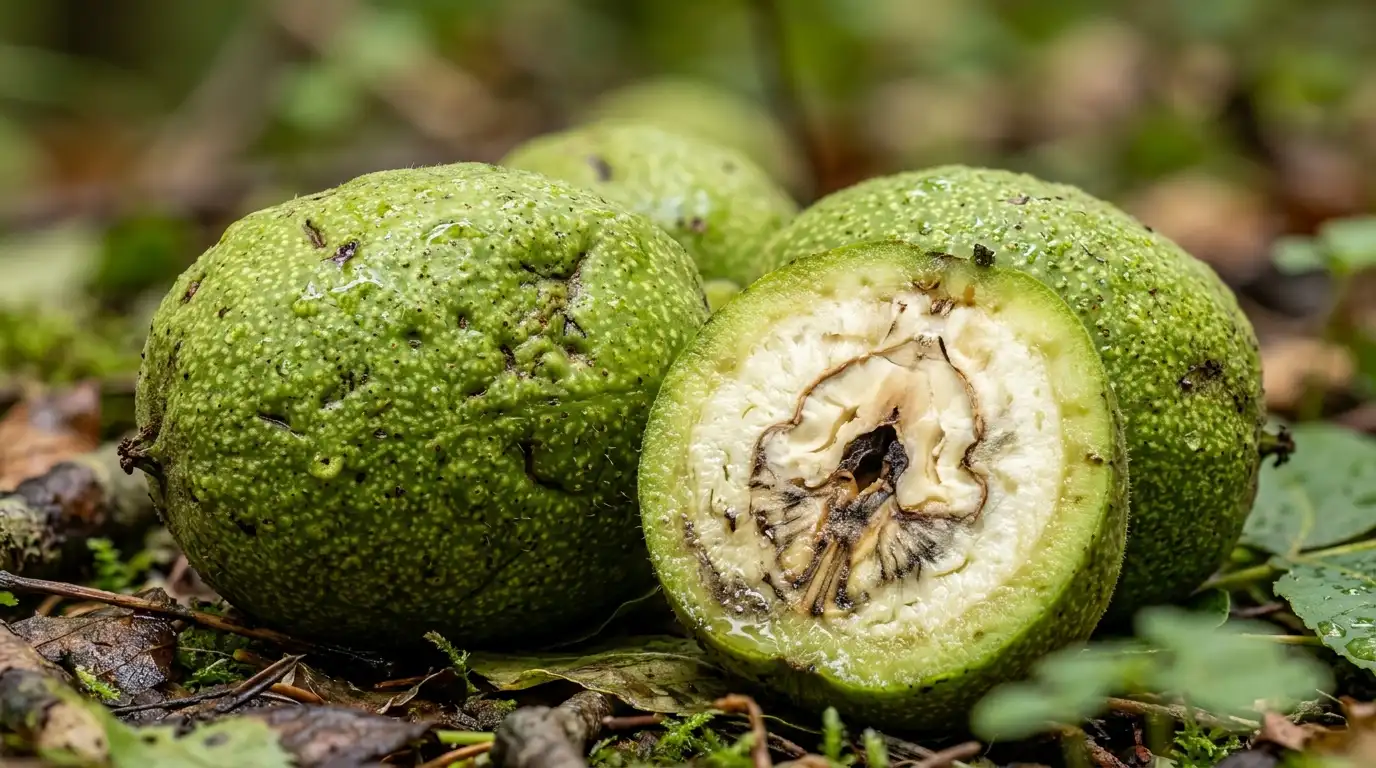
Inside a living walnut husk, juglone mostly sits in a colorless, water-friendly form called hydroxyjuglone. The moment the cut husk meets air, that precursor oxidizes into juglone, the yellow-to-brown pigment. Keep going and it darkens further. This is the reason a freshly opened hull is pale green and then turns black within hours. The color change you can see with your own eyes is the result of the chemical change.
Because of that, green (unripe) hull and mature (blackened) hull are not interchangeable:
- Green hull is picked while the husk is still green and firm. Its hydroxyjuglone has not yet fully oxidized and degraded, so traditional makers reach for it when preparing fresh tinctures.
- Mature or fallen hull has already blackened. Much of the fresh precursor has oxidized and broken down, so the profile is different.
This is why classic tincture recipes specify green hulls picked at a particular time of year, rather than the brown husks lying on the ground. Studies of green walnut husk confirm it is rich in phenolic compounds, including juglone (Cosmulescu et al., 2010).
One practical takeaway: if a product simply says “black walnut hull,” check whether it was made from green husk. A label that reads green walnut hull, green hull black walnut, or green walnut hull extract points to this fresher, unripe material. The black walnut hull cut and sifted format and green-hull tinctures serve slightly different preferences.
Here is how the three common parts of the tree compare at a glance:
| Plant part | Juglone level | Tannins | Traditionally found in |
|---|---|---|---|
| Fresh green hull | Highest (converts from hydroxyjuglone) | High | Tinctures and traditional herbal blends |
| Dried, blackened hull | Low (oxidized and degraded) | Moderate | Mild astringent washes; natural dye |
| Black walnut leaf | Moderate | Very high | Astringent teas and topical preparations |
The levels above are relative, not exact measurements, since juglone content shifts with harvest timing, drying, and storage.*
Active Compounds in Green Black Walnut Hull
Green black walnut hull is studied for a small group of plant compounds. Naming them plainly:
- Juglone (5-hydroxy-1,4-naphthoquinone): This is the signature naphthoquinone of Juglans nigra. Juglone has been extracted from walnut husk at roughly 2–4% of fresh weight, so the green hull is a notably concentrated source (Strugstad & Dueñas, 2012).
- Tannins including ellagitannins: These astringent polyphenols explain the puckering, drying quality of the hull and its long use in topical preparations.
- Flavonoids and other phenolic acids are documented in analyses of green walnut husk (Cosmulescu et al., 2010).
A simple statement about the chemistry: Juglans nigra husk contains juglone; juglone is a naphthoquinone; naphthoquinones are studied for antimicrobial activity in the laboratory. That chain is what researchers actually examine. This is preclinical, compound-level research – not evidence of any effect in people.
Traditional Uses
Most information about green black walnut hull comes from laboratory studies of its compounds, plus a long record of traditional use. It has not been confirmed to do anything in people. So the points below describe traditional use only, not outcomes.
Traditional Herbal Blends: Green black walnut hull has a long history as an ingredient in traditional herbal blends. Its interest comes from compounds like juglone and tannins, but the research is still early and mostly laboratory-based, so this is traditional use rather than a proven effect.
Topical Preparations: Traditionally, the hull appeared in topical preparations valued for its astringent, drying, and coloring qualities. The same pigment that stains cloth gives these preparations their deep color. Evidence here is limited, so this is a traditional use, not a proven effect.
Blends with wormwood and cloves: Green black walnut hull is traditionally combined with wormwood and cloves in herbal blends. If you would rather not measure loose herbs, our colon cleanser bitter is a ready-made botanical bitters blend in one 16-oz bottle.
Green Walnut Hull Extract and Other Forms
Green black walnut hull comes in a few common forms:
- Tincture or green walnut hull extract: The traditional choice, usually made from green husk and taken in drops in water. A green walnut hull extract or green black walnut hull tincture concentrates the fresh husk into liquid form.
- Cut and sifted hull: Used to brew a black walnut hull tea or to make your own preparations at home.
- Black walnut hull powder or capsules: A measured form for people who prefer not to taste it.
If you are formulating at home, our black walnut range gives you the hull and leaf in wildcrafted, lab-tested form. Whatever form you choose, follow the amount on the product label and check with a qualified practitioner – see the safety section below.
How to Identify and Harvest Green Black Walnut Hull?
If you want to gather your own green hulls, correct identification of Juglans nigra comes first. Use this quick checklist:
- Bark: Deeply furrowed, dark grey-brown, with a diamond-shaped pattern.
- Leaves: Pinnately compound, usually 15–23 leaflets, with the end leaflet often small or missing.
- Fruit: Round green husks about the size of a tennis ball, appearing in mid to late summer, with a slightly textured lime-green surface.
- Scent test: Scratch the green husk. It gives off a sharp, spicy, citrus-pine smell.
How to Make a Green Black Walnut Hull Tincture?
Green black walnut hull tincture is a traditional home preparation. It is made by combining fresh or dried green hull with a liquid extract base.
- Fresh green hull (1:2). Use one part fresh, chopped green hull with two parts liquid extract base.
- Dried green hull (1:5). Use one part dried green hull with five parts liquid extract base.
Label the bottle with the date and ratio. For the raw material, our black walnut hull cut and sifted is wildcrafted and lab-tested. This is a preparation method only, not a dosing guide – see safety below, and follow a qualified practitioner.
Safety, Side Effects & Handling
Green black walnut hull deserves respect, not fear. A few plain cautions:
- It is strong: Juglone is the same compound that stunts nearby plants, so the hull is traditionally used in small amounts and for short periods, not daily for months.
- It stains: Juglone oxidizes to a dark brown pigment. Expect it to mark skin, cloth, and countertops.
- Pregnancy and breastfeeding: Avoid it. There is not enough safety data.
- Tree-nut sensitivity/allergen: If you have any allergy to walnuts, approach with care.
- Medications: If you take any prescription medicine, ask your healthcare provider about possible drug interactions before you start.
- Storage: Keep it in an airtight container, away from heat, light, and moisture.
Keep it away from Dogs and Horses
Green black walnut hull is for human use only. Moldy black walnuts and hulls can carry tremorgenic mycotoxins that cause tremors and seizures in dogs, and black walnut is linked to laminitis in horses. Store hulls and tinctures where pets and livestock cannot reach them (ASPCA Animal Poison Control Center).
This is general information, not medical advice. Talk with a qualified healthcare provider about your own situation.*
Summary
Green black walnut hull is generally for people who want a traditional herbal ingredient for short-term use. It should be avoided by pregnant or nursing people, anyone with a walnut allergy, and anyone taking medication unless a healthcare provider says it is okay to use. Follow the product label, use it only as directed, and keep it away from children and pets.
Reference – Sources
- ACS. (2022). Juglone. Molecule of the Week.
- National Center for Biotechnology Information. (2019). A Comprehensive Review on the Chemical Constituents and Pharmacological Effects of Walnut (Juglans spp.). PMC.
- PubMed. (1981). Induced juglone toxicosis in pets – ponies and horses.
- PubMed. (2004). Depressant agent from walnut hulls.
- Southern Cross University. (2023). Juglans nigra. Medicinal Plant Monographs.
- U.S. National Institutes of Health. (n.d.). Black Walnut (Juglans nigra) hull extract 4:1. Dietary Supplement Label Database.
- Wikipedia. (n.d.). Juglone.
Frequently Asked Questions (FAQ)
Green black walnut hull is the unripe outer husk of the black walnut (Juglans nigra), harvested while still green. It contains juglone, tannins, and flavonoids, and is traditionally used in tinctures and herbal blends.
It has traditionally been used in herbal blends and topical preparations. Juglone and tannins are the studied compounds. The research is mostly laboratory-based, so its uses are traditional rather than confirmed in people.
Common forms are liquid tincture, cut-and-sifted hull for tea, and capsules or powder. Follow the amount on your product label, and take it with a full glass of water.
Juglone is potent, so green black walnut hull is traditionally used in small amounts and for short periods. Avoid it during pregnancy and breastfeeding. If you take medication, ask your healthcare provider about possible interactions first.*
Yes. Juglone oxidizes to a dark brown pigment, so the hull and its tincture can stain skin, cloth, and surfaces. This same pigment is used as a natural dye and ink.
Green hull is picked before the husk blackens. At that stage, its hydroxyjuglone has not yet oxidized and degraded, so traditional makers prefer it for tinctures. Mature, blackened hull holds less of the fresh compound.
Disclaimer: *These statements have not been evaluated by the Food and Drug Administration. This product is not intended to diagnose, treat, cure or prevent any disease.

Columbus Day 2026: History, Plants of the Columbian Exchange
Many foods and herbs we use today including chili peppers, cacao, vanilla, tomatoes, and potatoes,...
Oct

Vitamin C Powder: Forms, Dosage, Safety, and How to Choose
Vitamin C powder is a dissolvable supplement that is usually made with ascorbic acid or...
Oct

Goldenseal Root: Uses, Dosage, Safety & How to Buy It
What Is Goldenseal Root? Goldenseal root is a bitter yellow herb with a long history...
Oct
Andrographis Paniculata: Benefits, Herb Profile, Uses, Dosage & Safety
Andrographis paniculata is a bitter medicinal herb from the Acanthaceae family, often called “King of...
Sep

Patriot Day: History, Facts, and 9/11 Remembrance
Patriot Day is a day of remembrance. It is held every year on September 11th...
Sep
Olive Leaf: Benefits, Active Compounds, and How to Use It
We all use or have heard about olive oil. But did you know that the...
Sep
Labor Day Sale: Fresh Fall Botanicals
Update: The Herb To Body Labor Day 2026 sale ended on Monday, September 7, 2026,...
Sep
Astragalus Root: Benefits, Uses, Dosage & Safety
Astragalus root, also known as huang qi, comes from a plant in the pea family...
Aug
What Is Echinacea: Benefits, Active Compounds, Types, Uses and Who Should Avoid It?
When the cold season arrives, many people add a traditional botanical such as Echinacea to...
Aug

Elderberry (Sambucus nigra): What It’s Used For, Potential Benefits & Safety
Every autumn, the same scene plays out – someone at home starts sniffling. Through the...
Aug
Immune Supporting Herbs: Forms, Uses & Safety Guide
What is an Immune Support Herb? An immune-support herb is a plant traditionally used for...
Aug

Back to School Wellness: A Routine for the Whole School Year
The first bell of the school year changes a household’s routine overnight. Bedtimes shift earlier,...
Aug
Herbs for Women: Traditional Uses, Research Notes and Safety
Many women wellness seekers search for simple herbs to add to a daily routine. Some...
1 Comment
Aug

Oat Straw Tea: Benefits, Uses & How to Brew and Use Perfectly?
What Is Oat Straw Tea? Oat straw tea is a mild herbal tea made from...
Jul
Shikakai Powder: Benefits, Active Compounds, Uses and Safety
Long before bottled shampoo existed, people in South Asia reached for a dried legume pod...
Jul

Mugwort Tea: Benefits, Brewing, Flavor & the Safety Concern No One’s Telling You
Mugwort tea (Artemisia vulgaris), also known as the “Mother of Herbs,” holds a storied place...
Jul

Wormwood Herb: Benefits, Side Effects, Uses, Compounds & More
Wormwood (Artemisia absinthium) is one of the most famous and intensely bitter herbs in traditional...
Jul

Wheatgrass Juice Powder: Benefits, Nutrients, Uses, Taste Comparison & Buying Guide
In a perfect world, we’d all eat fresh greens every single day. But reality hits...
Jul
Yerba Mate: What Is It, Benefits, Caffeine Amount, and How to Make It
Yerba mate is a traditional caffeinated beverage from South America made from the dried leaves...
Jul

Alligator Pepper: Flavor, Uses, Botanical Profile, Substitute and Buying Tips
If you heard the name “alligator pepper,” what comes to mind? Is it the same...
Jul

Green Black Walnut Hull & Extract (Juglans nigra): Benefits, Uses & How It Differs
When you’re looking for black walnut hull, you quickly notice two very different products. One...
Jul

Fourth of July 2026: History, Traditions, and a Safe, Fun Day
The Fourth of July is easy to picture. The grill is going. Music is playing....
Jun

When Is Juneteenth 2026? Meaning, History, Colors & Herbal Deals
Many people know Juneteenth is a holiday, but they don’t know what to do. They...
Jun
Tongkat Ali Honey: Benefits, Taste, Uses & How to Take
Tongkat ali honey is honey mixed with tongkat ali root (Eurycoma longifolia, also called longjack)....
Jun

Best Father’s Day Gifts 2026 for a Health-Minded Dad
Most dads rarely ask for anything for themselves. They say “I’m fine” while rubbing a...
Jun
Black Seed (Nigella sativa): Compounds, Uses & Safety
Black seed is a versatile herb available year-round. It can be used in cooking, added...
Jun

Shilajit: What It Is, How It Works, and How to Choose the Right Form?
Shilajit is a natural mineral resin. It forms in high-altitude mountain ranges, mainly the Himalayas,...
Jun

Prekese (Aidan Fruit): Benefits, Active Compounds, Uses & Safety Guide
Prekese (Tetrapleura tetraptera) is a flowering tree in the Fabaceae (legume) family. It grows in...
May
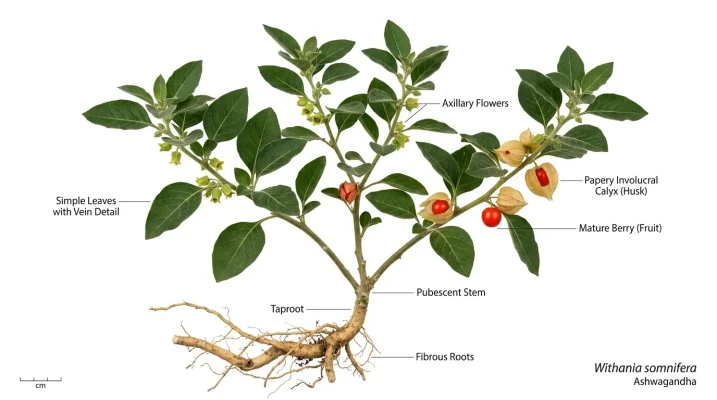
Ashwagandha (Withania somnifera): Benefits, Dosage & Safety Guide
Ashwagandha is a small woody shrub. It grows in dry regions of India, northern Africa,...
May

Substitutes for Cayenne Powder (Heat Levels, Ratios & When to Use Each)
Cayenne pepper is a staple spice in many cuisines because it adds sharp heat without...
May
Calendula Flower: What It Is, How to Use It & What Science Says
While many recognize the bright orange petals of Calendula officinalis (Pot Marigold), its role in...
May

Mother’s Day 2026: Natural & Herbal Gifts Moms Will Truly Love
Most gifts collect dust after a few days. Botanicals get used every day. If your...
May

What Is Cinco De Mayo Celebrated For: Meaning, History, Food Idea & 2026 Celebrations
What is Cinco de Mayo? Cinco de Mayo means “the fifth of May” in Spanish....
May