


Black Seed, Herbs
Black Seed (Nigella sativa): Compounds, Uses & Safety
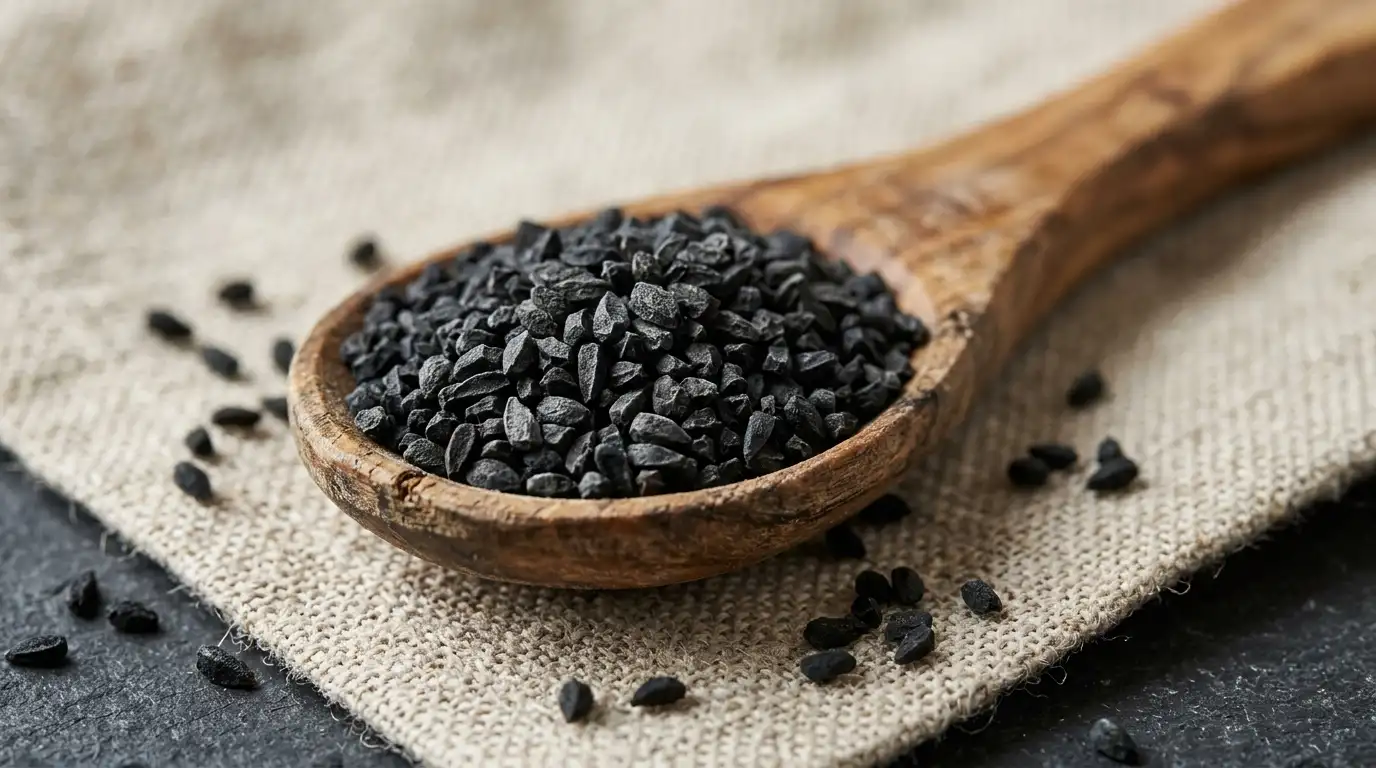
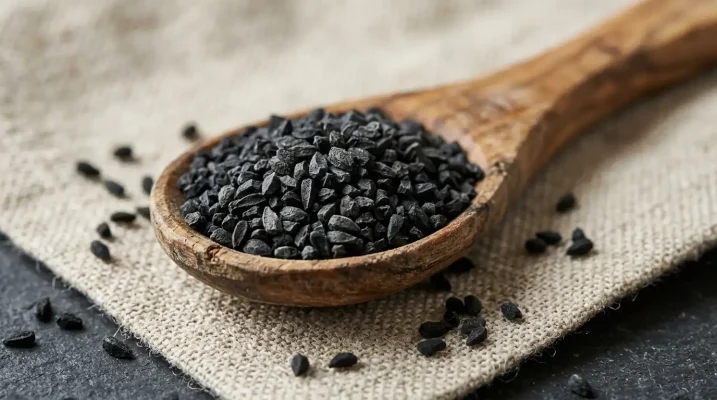
Black seed is a versatile herb available year-round. It can be used in cooking, added as oil, or sprinkled on bread, salads, and other dishes for a warm, slightly earthy flavor. These tiny seeds are also known as kalonji, black cumin, and nigella.
Below, everything is broken down into what it is, what research has examined, how the forms differ, and who should use caution.
What Is Black Seed? – Definition, Botanical Profile
Black seed is the common English name for Nigella sativa, a small annual flowering herb in the Ranunculaceae family. The seeds, tiny, black, triangular, and aromatic, are the plant part used in both cooking and supplements. Its primary compound is thymoquinone, alongside thymol, carvacrol, and nigellone. It is commonly used as oil, capsules, ground seed, or bitters.
Botanical Taxonomy
| Common name | Botanical name | Notes |
| Black seed | Nigella sativa | The supplement/culinary standard |
| Kalonji | Nigella sativa | South Asian / Urdu name |
| Nigella | Nigella sativa | Abbreviated botanical reference |
| Black caraway | Nigella sativa (usually) | Also applied to other species |
| Black cumin (common) | Nigella sativa | The most common synonym on supplement labels |
| Black cumin (distinct) | Bunium bulbocastanum | A different plant – root used, not seed |
“The black cumin” appears on labels for both Nigella sativa and Bunium bulbocastanum – botanically distinct plants with different compound profiles. The Nigella genus also includes ornamentals like Nigella damascena, which has no culinary or wellness use. Before you buy, confirm the label reads Nigella sativa.
- Family: Ranunculaceae (buttercup family).
- Native range: Southwest Asia, the Mediterranean, North Africa.
- Common cultivation: Egypt, Ethiopia, India, Turkey, Pakistan.
Browse the Black Seed collection.

Plant part used and traditional preparation
The seed is the part used – not the root, leaf, or flower. Seeds are pressed into black seed oil (also sold as black cumin seed oil or nigella oil), ground into powder, used whole in cooking, or extracted into tinctures and bitters.
Historically, Nigella sativa seeds appear in Assyrian herbal texts. In classical Islamic tradition the seed is widely referenced as habbatussauda. We share this as cultural and historical context, not as a health claim.
Active Compounds in Black Seed
Black seed remains a topic of interest in wellness because its seeds carry several well-characterized compounds. Thymoquinone, its lead compound, has been examined in hundreds of published papers – though most of that work is preclinical (cell or animal studies) rather than large human trials.
Black seed’s studied activity is linked mainly to four compounds: thymoquinone, thymol, carvacrol, and nigellone. Their concentrations vary by origin, harvest, and extraction method.
Thymoquinone – the lead compound
In lab and animal studies, thymoquinone has been examined in relation to the body’s inflammatory response. These are early, preclinical findings and do not mean any product produces these effects in people.
Thymol – aromatic monoterpene phenol
Thymol is a plant compound with a sharp, herby scent. You also find it in thyme. In lab studies, scientists have looked at how it acts on germs and on certain sensory nerve signals.
Carvacrol – thymol’s isomer
Carvacrol is closely related to thymol. It is the main compound in oregano oil. Black seed has only a small amount of it. Early lab work has studied it much like thymoquinone. Its effect looks weaker here, though.
Nigellone (dithymoquinone)
Nigellone is made by joining thymoquinone molecules. It sits in the oily part of the seed. In animal studies, scientists have examined how it relates to histamine, a substance the body links to allergy-type responses. This links to black seed’s long history of traditional use.
Nutrition & Composition
Black seed is mostly oil, with a small but varied set of minerals and vitamins. The seed is roughly 32–40% fixed oil (Gharby et al., 2015), and that oil is dominated by linoleic and oleic fatty acids.
| Item | What’s reported |
| Fixed oil content of seed | 32–40% by weight |
| Main fatty acids | Linoleic acid (omega-6), oleic acid (omega-9), palmitic acid |
| Per 1 tsp of oil (WebMD) | 45 calories, 5 g fat, 0 g carbohydrate, 0 g sugar |
| Minerals the seed supplies | Calcium, iron, zinc, copper, phosphorus |
| B-vitamins present | Thiamin, niacin, vitamin B6, vitamin B2, folic acid |
Regulatory status: In the United States, the FDA classifies Nigella sativa as Generally Recognized as Safe (GRAS) for use as a spice, natural seasoning, or flavoring (21 CFR 182.10).
Possible Benefits of Black Seed and Areas of Research

Immune-related research*
How black seed relates to the body’s natural defenses is one of its most-studied and controversial topics. Most of that work has been in cells and animals. A few small human studies have examined immune markers, but the evidence remains limited. In traditional wellness, many people reach for black seed during seasonal changes.* (Source: Immunomodulatory Effects of Active Ingredients From Nigella sativa – Effect of Nigella sativa on general health and immune system).
Respiratory research*
Black seed has long been used in traditional ways linked to the respiratory system. A few small human studies – including airway research by Boskabady and colleagues – have examined black seed oil (from Nigella sativa seeds) and breathing measures in adults. Though human evidence remains limited and more studies are needed.* (Source: Clinical and experimental effects of Nigella sativa and its constituents on respiratory and allergic disorders – PubMed)
Skin (used on the skin)*
Black seed oil is often used in everyday skin care, where its natural fats help condition the skin. Researchers have also done early lab work on thymoquinone in the skin. For use on the skin, pick a cold-pressed, unrefined oil. (Source: Dermatological effects of Nigella sativa – Science Direct)
Hair and Scalp*
Black seed oil is a common pick for scalp and hair routines. A few early studies have looked at oils used on the scalp, but the results are early and the human evidence is limited. It is used in hair care, not as a hair-loss product, and results differ from person to person. (Source: Dermaceutical Utilization of Nigella sativa Seeds: Applications and Opportunities)
Weight Management and Metabolism*
Researchers have studied black seed for body weight and related markers in small trials. The findings are mixed. Black seed is not a weight-loss product. It is not a stand-in for healthy eating, activity, or medical care. (Source: The effect of Nigella sativa (black seed) supplementation on body weight and body composition – Science Direct)
Thyroid markers*
Only a few small studies have looked at black seed and thyroid markers (for example, a 2016 trial by Tajmiri and colleagues). This does not show it can be used for any thyroid condition. If you have a thyroid condition, work with your clinician. (Source: American Thyroid Association)
*Disclaimer: It is not medical advice and does not describe outcomes you should expect. Black seed is not approved by the FDA for the diagnosis, treatment, cure, or prevention of any disease or condition.
Gender-Specific Research
Men’s reproductive research
Men’s reproductive health is an area of preliminary study, including a small randomized, placebo-controlled trial. The proposed mechanism is thymoquinone’s antioxidant activity. Human evidence is limited and findings vary.* (Source: Kolahdooz et al., Phytomedicine, 2014).
Women’s wellness research
Women’s wellness studies have explored cycle-related and metabolic markers in small, early-stage research. The human evidence is limited, and this does not establish use for any reproductive condition.*
(Sources: Nigella sativa Seeds Ease Severity of Premenstrual Syndrome; Nigella sativa on anthropometric and biochemical indices in postmenopausal women with metabolic syndrome, J Res Med Sci. 2020, PMC 32236818).

How to Use Black Seed: Forms & Bioavailability
Black seed comes in several formats, each with different bioavailability. The information below describes common product formats and the amounts reported in studies and traditional use, not recommendations. Talk to your provider before starting any supplement.
| Format | What it is | Amounts reported in studies / traditional use |
| Cold-pressed oil | Pressed seed oil; most-studied format | 1–3 mL/day reported in trials, taken with food |
| Capsules | Encapsulated oil or blackseed powder; tasteless, measured | Capsules commonly 450–500 mg; studies used 1–3 g/day powder equivalent |
| Bitters / tincture | Liquid extract, often with other botanicals | Per product label |
| Whole / ground seed | Culinary-first form | 1–2 g/day (about ½–1 tsp) in food |
| Topical oil | Applied to skin or hair | No set amount; dilute in a carrier oil for scalp |
Notes
- Oil is the most-studied format. It is commonly taken with food, since the active compounds are oil-soluble. Look for cold-pressed, extra-virgin, certified organic, and a stated percentage of thymoquinone. See the Black Seed Oil collection.
- Bitters combine Nigella sativa extract with other botanicals in a liquid base. For how bitters are formulated and what research has examined, see Black Seed Bitters: Benefits and Side Effects.
- Capsules give consistent, tasteless dosing – the easiest option for a steady routine.
- Whole or ground seed is used in South Asian, Middle Eastern, and North African cooking (the seeds are not black sesame). Thymoquinone bioavailability is lower from whole seed than from the extracted oil.
- Topical oil for scalp use, dilute in a carrier oil (such as jojoba) at about 1:3 to soften the strong aroma.
Black Seed in Cooking – Flavor & Culinary Uses
Black seed is, first and foremost, a kitchen spice, and this is its lowest-stakes, everyday use. The mature seed has a flavor often described as aromatic, pungent, and nutmeg-like, with an oniony, slightly smoky edge. Some cooks use it as a pepper substitute.

It appears in spice blends and breads across many cuisines:
- As a finishing spice – scattered over salads, roasted vegetables, eggs, or yogurt dips for a peppery, aromatic touch.
- Berbere – the Ethiopian blend that pairs black seed with cardamom, coriander, fenugreek, paprika, and chili.
- Breads – sprinkled on naan, flatbreads, and Turkish breads; ground into the Palestinian roasted-seed paste qizha (gizha) for breads and cakes.
- Cheese – pressed into halloumi-style cheeses in parts of the Middle East and Cyprus.
Can you cook with black seed oil?
Black seed oil can be used in cooking, but treat it as a finishing oil. Add it at low heat or after cooking – high heat dulls its delicate compounds and flavor. Drizzle over warm (not sizzling) dishes, salads, or stir into honey. Whole black seeds, by contrast, toast well in a hot pan.
Safety & Things to Know
Small culinary amounts have a long safety record. Concentrated oil, capsules, and high doses are different and warrant more care.
Who should use caution
- Pregnant individuals: Should consult a clinician before use; supplemental use is commonly avoided. Culinary amounts differ; still talk with a health care provider.
- Nursing individuals: Human safety data for supplemental use is limited – consult your provider.
- Before surgery: Many clinicians advise pausing supplemental use ahead of time; ask your provider.
May interact with medications
Black seed may interact with several classes of medications. This is an interaction caution, not a statement of certain effect.
- Anticoagulants (warfarin, aspirin): May interact; consult prescriber.
- Blood-pressure medicines: May interact; consult prescriber.
- Blood-sugar medicines (metformin, insulin): May interact; monitor and consult prescriber.
- Cyclosporine: May affect metabolism; avoid concurrent use.
General notes
At typical supplement amounts, reported side effects are usually mild and gastrointestinal (nausea, upset stomach), often reduced by taking with food. Topical oil can rarely irritate skin – patch-test first. Very high or prolonged use beyond studied amounts is not advised; do not self-escalate dosing.
How to Choose Quality Black Seed – Sourcing
Not all products carry the same compound profile. Check the label and documentation before you buy:
- Latin binomial confirmed – the label says Nigella sativa (not just “black cumin,” which can mean Bunium bulbocastanum).
- Cold-pressed, extra-virgin (oil) – heat and solvents degrade thymoquinone; cold-pressing preserves the volatile fraction.
- Thymoquinone percentage – reputable suppliers provide a third-party Certificate of Analysis.
- Certified organic – lowers pesticide-residue risk and signals traceability.
- Origin transparency – Egyptian and Ethiopian seed are often cited for higher thymoquinone yields, but a COA matters more than origin alone.
- No hidden fillers – single-ingredient oils should list only Nigella sativa seed oil; carrier blends should be disclosed.
- Dark-glass or opaque packaging – thymoquinone is light- and heat-sensitive.
Why do people choose Herb To Body for black seed?
- Clearly named, single-ingredient Nigella sativa products.
- Cold-pressed organic black seed oil.
- Whole-seed and bulk options.
- Liquid black seed bitters blended with other botanicals.
- Transparent sourcing and FDA-compliant labeling.
Recipes & Comparisons
Black seed bitters – the liquid form
If you’re interested in bitters specifically, the dedicated guide covers what they contain and how the format compares to blackseed oil or other forms: Black Seed Bitters: Benefits and Side Effects.
Simple recipe – seed and honey
A traditional preparation still used today: stir 1 tsp raw honey with ½ tsp ground black seed (Nigella sativa). Take once daily, ideally in the morning before eating. Honey tempers the sharp, peppery flavor. This is food-level use with the herb’s established culinary safety record.
Shop – Black Seed & Honey from Herb to Body
Conclusion
Black seed is a traditional, widely used spice valued for its potential. A few things to keep in mind before you buy: make sure the label reads “Nigella sativa,” the specific type you want.
If you’re choosing an oil, look for a cold-pressed version and confirm its quality with a Certificate of Analysis. Then pick the form – seeds, oil, or capsules, that best fits your daily routine. And if you’re taking medication or are pregnant, talk to your doctor before using black seed.
Resources
- Wikipedia – Nigella sativa (taxonomy, common names, compound profile, FDA GRAS status, oil content).
- Ahmad et al. (2013). Review of Nigella sativa pharmacology and thymoquinone. Broad pharmacological overview.
- Hasan & Abdel‑Wahab (2022). Immunomodulatory effects of Nigella sativa. Recent open-access review of immune-related preclinical and limited human studies.
- Gharby et al. (2015). Chemical composition and stability of Nigella sativa seed oil. Source for seed oil content (~32–40%) and fatty-acid profile.
- Black seed nutrition and consumer guidance – WebMD.
- PubMed Central – Nigella sativa search. Central OA repository of articles/reviews.
- WebMD – “Are Black Seeds (Nigella) Healthy?” (composition, dosage ranges, side effects). Reviewed 2026.
- Sahebkar A., et al. (2016). Meta-analysis of RCTs on Nigella sativa and blood pressure. Journal of Hypertension, 34(11):2127–35. PMID: 27512971.
- “Black seed” supplement summary (evidence magnitude, dosage). Updated 2023.
Frequently Asked Questions (FAQ)
Black seed (Nigella sativa) is commonly used as a cooking spice and as oil, capsules, or bitters. In research, main compound of thymoquinone has been studied in several areas. It is a food and botanical ingredient, not an approved medicine.
Search for Nigella sativa on the label, cold-pressed and extra-virgin processing, a stated thymoquinone percentage or available COA, certified organic, and dark-glass packaging.
Nigella usually refers to Nigella sativa, the plant whose black seeds are known as black seed, black cumin, or kalonji. It is an annual flowering herb in the buttercup (Ranunculaceae) family with pale blue-and-white flowers.
Black seed (Nigella sativa), black sesame (Sesamum indicum), and chia (Salvia hispanica) are unrelated plants. Black sesame is a culinary seed valued for its fatty acids; chia is known for fiber and ALA omega-3. Only black seed contains thymoquinone.
Oil and capsules are generally better tolerated with food because of their oil content, which also helps absorb the fat-soluble compounds. Taking it on an empty stomach is not harmful for most people but may cause mild stomach discomfort in sensitive individuals.*
Researchers have studied black seed in relation to body weight and metabolic markers in small trials, but findings are inconsistent and not sufficient to support weight-loss claims. It is not a weight-loss product.*
In culinary amounts, it has a long safety record, and reported side effects at typical supplement amounts are usually mild and gastrointestinal. It is commonly avoided at supplement amounts during pregnancy, and people on blood-thinning, blood-pressure, or blood-sugar medicines should ask a provider first.*
It depends on your preference. Cold-pressed oil is the most-studied format. Capsules offer consistent, tasteless dosing. Bitters give a liquid option. Whole or ground seed suits cooking, and topical oil is used for skin and scalp routines.
Kalonji is the South Asian name for black seed – the seeds of Nigella sativa, a buttercup (Ranunculaceae) family plant. The tiny black seeds are used as a spice in breads, curries, and pickles, and its pressed oil is used in wellness routines. Kalonji, black seed, and nigella all refer to the same seed. “Black cumin” is commonly used but technically imprecise, as true black cumin is a different plant.
Usually, but not always. Most “black cumin seed oil” products are Nigella sativa. However, a separate plant, Bunium bulbocastanum, is also sold as “black cumin.”
There is no exact time. Many people take black seed oil in the morning with breakfast so the habit sticks; others prefer an evening meal. The common practice is to take it with food, since its compounds are oil-based, and at the same time each day. Talk to your healthcare provider before starting any supplement.
Nigella seeds (black seed) have an aromatic, pungent flavor often described as nutmeg-like, with an oniony, slightly smoky edge. Some cooks use them as a mild, pepper-style finishing spice.

Columbus Day 2026: History, Plants of the Columbian Exchange
Many foods and herbs we use today including chili peppers, cacao, vanilla, tomatoes, and potatoes,...
Oct

Vitamin C Powder: Forms, Dosage, Safety, and How to Choose
Vitamin C powder is a dissolvable supplement that is usually made with ascorbic acid or...
Oct

Goldenseal Root: Uses, Dosage, Safety & How to Buy It
What Is Goldenseal Root? Goldenseal root is a bitter yellow herb with a long history...
Oct
Andrographis Paniculata: Benefits, Herb Profile, Uses, Dosage & Safety
Andrographis paniculata is a bitter medicinal herb from the Acanthaceae family, often called “King of...
Sep

Patriot Day: History, Facts, and 9/11 Remembrance
Patriot Day is a day of remembrance. It is held every year on September 11th...
Sep
Olive Leaf: Benefits, Active Compounds, and How to Use It
We all use or have heard about olive oil. But did you know that the...
Sep
Labor Day Sale: Fresh Fall Botanicals
Update: The Herb To Body Labor Day 2026 sale ended on Monday, September 7, 2026,...
Sep
Astragalus Root: Benefits, Uses, Dosage & Safety
Astragalus root, also known as huang qi, comes from a plant in the pea family...
Aug

What Is Echinacea: Benefits, Active Compounds, Types, Uses and Who Should Avoid It?
When the cold season arrives, many people add a traditional botanical such as Echinacea to...
Aug
Elderberry (Sambucus nigra): What It’s Used For, Potential Benefits & Safety
Every autumn, the same scene plays out – someone at home starts sniffling. Through the...
Aug
Immune Supporting Herbs: Forms, Uses & Safety Guide
What is an Immune Support Herb? An immune-support herb is a plant traditionally used for...
Aug

Back to School Wellness: A Routine for the Whole School Year
The first bell of the school year changes a household’s routine overnight. Bedtimes shift earlier,...
Aug
Herbs for Women: Traditional Uses, Research Notes and Safety
Many women wellness seekers search for simple herbs to add to a daily routine. Some...
1 Comment
Aug
Oat Straw Tea: Benefits, Uses & How to Brew and Use Perfectly?
What Is Oat Straw Tea? Oat straw tea is a mild herbal tea made from...
Jul
Shikakai Powder: Benefits, Active Compounds, Uses and Safety
Long before bottled shampoo existed, people in South Asia reached for a dried legume pod...
Jul

Mugwort Tea: Benefits, Brewing, Flavor & the Safety Concern No One’s Telling You
Mugwort tea (Artemisia vulgaris), also known as the “Mother of Herbs,” holds a storied place...
Jul

Wormwood Herb: Benefits, Side Effects, Uses, Compounds & More
Wormwood (Artemisia absinthium) is one of the most famous and intensely bitter herbs in traditional...
Jul

Wheatgrass Juice Powder: Benefits, Nutrients, Uses, Taste Comparison & Buying Guide
In a perfect world, we’d all eat fresh greens every single day. But reality hits...
Jul
Yerba Mate: What Is It, Benefits, Caffeine Amount, and How to Make It
Yerba mate is a traditional caffeinated beverage from South America made from the dried leaves...
Jul

Alligator Pepper: Flavor, Uses, Botanical Profile, Substitute and Buying Tips
If you heard the name “alligator pepper,” what comes to mind? Is it the same...
Jul

Green Black Walnut Hull & Extract (Juglans nigra): Benefits, Uses & How It Differs
When you’re looking for black walnut hull, you quickly notice two very different products. One...
Jul

Fourth of July 2026: History, Traditions, and a Safe, Fun Day
The Fourth of July is easy to picture. The grill is going. Music is playing....
Jun

When Is Juneteenth 2026? Meaning, History, Colors & Herbal Deals
Many people know Juneteenth is a holiday, but they don’t know what to do. They...
Jun
Tongkat Ali Honey: Benefits, Taste, Uses & How to Take
Tongkat ali honey is honey mixed with tongkat ali root (Eurycoma longifolia, also called longjack)....
Jun

Best Father’s Day Gifts 2026 for a Health-Minded Dad
Most dads rarely ask for anything for themselves. They say “I’m fine” while rubbing a...
Jun
Black Seed (Nigella sativa): Compounds, Uses & Safety
Black seed is a versatile herb available year-round. It can be used in cooking, added...
Jun

Shilajit: What It Is, How It Works, and How to Choose the Right Form?
Shilajit is a natural mineral resin. It forms in high-altitude mountain ranges, mainly the Himalayas,...
Jun

Prekese (Aidan Fruit): Benefits, Active Compounds, Uses & Safety Guide
Prekese (Tetrapleura tetraptera) is a flowering tree in the Fabaceae (legume) family. It grows in...
May
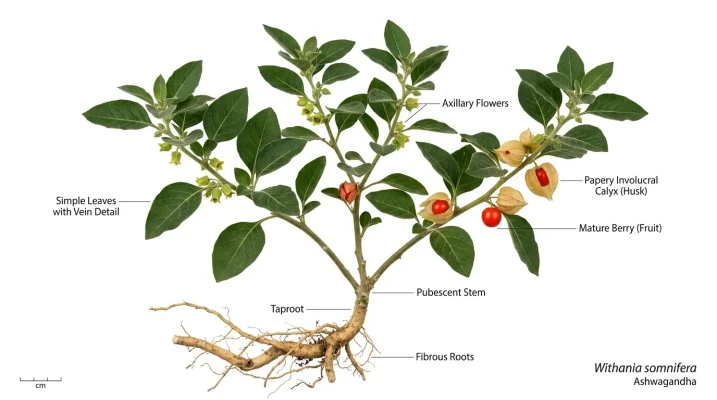
Ashwagandha (Withania somnifera): Benefits, Dosage & Safety Guide
Ashwagandha is a small woody shrub. It grows in dry regions of India, northern Africa,...
May

Substitutes for Cayenne Powder (Heat Levels, Ratios & When to Use Each)
Cayenne pepper is a staple spice in many cuisines because it adds sharp heat without...
May
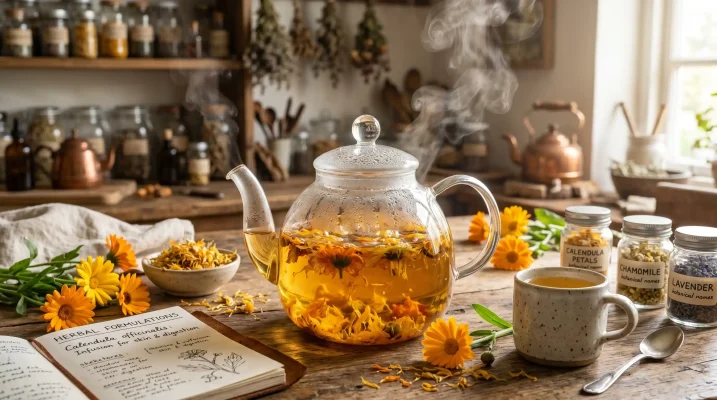
Calendula Flower: What It Is, How to Use It & What Science Says
While many recognize the bright orange petals of Calendula officinalis (Pot Marigold), its role in...
May
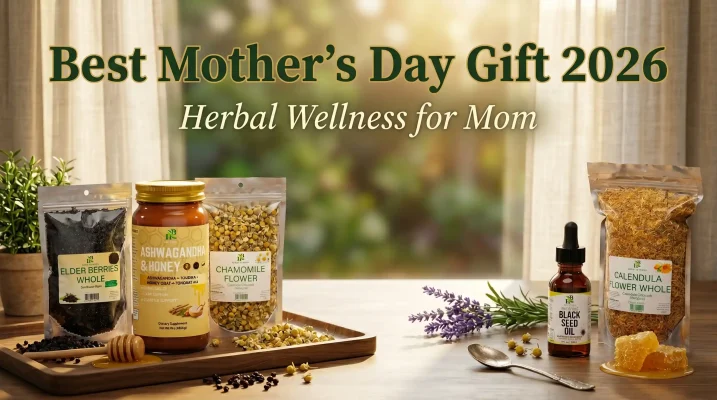
Mother’s Day 2026: Natural & Herbal Gifts Moms Will Truly Love
Most gifts collect dust after a few days. Botanicals get used every day. If your...
May

What Is Cinco De Mayo Celebrated For: Meaning, History, Food Idea & 2026 Celebrations
What is Cinco de Mayo? Cinco de Mayo means “the fifth of May” in Spanish....
May

Best Sea Moss to Buy in 2026: Forms, Species & Quality
Sea moss is one of the most popular sea vegetables on the market. But the...
Apr

Green Sea Moss: Nutrition, Benefits & Safety Guide (2026)
Marine superfoods have become very popular, but green sea moss is often misunderstood because of...
Apr
Disclaimer: *These statements have not been evaluated by the Food and Drug Administration. This product is not intended to diagnose, treat, cure or prevent any disease.