


Elderberry, Health Awareness, Immune Supporting Herbs, Mullein
10 Winter Herbs and Spices for Tea and How to Brew Each One
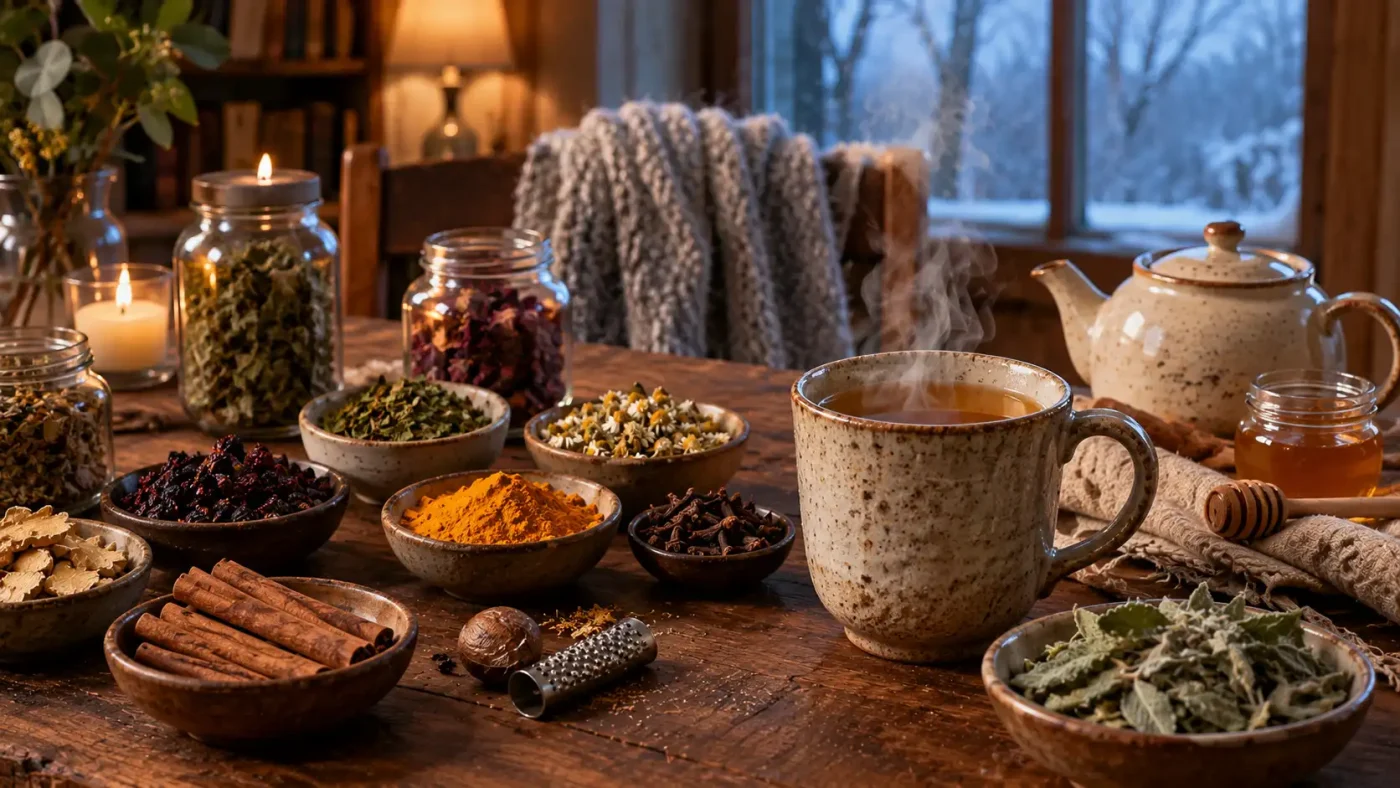
Fall is slowly turning into winter. Days get shorter, and nights get colder. Leaves drop, gardens rest, and plants pull back into the ground until spring. We cook warm meals, and want something hot to hold in our hands. For many of us, that means a cup of tea or coffee.
A cinnamon stick in a pot on the stove. A spoon of chamomile flowers in a mug. A pinch of ginger with a little honey. Simple things like these can make a cold night feel cozy.
You will find 10 herbs and spices people love to use in winter. For each one, we share what it is, how it tastes, how to brew it, and a short safety note.
Winter Herbs and Spices at a Glance
| Herb or spice | Botanical name | Form | How to prepare |
| Ginger | Zingiber officinale | Cut and sifted root | 1 tsp in 8 oz hot water, steep 5 to 10 min |
| Chai spices | Black tea plus spices | Blend at home | Simmer spices, then steep tea 1 to 2 min |
| Horseradish | Armoracia rusticana | Root powder | 1/2 tsp in 8 oz water or juice |
| Chamomile | Matricaria chamomilla | Whole flowers | 1 Tbsp in 8 oz boiled water, steep 5 to 7 min |
| Peppermint | Mentha piperita | Cut and sifted leaf | 2 Tbsp in 8 to 12 oz hot water, steep 5 to 10 min |
| Mullein | Verbascum thapsus | Leaf powder or cut leaf | 1/4 tsp in 8 oz hot water, steep 10 to 15 min, filter |
| Cinnamon | Cinnamomum cassia, C. verum | Chips, sticks, powder | Simmer 1/4 tsp chips 10 min, or steep 1 stick 10 to 15 min |
| Turmeric | Curcuma longa | Ground root | 1/4 tsp or more to taste in cooking |
| Elderberry | Sambucus nigra | Whole dried berries | 1 tsp in 8 oz water, simmer around 45 min |
| Mulling spices | Cinnamon, cloves, nutmeg | Whole spices | Warm gently in cider, then strain |
1. Ginger Tea
Ginger (Zingiber officinale) is a knobby root with a bright, peppery bite. Dried and cut, it brews into a golden cup with a gentle heat on the finish. Our Ginger Root C/S is sourced from all over the world and packed in the US.
How to brew: Add 1 teaspoon (about 2 g) of ginger root to 8 ounces of hot water. Steep for 5 to 10 minutes, then strain. Add lemon or honey if you like.
For cooking, try 1/4 tsp of Ginger Root Powder in stir-fries, curries, marinades, and baking.
Safety: NCCIH lists possible side effects of ginger, including abdominal discomfort, heartburn, diarrhea. Talk with your healthcare provider before using it if you take medicines or are pregnant.
2. Chai Spices
Chai is a spiced black tea, and the fun part is building it yourself. Cinnamon brings sweetness, ginger adds heat, and cloves give a deep, almost smoky note. Green cardamom is a classic addition too.
How to make it at home:
- Simmer 1/4 tsp Cinnamon C/S in 8 oz water for 10 minutes.
- Add a pinch of ginger and 2 or 3 whole cloves while it simmers.
- Turn off the heat. Add 1 tsp Organic Black Tea and steep for 1 to 2 minutes.
- Strain, then add warm milk and honey to taste.
Curious about the star-shaped spice in many chai blends? Our anise seed vs star anise guide explains the difference.
Safety: Black tea contains caffeine. Ask your healthcare provider first if you are pregnant, nursing or take medicine.
3. Horseradish
Horseradish (Armoracia rusticana) is a root known for a sharp, nose-tingling heat. Our Horseradish Root Powder lists China as its origin.
How to use: Mix 1/2 teaspoon (about 1 g) of horseradish root powder into 8 ounces of water or juice. Start with a small amount, since the flavor is strong.
Safety: Very strong and can irritate the mouth and stomach. Ask your healthcare provider first if you are pregnant, nursing or take medicine.
4. Chamomile Tea
Chamomile (Matricaria chamomilla) has small daisy-like flowers with a soft, apple-and-honey aroma. It is a natural pick for a quiet winter evening.
How to brew: Add 1 tablespoon (about 1 g) of whole flowers to 8 ounces of freshly boiled water. Cover and steep for 5 to 7 minutes, then strain. Sweeten with honey if you like. Store the flowers in a cool place, below 63°F.
Safety: NCCIH says chamomile is likely safe in amounts commonly found in teas. You may react to it if you are allergic to ragweed, chrysanthemums, marigolds, or daisies. NCCIH also notes possible interactions with warfarin, sedatives and birth control pills. Ask your healthcare provider first if you take any of these, or if you are pregnant or breastfeeding.
5. Peppermint Tea
Peppermint (Mentha piperita) gives a crisp, cooling cup that cuts through rich holiday meals.
How to brew: Add 2 tablespoons (about 3.2 g) of peppermint leaf to 8 to 12 ounces of hot water. Cover and steep for 5 to 10 minutes to keep the aromatic oils in, then strain well. Enjoy it warm or over ice.
Safety: According to NCCIH, Peppermint tea, which is made from peppermint leaves, appears to be safe. However, the long-term safety of consuming large amounts of peppermint leaf is unknown.”
6. Mullein Tea
Mullein (Verbascum thapsus) belongs to the figwort family, Scrophulariaceae. Its large leaves are soft and fuzzy, and those tiny hairs are the reason straining matters. We offer Mullein Leaf Powder and Mullein Leaf C/S.
How to brew:
- Mix 1/4 teaspoon into 8 ounces of hot water.
- Steep for 10 to 15 minutes.
- Strain thoroughly through a coffee filter or tight cheesecloth to remove fine plant hairs before drinking.
The cut leaf works the same way: use about 1/4 tsp (1 g) per cup, on its own or mixed with other herbs, and use the same filter step. For more detail, read our mullein leaf use and safety guide.
Safety: Talk with your healthcare provider before using mullein if you are pregnant, breastfeeding or preparing it for a child.
7. Cinnamon Tea and Sticks
Cinnamon is a spice we use all year round, but it feels extra special in winter. Its warm, sweet smell makes cookies, cakes, and hot drinks taste cozy.
But cinnamon is more than a baking spice. It can also make a simple cup of tea feel comforting on a cold night.
- Cinnamon C/S (cassia, Vietnam): simmer 1/4 teaspoon (about 0.5 g) in 8 oz of water for 10 minutes, then strain.
- Cinnamon Sticks 2-3/4 (C. verum, Indonesia): add 1 stick to 8 oz hot water, cover and steep 10 to 15 minutes, then remove.
- Cinnamon Powder (cassia, India): add to baked goods, hot cereals, hot chocolate and other beverages.
Safety: NCCIH says cinnamon is likely safe when consumed in the amounts commonly used in foods. Larger amounts may cause stomach upset or allergic reactions, and cassia contains coumarin, which NCCIH links to liver concerns in some people.
8. Turmeric Tea and Golden Milk

Turmeric is a golden-yellow spice with an earthy, slightly bitter taste. It adds warm color and flavor to food and drinks. In winter, many people stir it into golden milk. Our Turmeric Root Ground can be used for tea and in cooking.
How to use: Add 1/4 tsp or more to taste when cooking curries, soups, stews, rice and roasted vegetables.
Simple golden milk: Warm 1 cup of milk. Whisk in 1/4 tsp turmeric, a pinch of cinnamon powder and a pinch of ginger powder. Sweeten with honey, or try our Turmeric Honey. Contains licorice and ginseng; not for use with high blood pressure, pregnancy or blood pressure medication. Our honey uses post has more ideas.
Safety: NCCIH lists nausea and acid reflux among possible side effects. It also notes liver damage reports linked to some turmeric supplements, mostly highly absorbable curcumin products. Turmeric supplements may be unsafe in pregnancy, so talk with your healthcare provider first.
9. Elderberry Syrup
Elderberries (Sambucus nigra) are small, dark purple berries with a tart, wine-like flavor. Our Elderberries Whole best for making warm tea or homemade elderberry syrup. They can also be simmered into jam or added to smoothies, oatmeal, and baked treats.
How to prepare: Add 1 teaspoon (3 g) of whole dried elderberries to 8 ounces of water and bring to a boil. Reduce the heat and simmer for around 45 minutes, then strain. Sip it as tea or use it as a base for syrups and cordials. For a full recipe, see our DIY elderberry syrup guide.
Safety: Always cook elderberries. NCCIH explains that raw or unripe elderberries, plus the leaves and stems, contain poisonous cyanide-producing substances that can cause nausea, vomiting, and diarrhea. Cooking eliminates this toxin.
You can get more insight from Elderberry – What It’s Used For, Benefits & Safety
10. Hot Cider and Mulling Spices
Nothing smells more like the holidays than a pot of spiced cider. You only need three whole spices: cinnamon sticks, cloves and nutmeg (Myristica fragrans).
How to make it: Pour apple cider into a pot. Add 2 or 3 cinnamon sticks, about 1 tsp whole cloves and a little freshly grated nutmeg. Warm it gently on low heat for 15 to 20 minutes, then strain before serving. Nutmeg can also go into tea and coffee blends, so a light grating on top works well too.
Safety: Use nutmeg in small pinches. A 2001 case review by Stein and colleagues reported nutmeg intoxication after about two to three tablespoons of powder (roughly 14 to 21 g).
More Seasonal Reading
Why Choose Herb To Body?
- Ingredient Transparency: Full ingredient list on every label. No hidden blends.
- Sourced from All Over the World and Packed in the US.
Summary
Winter is a time to slow down and enjoy simple things. Maybe it’s a pot of spiced cider filling the kitchen with a sweet, spicy smell, or a mug of ginger tea at the end of the day can make cold nights feel warm and calm.
You don’t need to try everything at once. Pick one or two flavors you like, then experiment with a new blend each week. Before you start, take a quick look at the safety notes. Especially if you’re pregnant, nursing, or taking medicine.
Ready to stock your winter shelf? Find your favorite herbs and spices and make this season a little cozier.
Sources
- NCCIH: Ginger, Cinnamon, Chamomile, Peppermint, Turmeric, European Elder
- European Medicines Agency: Verbasci flos (mullein flower) herbal monograph
- Stein U, Greyer H, Hentschel H. Nutmeg (myristicin) poisoning. Forensic Sci Int. 2001. PMID 11343860
- Kew Plants of the World Online: botanical names
Frequently Asked Questions (FAQ)
Ginger, chai spices, chamomile, peppermint, mullein, cinnamon, turmeric and elderberry are popular winter tea herbs in the US. Whole cinnamon, cloves and nutmeg are popular for mulled cider.
Mix 1/4 teaspoon of mullein leaf powder into 8 ounces of hot water and steep for 10 to 15 minutes. Strain it through a coffee filter or tight cheesecloth to remove the fine plant hairs before drinking.
Yes. Raw or unripe elderberries contain cyanide-producing substances, and cooking eliminates this toxin. Simmer for around 45 minutes, then strain.
Cassia cinnamon (Cinnamomum cassia) has a bold, sweet-hot flavor and contains coumarin. Ceylon cinnamon (Cinnamomum verum) is lighter and more delicate. Both work in tea, cider and baking.
Use nutmeg in small pinches for flavor.
Simmer 1/4 tsp turmeric powder (or a 1-inch fresh turmeric piece) in 1 cup water for 5 to 10 minutes. Add a pinch of black pepper, then strain; add lemon or honey if desired.
Both are popular warming spices for winter tea and cooking. Ginger adds a bright, peppery bite with gentle heat, and turmeric brews into a warm, golden cup.
Ginger contains natural compounds called gingerols, which give it its bright, peppery bite. Turmeric contains curcumin, the compound behind its golden color. Research on ginger or turmeric tea is limited, so enjoy them as part of a balanced diet.
Mulling spices are a warm spice blend used to flavor hot drinks. Especially apple cider, wine, and tea. A typical mix includes cinnamon sticks, whole cloves, allspice berries, star anise, nutmeg, and sometimes dried orange peel, ginger, or cardamom.
Golden milk also called turmeric latte. It is a warm drink made with milk (dairy or plant-based), turmeric, and spices such as cinnamon, ginger, and black pepper. It is often sweetened with honey or maple syrup.