


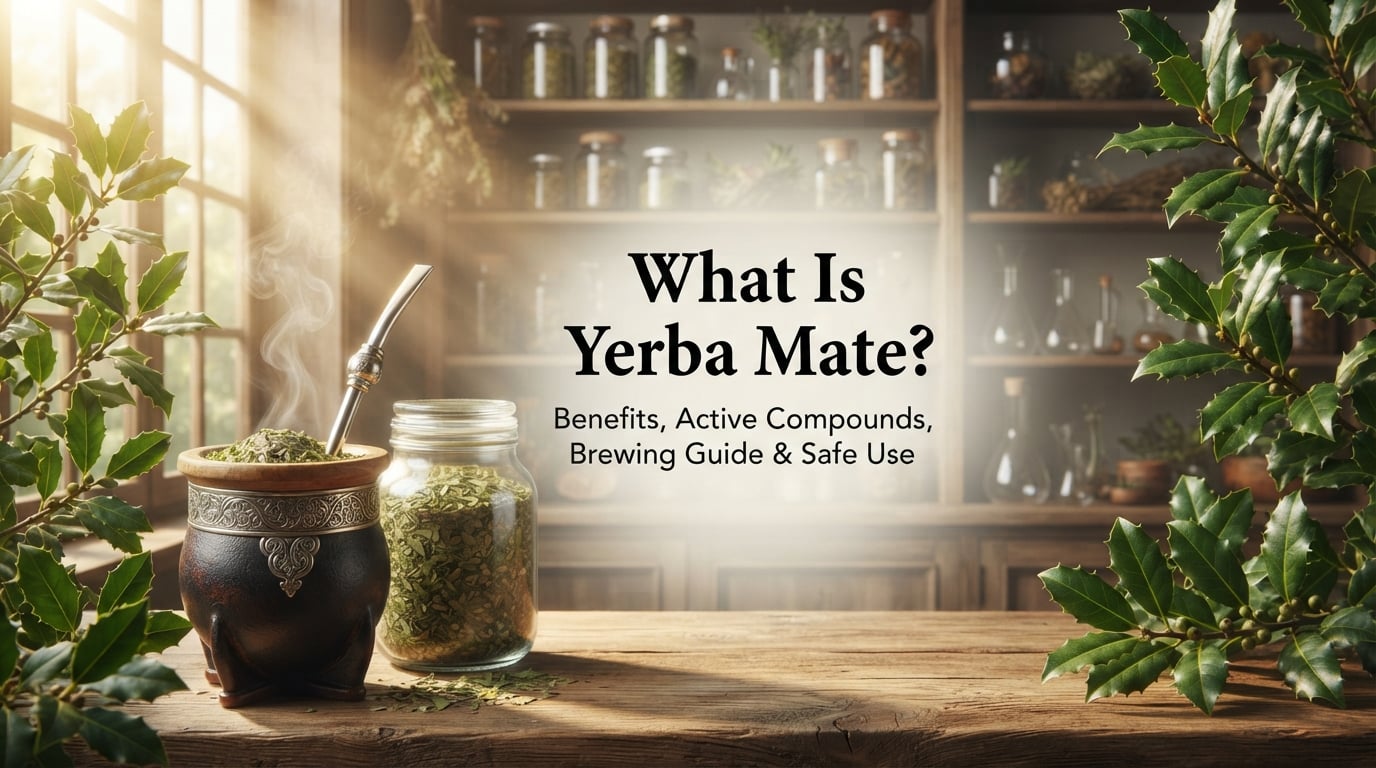
Yerba mate is a traditional caffeinated beverage from South America made from the dried leaves of Ilex paraguariensis. It offers steady energy, useful antioxidants, and a warm cultural ritual. Most healthy adults can likely consume yerba mate in moderate amounts.
Key Takeaways
| Topic | Takeaway |
| What it is | Brewed from Ilex paraguariensis leaves, a South American holly tree. |
| Energy | Caffeine + theobromine give steady energy without the coffee crash. |
| Caffeine | 40–90 mg per cup – comparable to a light coffee. |
| Potential benefits* | Early research has examined mate in relation to focus, metabolism, and cholesterol and blood sugar already within a normal range. |
| Brewing | Use hot water below boiling (150–170°F); gourd, French press, or iced (tereré). |
| Safety | Well tolerated in moderation; drink warm not scalding, and check medication interactions. |
What Is Yerba Mate – A Botanical Overview
Yerba mate has a long history of traditional use across South America. The yerba mate drink comes from a South American holly tree.
Yerba mate comes from Ilex paraguariensis, a tree in the holly family (Aquifoliaceae). The dried leaves and small stems are what you brew. In the wild the tree can grow many feet tall, though farmers keep it pruned like a shrub for harvest. In Spanish, “yerba” means herb; “mate” (from the Quechua word “mati”) refers to the gourd used as a drinking vessel. Colloquially “yerba mate” refers both to the plant and the brewed beverage.
A few more points clear up common confusion:
Yerba mate is not a brand: Yerba Madre (formerly Guayaki) is a company that sells it; the plant is the entity described here.
You will find yerba mate sold as loose-leaf cut and sifted, in tea bags, and in canned drinks. The traditional method uses a hollow gourd and a metal filter straw called a bombilla.
Active Compounds in Yerba Mate
Yerba mate owes its effects to a small group of plant chemicals. Naming them matters, because each one behaves differently in the body.
- Xanthines: Caffeine, theobromine, and theophylline. These act as mild stimulants.
- Polyphenols: Chlorogenic acid and related caffeoyl compounds, plus flavonoids such as quercetin and rutin. These act as antioxidants.
- Saponins: Bitter compounds (matesaponins) that give mate its edge and are studied for their role in the normal inflammatory response.
- Micronutrients: Small amounts of vitamin C, thiamine (B1), riboflavin (B2), potassium, magnesium, manganese, and zinc.
Caffeine blocks adenosine receptors in the brain, and that action reduces the feeling of fatigue while raising alertness. Chlorogenic acid scavenges free radicals, and lab studies suggest this may lower markers of oxidative stress.* (Gawron-Gzella et al., 2021, NIH/PMC).
Caffeine and Energy
Yerba mate contains meaningful amounts of caffeine. A brewed cup typically ranges 40–90 mg depending on preparation, similar to lighter servings of coffee or strong tea. How much caffeine in yerba mate you get depends on steeping. Longer steeping and more leaves raise the yerba mate caffeine content. Alongside caffeine, the leaves also contain a compound called theobromine.
Theobromine, also found in cocoa, has milder stimulant effects than caffeine and may contribute to perceived differences in “feel,” but reports of calmer energy are subjective. Still, caffeine can gently raise both heart rate and blood pressure. Therefore, sensitive people should begin with one small first serving. Some brands also sell a ready-to-cane yerba mate energy drink. However, loose leaves let you control the strength and added sugar.
Possible Yerba Mate Benefits
Research is still developing, many promising results come from small human trials or animal/lab studies, so interpret potential benefits cautiously. So what are the possible benefits of yerba mate here? Let’s have a look
Energy and Focus*
Because it contains caffeine, alertness may rise, and fatigue may fade for limited time. Regular drinkers often describe a calmer, cleaner energy than a jittery buzz. Still, those reports remain personal testimonials, not confirmed trial results.
Metabolism and Weight*
Studies suggest caffeine and theobromine may raise fat burning slightly. In one trial, mate raised fat oxidation by 24% during light exercise. That effect may spare muscle glycogen and delay fatigue a little. Some researchers have looked at a supporting role for weight management. Even so, diet and daily activity still do the heavy lifting.
Cardiovascular Research*
A 2019 trial followed 119 women for 12 weeks. The study examined changes in cholesterol markers over that period. Researchers credit the polyphenols, yet results across studies stay mixed. So more human research is needed before any firm claim.
Blood Sugar*
Some research has examined mate in relation to blood sugar already within a normal range. It may also slow how fast the stomach empties. However, larger human trials are still needed.*
Antioxidants
Yerba mate carries plenty of polyphenols, which act as antioxidants. In labs, chlorogenic acid may lower markers of oxidative stress. A 2023 study examined mate extracts in laboratory settings. These yerba mate tea benefits still need bigger human studies.*
Yerba Mate vs Coffee vs Green Tea
People often compare these three popular caffeine drinks side by side. The simple table below lays out the useful, everyday differences.
| Feature | Yerba Mate | Coffee | Green Tea |
| Caffeine per cup | 40–90 mg | 95 mg | 20–45 mg |
| Main compounds | Caffeine, theobromine | Caffeine, chlorogenic acids | Caffeine, L-theanine |
| Signature antioxidants | Polyphenols, chlorogenic acid | Chlorogenic acids | Catechins, EGCG |
| Typical energy feel | Steady, even | Fast, sharp | Mild, gentle |
| Brew temperature | 70–80°C | 90–96°C | 70–85°C |
How to Make Yerba Mate?
Brewing looks tricky, yet one simple rule keeps it easy. Keep the water hot but below boiling, or it turns harsh.
Traditional Gourd Method
Fill a cured gourd about two-thirds with the dried leaf. Tilt it so the leaf forms a gentle dry slope. Then add a splash of cool water to the low side. Slide in the bombilla, and top with water near 150–170°F. Sip slowly, then refill the same leaves several more times. This slow, shared pour explains the drinking yerba mate tradition.
Simple Modern Method
Without a gourd, a simple French press still works well. Add one tablespoon of loose yerba mate for each cup. Pour water just off the boil, then steep three to five minutes. Finally, strain the leaf and enjoy your fresh yerba mate tea.
Cold Method (Tereré)
For hot days, mix ice water with citrus and a little sweetener. Then pour it over the leaf for a refreshing yerba mate drink. Paraguay loves this iced version, especially in the summer heat.

Finding Yerba Mate Near You
People often search for yerba mate near me. To be honest, not all yerbamate you will found are the same quality everytime. Many shoppers also search for organic yerba mate.
Herb To Body Yerba Mate is wildcrafted, lab-tested leaf answers that same clean-sourcing wish today. Prefer bold or mild yerba mate flavors from one versatile leaf
Herb To Body offers Yerba Mate C/S, a cut-and-sifted loose leaf. It arrives wildcrafted, lab-tested, and proudly made in the USA.
Is Yerba Mate Safe? Simple Tips
Honest safety information matters far more than hype or needless fear. In moderate amounts, mate is well tolerated by most healthy adults. However, very large daily amounts may raise a few health risks.
Serve it warm, not scalding
Sip your mate warm, and let a hot cup cool first. Drinking any beverage scalding hot, for years, may irritate the throat. Because very hot beverages have been associated with increased esophageal cancer risk in observational studies, avoid drinking liquids at scalding temperatures.
Caffeine effects
Large amounts may cause trouble sleeping, a faster heartbeat, headaches, or a jittery feeling, especially if you are sensitive to caffeine.
Check your medications
Yerba mate may interact with certain medications – especially drugs processed by the liver enzyme CYP1A2, such as fluvoxamine (Luvox), which can raise caffeine levels in the body. If you take any prescription medication, check with your doctor or pharmacist.
Pregnancy, nursing, and children
If you are pregnant or nursing, ask about caffeine first. Because of caffeine, yerba mate is not recommended for infants and young children; guidelines usually advise avoiding caffeine in children under 2 and limiting intake in older children. This article is educational and does not replace medical advice; consult a healthcare professional for personalized guidance.
The Bottom Line
Yerba mate pairs caffeine with a long, shared cultural history. Research suggests possible support for focus, metabolism, and heart health. However, most studies remain small, so questions still stay open. For a balanced routine, drink it warm and in modest amounts. That approach lets this traditional leaf suit a modern daily habit.
Disclaimer: This article is for educational purposes only and is not medical advice. Please consult a qualified healthcare professional before changing your diet or caffeine intake, especially if you are pregnant, nursing, or managing a health condition.
Sources
- WebMD – Yerba Mate: uses, caffeine, side effects, and safety.
- Heck CI, de Mejia EG. Yerba Mate Tea : a comprehensive review on chemistry, health implications, and technological considerations. J Food Sci. 2007.
- Palavicini SMS, et al. Bioactive Compounds of Ilex paraguariensis: A Critical Update on Extraction, Gastrointestinal Stability, and Technological Applications. J Food Sci. 2025. – PMC
- Alkhatib A, Atcheson R. Yerba Maté (Ilex paraguariensis) Metabolic, Satiety, and Mood State Effects at Rest and during Prolonged Exercise. Nutrients. 2017. – PMC NLM
- Krolikowski TC, et al. The Impact of a Pre-Exercise Carbohydrate Meal on the Effects of Yerba Mate Drink on Metabolism, Performance, and Antioxidant Status in Trained Male Cyclists. Sports Med Open. 2022. – PMC. NCBI
- Li D, et al. Yerba Maté and its impact on glycemic control and metabolic health: a systematic review and meta-analysis. Front Endocrinol (Lausanne). 2025.
- Loomis D, et al. Carcinogenicity of drinking coffee, mate, and very hot beverages (IARC Monographs Volume 116). Lancet Oncol. 2016.
- Inoue-Choi M, et al. Hot beverage intake and oesophageal cancer in the UK Biobank: prospective cohort study. Br J Cancer. 2025.
Frequently Asked Questions (FAQ)
Yes, mate naturally contains caffeine, roughly 40 to 90 milligrams per cup.
For most healthy adults, moderate daily amounts fit a balanced routine.
Moderate daily amounts suit most adults, as long as it stays warm.
You’ll find yerba mate in health stores, grocery chains, and online. For clean, wildcrafted loose-leaf sourced and lab-tested in the USA, Herb To Body’s Yerba Mate C/S is worth a look.
Amounts vary, but a typical cup sits near a light coffee.
Expect a grassy, earthy, slightly bitter flavor, softened by cold brewing.
Mate adds theobromine, which many drinkers link to steadier, calmer energy.
Yerba mate is a natural brewed beverage, not a formulated energy drink. Its lift comes from caffeine and theobromine in the leaf itself, not added sugar or synthetic stimulants.
Disclaimer: *These statements have not been evaluated by the Food and Drug Administration. This product is not intended to diagnose, treat, cure or prevent any disease.

Columbus Day 2026: History, Plants of the Columbian Exchange
Many foods and herbs we use today including chili peppers, cacao, vanilla, tomatoes, and potatoes,...
Oct

Vitamin C Powder: Forms, Dosage, Safety, and How to Choose
Vitamin C powder is a dissolvable supplement that is usually made with ascorbic acid or...
Oct

Goldenseal Root: Uses, Dosage, Safety & How to Buy It
What Is Goldenseal Root? Goldenseal root is a bitter yellow herb with a long history...
Oct
Andrographis Paniculata: Benefits, Herb Profile, Uses, Dosage & Safety
Andrographis paniculata is a bitter medicinal herb from the Acanthaceae family, often called “King of...
Sep

Patriot Day: History, Facts, and 9/11 Remembrance
Patriot Day is a day of remembrance. It is held every year on September 11th...
Sep
Olive Leaf: Benefits, Active Compounds, and How to Use It
We all use or have heard about olive oil. But did you know that the...
Sep
Labor Day Sale: Fresh Fall Botanicals
Update: The Herb To Body Labor Day 2026 sale ended on Monday, September 7, 2026,...
Sep
Astragalus Root: Benefits, Uses, Dosage & Safety
Astragalus root, also known as huang qi, comes from a plant in the pea family...
Aug
What Is Echinacea: Benefits, Active Compounds, Types, Uses and Who Should Avoid It?
When the cold season arrives, many people add a traditional botanical such as Echinacea to...
Aug
Elderberry (Sambucus nigra): What It’s Used For, Potential Benefits & Safety
Every autumn, the same scene plays out – someone at home starts sniffling. Through the...
Aug
Immune Supporting Herbs: Forms, Uses & Safety Guide
What is an Immune Support Herb? An immune-support herb is a plant traditionally used for...
Aug

Back to School Wellness: A Routine for the Whole School Year
The first bell of the school year changes a household’s routine overnight. Bedtimes shift earlier,...
Aug
Herbs for Women: Traditional Uses, Research Notes and Safety
Many women wellness seekers search for simple herbs to add to a daily routine. Some...
1 Comment
Aug
Oat Straw Tea: Benefits, Uses & How to Brew and Use Perfectly?
What Is Oat Straw Tea? Oat straw tea is a mild herbal tea made from...
Jul
Shikakai Powder: Benefits, Active Compounds, Uses and Safety
Long before bottled shampoo existed, people in South Asia reached for a dried legume pod...
Jul
Mugwort Tea: Benefits, Brewing, Flavor & the Safety Concern No One’s Telling You
Mugwort tea (Artemisia vulgaris), also known as the “Mother of Herbs,” holds a storied place...
Jul
Wormwood Herb: Benefits, Side Effects, Uses, Compounds & More
Wormwood (Artemisia absinthium) is one of the most famous and intensely bitter herbs in traditional...
Jul

Wheatgrass Juice Powder: Benefits, Nutrients, Uses, Taste Comparison & Buying Guide
In a perfect world, we’d all eat fresh greens every single day. But reality hits...
Jul
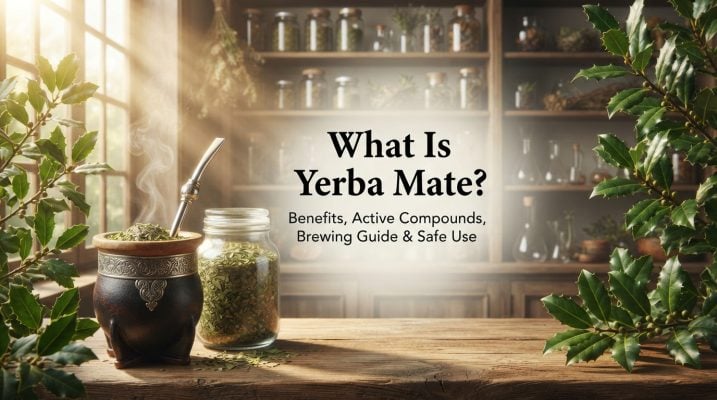
Yerba Mate: What Is It, Benefits, Caffeine Amount, and How to Make It
Yerba mate is a traditional caffeinated beverage from South America made from the dried leaves...
Jul

Alligator Pepper: Flavor, Uses, Botanical Profile, Substitute and Buying Tips
If you heard the name “alligator pepper,” what comes to mind? Is it the same...
Jul
Green Black Walnut Hull & Extract (Juglans nigra): Benefits, Uses & How It Differs
When you’re looking for black walnut hull, you quickly notice two very different products. One...
Jul

Fourth of July 2026: History, Traditions, and a Safe, Fun Day
The Fourth of July is easy to picture. The grill is going. Music is playing....
Jun