

Uncategorized
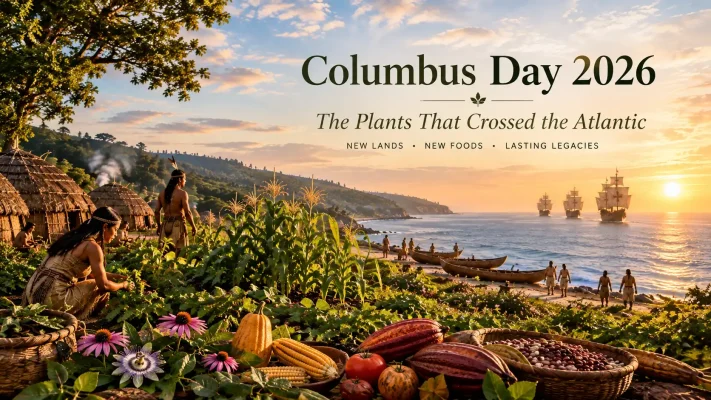
Columbus Day 2026: History, Plants of the Columbian Exchange

Many foods and herbs we use today including chili peppers, cacao, vanilla, tomatoes, and potatoes, originated in the Americas long before they spread around the world.
Columbus Day 2026, observed on Monday, October 12, is an opportunity to explore the Columbian Exchange: the movement of plants, foods, animals, and people between the Americas and Europe, Africa, and Asia after 1492.
It also serves to honor Indigenous communities whose knowledge and cultures existed long before European arrival. We will explore the facts and history surrounding this day and learn more about its significance.
When Is Columbus Day 2026?
Columbus Day 2026 is Monday, October 12. It is a US federal holiday, held on the second Monday in October since 1971. The date recalls October 12, 1492, when Christopher Columbus came ashore on an island in the Bahamas known to its Lucayan inhabitants as Guanahaní.
Many states and cities also mark the same Monday as Indigenous Peoples’ Day. Berkeley, California, led the way in 1992. The day holds two stories: a voyage, and the nations that lived in the Americas for thousands of years before it.
What Was the Columbian Exchange?
The Columbian Exchange refers to the movement of plants, animals, foods and ideas between the Americas and other parts of the world after 1492. Historian Alfred W. Crosby popularized the term in his 1972 book, The Columbian Exchange.
The exchange permanently changed global agriculture and food traditions. Plants that originated in the Americas became important foods in many other regions, while crops from Europe, Africa, and Asia were introduced to the Americas.

| From the Americas | From Europe, Africa, and Asia |
| Potatoes, tomatoes, maize, and squash | Wheat, rice, oats, and barley |
| Chili peppers, cacao, vanilla, and peanuts | Coffee, citrus fruits, onions, and olives |
| Pineapple, papaya, cassava, and sweet potatoes | Sugarcane, bananas, and many livestock species |
Picture Italian food without tomatoes or Thai food without chili peppers. Likewise, coffee and oranges reached the Americas by ship.
Herbs Native to the Americas Worth Knowing
Food crops often receive the most attention in the history of the Columbian Exchange. However, the Americas also have a rich diversity of native herbs, spices, fruits, and botanicals.
Indigenous peoples across North, Central, and South America developed detailed knowledge of native plants over generations. Many of these plants are still enjoyed in food, tea, and herbal preparations today.
Soursop (Annona muricata)
Soursop is a tree native to the warmest tropical regions of North and South America. You may also know it as graviola or guanábana.
Its large green fruit has a spiky outer skin and soft white flesh with a sweet, tangy flavor. Today, soursop grows throughout tropical regions of the world, including parts of the Caribbean, Central and South America, Asia, and Africa.
Dig more into the soursop and related products
Echinacea (Echinacea purpurea)
Echinacea, or purple coneflower, is native to the region east of the Rocky Mountains in the United States. According to the NIH’s National Center for Complementary and Integrative Health, Native Americans used the plant in their traditional practices. Today, many people use it in the colder months, since it may support normal immune function.*
For a closer look at its varieties, traditional uses, and practical safety considerations, read Herb To Body’s guide to echinacea benefits, types, uses, and safety tips
Cayenne (Capsicum annuum)
Cayenne is a type of chili pepper and one of the most familiar crops linked to the Columbian Exchange. Like other chili peppers, cayenne originated in the Americas before becoming a widely used ingredient in cuisines around the world.
Its signature heat comes from capsaicin, a naturally occurring compound found in chili peppers. A small pinch of cayenne can add bold, warming flavor to soups, sauces, teas, and tonics.
If you are out of cayenne or prefer a different level of heat, see our guide to finding a substitute for cayenne powder.
Passionflower (Passiflora incarnata)
Passionflower, also called maypop, is a flowering vine native to the southeastern and south-central United States. It is known for its distinctive purple-and-white flowers, climbing vines, and edible fruit.
The leaves, stems, and flowers are commonly used in herbal teas and botanical blends. If you enjoy herbal tea, explore Herb To Body’s passion flower herb and follow the product label for suggested use and safety information.
Damiana
Damiana is an aromatic shrub with roots in the herbal traditions of Mexico, Central America, the Caribbean, and southern Texas.
Its leaves are commonly brewed as tea or included in botanical blends. Damiana is another example of the diverse plant traditions that developed across the Americas
Vanilla and Allspice
Vanilla and allspice are two more American-origin botanicals with a major influence on global flavor traditions.
Vanilla comes from a tropical orchid native to Mexico and parts of Central America. It became widely known for its use in cacao drinks and later became a popular flavor in desserts, beverages, and baked goods around the world.
Allspice is the dried berry of a tree native to the Caribbean and Central America. It has a warm aroma often compared with a mix of cinnamon, clove, and nutmeg. Both vanilla and allspice show how plants from the Americas became part of global cooking.
A Simple Way to Mark the Day With Herbs
You don’t need a party to make the day meaningful. Here are a few low-key ideas:
- Cook with America’s native foods: Cook with foods native to the Americas, such as potatoes, tomatoes, squash, beans, corn, cacao, or chili peppers.
- Brew a cup of soursop leaf tea: Our guide on how to make soursop tea walks you through the process.
- Learn about the land you live on: Know about the Indigenous nations whose traditional homelands include the place where you live.
- Try one new ingredient with roots in the Americas: Such as cacao, vanilla, chili pepper, allspice, or papaya.
Bring Soursop Into Your Routine
If the story of soursop sparks your interest, our Soursop Bitter 16oz is an easy place to start. It is a liquid herbal formula that pairs soursop with a blend of other botanicals. Notably, the blend includes plants with roots in the Americas, such as cayenne pepper and maca. Bitters have traditionally been taken before meals, and they may help support healthy digestion.
Here is why people choose Herb To Body:
- Made in the USA.
- Crafted in small batches.
- Herb To Body is transparent about its full ingredient list. Which is shown on the product page.
- Soursop is available in several forms, including bitters, dried leaves, and leaf and fruit powder.
How to use it: Take 1 tablespoon (about 15 mL) once a day, ideally 30 minutes before a meal. Enjoy it on its own or stir it into water, tea, or juice. Shake the bottle well before each use. Many people follow a cycle of 6 to 8 weeks on, then take a 1- to 2-week break.
Safety note: Do not use if you are pregnant or nursing. If you take any medication or have a health condition, talk with your healthcare provider first.
Want the full picture first? Read our complete guide to soursop, or browse American made every form in our bitters collection.
Bottom Line
Columbus Day is an opportunity to look at how plants from the Americas helped shape foods, flavors, and herbal traditions around the world. From cacao and chili peppers to echinacea, passionflower, damiana, and soursop, these plants reflect the rich botanical history of the Americas.
Today, many people still enjoy these botanicals in foods, teas, and herbal products. Learning where they come from can help us better appreciate the Indigenous knowledge and cultural traditions connected to them.
At Herb To Body, we are proud to offer soursop in several forms, including dried leaves, powder, and bitters. Explore our herbs and botanicals to find the format that best fits your routine, and always follow the product label for suggested use and safety information.
Herbal products are not a replacement for medical care. If you are pregnant, nursing, taking medication, or managing a health condition, speak with a qualified healthcare professional before using a new herbal product.
Sources
- U.S. Office of Personnel Management. Federal Holidays Calendar 2026.
- Nunn, N. and Qian, N. (2010). The Columbian Exchange: A History of Disease, Food, and Ideas. Journal of Economic Perspectives, 24(2), 163 to 188.
- Crosby, Alfred W. (1972). The Columbian Exchange: Biological and Cultural Consequences of 1492.
- National Center for Complementary and Integrative Health. Echinacea.
- Columbus Day – Wikipedia
Frequently Asked Questions (FAQ)
Yes. Columbus Day is a US federal holiday, observed on Monday, October 12, 2026. Federal offices close for the day. Some states and cities observe Indigenous Peoples Day on the same date instead of, or alongside, Columbus Day.
Several popular herbs come from the Americas. Examples include soursop from the tropics, echinacea from the eastern United States, and chili peppers such as cayenne. Indigenous peoples used many of these plants long before 1492.
The Columbian Exchange is the movement of plants, animals, and foods between the Americas and the rest of the world after 1492. Historian Alfred W. Crosby coined the term in 1972. It brought crops like potatoes, tomatoes, and chili peppers to the rest of the world.
Columbus Day is a U.S. federal holiday that commemorates Christopher Columbus’s 1492 arrival in the Americas. Indigenous Peoples’ Day is observed by many states and cities on the same date to honor the history, cultures, and contributions of Indigenous peoples.
Disclaimer: *These statements have not been evaluated by the Food and Drug Administration. This product is not intended to diagnose, treat, cure or prevent any disease.
Columbus Day 2026: History, Plants of the Columbian Exchange
Many foods and herbs we use today including chili peppers, cacao, vanilla, tomatoes, and potatoes,...
Oct

Vitamin C Powder: Forms, Dosage, Safety, and How to Choose
Vitamin C powder is a dissolvable supplement that is usually made with ascorbic acid or...
Oct

Goldenseal Root: Uses, Dosage, Safety & How to Buy It
What Is Goldenseal Root? Goldenseal root is a bitter yellow herb with a long history...
Oct
Andrographis Paniculata: Benefits, Herb Profile, Uses, Dosage & Safety
Andrographis paniculata is a bitter medicinal herb from the Acanthaceae family, often called “King of...
Sep

Patriot Day: History, Facts, and 9/11 Remembrance
Patriot Day is a day of remembrance. It is held every year on September 11th...
Sep
Olive Leaf: Benefits, Active Compounds, and How to Use It
We all use or have heard about olive oil. But did you know that the...
Sep
Labor Day Sale: Fresh Fall Botanicals
Update: The Herb To Body Labor Day 2026 sale ended on Monday, September 7, 2026,...
Sep
Astragalus Root: Benefits, Uses, Dosage & Safety
Astragalus root, also known as huang qi, comes from a plant in the pea family...
Aug