


Herbs
Mugwort Tea: Benefits, Brewing, Flavor & the Safety Concern No One’s Telling You

Mugwort tea (Artemisia vulgaris), also known as the “Mother of Herbs,” holds a storied place in traditional European, Asian, and Native American herbal traditions. Recognized for its aromatic, sage-like aroma and distinctly earthy, slightly bitter flavor, this powerful botanical tisane has resurged in popularity among modern wellness enthusiasts.
In this easy guide, you will learn what mugwort tea does, how it tastes, how to brew it safely, and who should skip it. Everything stays clear and practical, so you can decide if it fits your routine.
What Is Mugwort Tea?
Mugwort tea comes from the dried leaves and flowering tops of Artemisia vulgaris. This plant belongs to the daisy family and grows across North America, Europe, and Asia. It looks like a common weed but carries a long history in herbal traditions.
People have used mugwort for centuries in Europe and Asia. They added it to food, used it in rituals, and brewed it for daily wellness. The plant holds natural compounds such as flavonoids, bitter sesquiterpene lactones, and light essential oils. These give mugwort its special character.
Active Plant Chemistry: How Mugwort Works
The therapeutic and aromatic properties of mugwort tea stem from a rich complex of natural phytochemicals:
| Chemical Class | Key Compounds | Biological Action & Function |
| Sesquiterpene Lactones | Yomogin, Vulgarin | Responsible for the characteristic bitter taste; may stimulate digestive secretions and support smooth muscle relaxation. |
| Essential Oils / Terpenes | Cineole, Thujone, Camphor, Borneol | Gives an aromatic scent; contribute its aromatic character and traditional digestive use. |
| Flavonoids | Quercetin, Kaempferol | Antioxidant compounds that may help neutralize cellular free radicals. |
| Coumarins | Umbelliferone, Esculetin | May support circulatory health and normal vascular response. |
Potential Health Benefits of Mugwort Tea
Although people have used certain remedies for many years, NCCIH says there isn’t enough human research to confirm mugwort for any condition. Here is what current research and findings tells us:
1. May Support Digestive Health & Appetite Stimulation*
As a natural botanical bitter, mugwort tea triggers bitter taste receptors on the tongue, signaling the digestive tract to release saliva, stomach acid, bile, and pancreatic enzymes. This reflex may help break down fats, ease bloating, and calm mild indigestion after heavy meals.*
2. Menstrual Comfort*
Traditional use points to gentle support for monthly cycles. However, this same quality means pregnant women must avoid it completely.*
3. Nervous System Calming & Nighttime Wind-Down*
The volatile terpenes in mugwort, particularly cineole and borneol, may interact with central nervous system pathways to support mental relaxation. Drinking a warm cup 30 to 60 minutes before bed can serve as an effective non-caffeinated nightcap to quiet a busy mind.*
4. Rich Antioxidant Profile*
Mugwort leaves contain abundant flavonoid compounds that may help protect tissues against oxidative stress. Regular consumption of antioxidant-rich herbal infusions may support overall immune resilience and cellular health.
5. Circulatory Support & Moxibustion Applications*
Beyond oral consumption, mugwort could be use topically.*
6. Everyday Wellness
The plant shows antioxidant activity in lab reviews. It may add a small layer of daily calm and resilience. Human studies remain limited, so enjoy it mindfully.
Overall, mugwort tea works best as part of a balanced lifestyle. Listen to your body and start small.
7. Sleep and dreams
Some sip it at night because it could support calmer rest. Folklore also ties it to vivid dreaming, which is why it turns up in dream pillows.
What Does Mugwort Tea Taste Like?
Mugwort tea tastes earthy and green with a gentle sage-like bitterness at first. A light sweetness often follows. The aroma feels herbal and slightly woody, like a fresh garden after rain. It is not sweet like fruit tea, yet many people grow to like its clean, natural flavor.
You can soften the taste easily. Add a bit of honey, fresh lemon, peppermint, or ginger. Most beginners prefer a shorter steep for a milder cup.
If you want easy to use ready to use option check our digestive herbal bitters
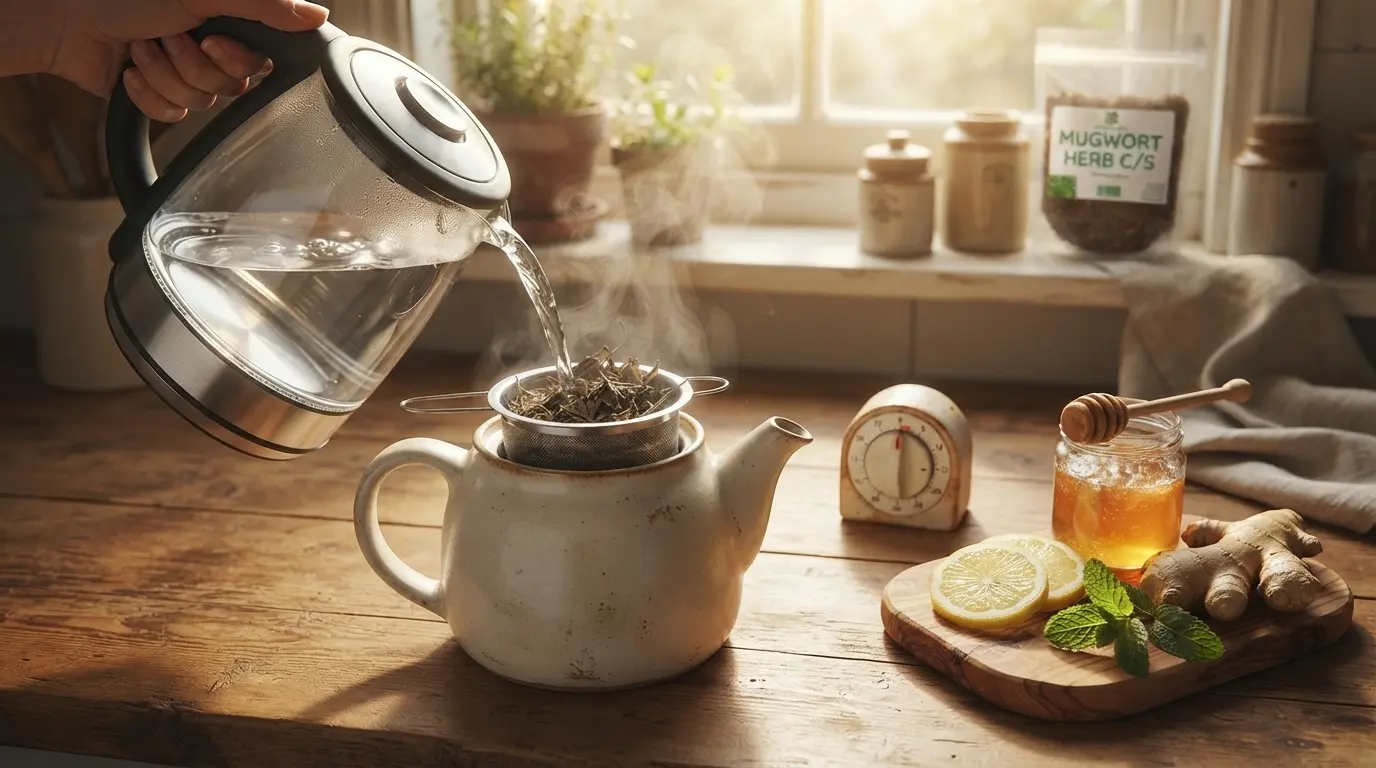
How to Brew Mugwort Tea: Step-by-Step (Mugwort Uses)
Because mugwort leaves contain potent bitter principles, proper brewing temperature and steeping time make all the difference between a pleasantly resinous cup and an unpalatably bitter drink. Here are some of the drinking mugwort tea way you may follow
Basic Steeping Instructions
1. Measure Herbs & Water: Ratio: 1-2 tsp per 8 oz water.
Place 1 to 2 teaspoons of dried organic mugwort leaves (or 1 tablespoon fresh leaves) into a tea infuser basket or paper filter.
2. Heat Water to Ideal Temperature: Optimal: 90–95°C / 195–203°F.
Bring fresh water to a rolling boil, then let it sit off the heat for 60 seconds. Avoid pouring boiling water directly onto leaves to preserve delicate essential oils.
3. Steep Covered: Duration: 5–10 minutes.
Pour hot water over the infuser and cover your cup or pot with a saucer. Covering prevents beneficial volatile aromatic compounds from escaping in the steam.
4. Strain & Customize Taste: Optional modifiers.
Remove the infuser. Add 1 tsp raw honey or a slice of fresh lemon to soften natural bitterness.
Steeping Duration & Profile Guide
| Steeping Time | Flavour Profile | Bitterness Rating (1–5) | Bitterness level | Flavor Profile | Best Used For |
| 3–5 minutes | Light, herbal, sage-like, subtle sweetness | 2 / 5 | Low | Light, herbal, subtle sweet | Beginners, evening dream rituals, mild wind-down. |
| 5–10 minutes | Earthy, resinous, aromatic, moderate bitter finish | 3.5 / 5 | Medium | Earthy, aromatic | Post-meal digestion, gut stimulation. |
| 10+ minutes | Deeply bitter, astringent, intense botanical extract | 5 / 5 | High | Strong, deep resinous | Concentrated traditional herbal tonics/Occasional stronger tonic |
Mugwort Tea for Sleep
Most people feel mild, pleasant effects after one cup. You may notice a warm, settling sensation. Some report clearer dreams and better recall when they drink it before bed. Effects vary from person to person, so test one small cup first.
Try this easy bedtime ritual: Brew a light cup 45 minutes before sleep, keep your room calm, and jot down any dreams in the morning. Keep servings occasional for the gentlest experience.
- Dream Vividness: Brighter colors, clearer sensory details, and enhanced narrative structures. Many people report more vivid dreams, though this is anecdotal and not confirmed by research.
- Dream Recall: Greater ease in remembering dream sequences upon awakening.
- Hypnagogic Awareness: Vivid imagery experienced while transitioning from wakefulness into sleep.
Mugwort Tea Side Effects
Safety comes first with any herb. Mugwort tea is generally well-tolerated in small amounts, yet it is not right for everyone.
- Avoid if pregnant or breastfeeding – it may stimulate the uterus.
- Skip if you have ragweed or daisy family allergies – cross-reactions can occur.
- Talk to your doctor if you take medications or have health conditions.
- Limit use to occasional cups. Long daily use is not recommended due to natural thujone content.
Store dried mugwort in a cool, dark place. It stays fresh for about one year in a sealed jar.
Understanding Thujone Limits
Mugwort naturally contains thujone – a chemical compound found in larger quantities in wormwood and absinthe. In massive concentrated doses, thujone can affect the central nervous system. However, standard water infusions (teas) contain only trace amounts of thujone that are considered non-toxic for short-term adult use.
Recommended Cycling: Drink mugwort tea for no more than 2 to 3 consecutive weeks, followed by a 1-week break to keep intake moderate.
Where to Buy Mugwort Tea You Can Trust?
Quality changes everything with a bitter herb like this. So where to buy mugwort tea that is actually fresh? You could search “mugwort near me” or “mugwort tea near me” and hope a local shop stocks it.
At Herb To Body, we keep it clean and clear:
- Single-ingredient loose leaf, with nothing hidden.
- The exact botanical name is printed on every batch.
- Lab-tested for purity and quality.
- Wildcrafted and handled with care.
- Made in the USA in a GMP-certified facility.
- Sold in bulk, so you control freshness and strength.
Likewise, if you want to know where to buy dried mugwort leaves for tea without guessing or low quality product. Check our loose-leaf herb ships straight to your door. In addition, shoppers comparing the best online stores to buy organic mugwort in the US will find fair, wholesale pricing here. Curious how this leaf compares to its sharper relative? Our guide on wormwood vs mugwort breaks down the real differences
Conclusion
Mugwort tea offers a simple way to connect with an ancient herb. Begin with one mild cup in the evening. Notice how you feel. Respect its strength, and it can become a pleasant part of your wind-down routine.
A good cup starts with a good leaf. If you want single-ingredient, lab-tested mugwort with the botanical name on every batch, Herb To Body has it ready to ship. Brew one small cup, notice how your body responds, and let this old-world herb earn a quiet place in your evenings.
Sources – Reference
- NCCIH (NIH) National Center for Complementary and Integrative Health Mugwort: Usefulness and Safety – nccih.nih
Ekiert H, Pajor J, Klin P, et al. Significance of Artemisia vulgaris L. (common mugwort) in the history of medicine and its possible contemporary applications. Molecules. 2020;25(19):4415 – pmc.ncbi.nlm.nih - Medical News Today – Mugwort: Uses, side effects, and more
Frequently Asked Questions (FAQ)
Mugwort tea should be consumed occasionally. It contains thujone, which is safest in small amounts. Limiting servings and spacing them out is the better choice for healthy adults.*
Earthy, green, and sage-like, with an upfront bitterness and a faint sweet finish. Peppermint, ginger, or honey can soften the flavor.
No, mugwort (Artemisia vulgaris) and wormwood (Artemisia absinthium) are different species. Mugwort is milder, used in teas and moxibustion; wormwood is intensely bitter, high in thujone, and famously used in absinthe.
It may assist some individuals in relaxing before bedtime, while others report experiencing more vivid dreams. The effects are mild and can vary from person to person, so it’s best to start with a small cup in the evening.*
Anyone pregnant or breastfeeding, people with ragweed allergies, and those on medications without medical advice. When unsure, ask a healthcare professional.
Mugwort (Artemisia vulgaris) is a 2–6 ft tall perennial with erect, ridged, purplish-brown stems. Its deeply lobed, feathery leaves are dark green on top and silvery-white underneath due to dense wooly hairs, giving a sage-like or chrysanthemum-like appearance and aroma.
Disclaimer: *These statements have not been evaluated by the Food and Drug Administration. This product is not intended to diagnose, treat, cure or prevent any disease.

Columbus Day 2026: History, Plants of the Columbian Exchange
Many foods and herbs we use today including chili peppers, cacao, vanilla, tomatoes, and potatoes,...
Oct

Vitamin C Powder: Forms, Dosage, Safety, and How to Choose
Vitamin C powder is a dissolvable supplement that is usually made with ascorbic acid or...
Oct

Goldenseal Root: Uses, Dosage, Safety & How to Buy It
What Is Goldenseal Root? Goldenseal root is a bitter yellow herb with a long history...
Oct
Andrographis Paniculata: Benefits, Herb Profile, Uses, Dosage & Safety
Andrographis paniculata is a bitter medicinal herb from the Acanthaceae family, often called “King of...
Sep

Patriot Day: History, Facts, and 9/11 Remembrance
Patriot Day is a day of remembrance. It is held every year on September 11th...
Sep

Olive Leaf: Benefits, Active Compounds, and How to Use It
We all use or have heard about olive oil. But did you know that the...
Sep
Labor Day Sale: Fresh Fall Botanicals
Update: The Herb To Body Labor Day 2026 sale ended on Monday, September 7, 2026,...
Sep

Astragalus Root: Benefits, Uses, Dosage & Safety
Astragalus root, also known as huang qi, comes from a plant in the pea family...
Aug

What Is Echinacea: Benefits, Active Compounds, Types, Uses and Who Should Avoid It?
When the cold season arrives, many people add a traditional botanical such as Echinacea to...
Aug

Elderberry (Sambucus nigra): What It’s Used For, Potential Benefits & Safety
Every autumn, the same scene plays out – someone at home starts sniffling. Through the...
Aug
Immune Supporting Herbs: Forms, Uses & Safety Guide
What is an Immune Support Herb? An immune-support herb is a plant traditionally used for...
Aug

Back to School Wellness: A Routine for the Whole School Year
The first bell of the school year changes a household’s routine overnight. Bedtimes shift earlier,...
Aug

Herbs for Women: Traditional Uses, Research Notes and Safety
Many women wellness seekers search for simple herbs to add to a daily routine. Some...
1 Comment
Aug

Oat Straw Tea: Benefits, Uses & How to Brew and Use Perfectly?
What Is Oat Straw Tea? Oat straw tea is a mild herbal tea made from...
Jul

Shikakai Powder: Benefits, Active Compounds, Uses and Safety
Long before bottled shampoo existed, people in South Asia reached for a dried legume pod...
Jul

Mugwort Tea: Benefits, Brewing, Flavor & the Safety Concern No One’s Telling You
Mugwort tea (Artemisia vulgaris), also known as the “Mother of Herbs,” holds a storied place...
Jul

Wormwood Herb: Benefits, Side Effects, Uses, Compounds & More
Wormwood (Artemisia absinthium) is one of the most famous and intensely bitter herbs in traditional...
Jul

Wheatgrass Juice Powder: Benefits, Nutrients, Uses, Taste Comparison & Buying Guide
In a perfect world, we’d all eat fresh greens every single day. But reality hits...
Jul

Yerba Mate: What Is It, Benefits, Caffeine Amount, and How to Make It
Yerba mate is a traditional caffeinated beverage from South America made from the dried leaves...
Jul

Alligator Pepper: Flavor, Uses, Botanical Profile, Substitute and Buying Tips
If you heard the name “alligator pepper,” what comes to mind? Is it the same...
Jul

Green Black Walnut Hull & Extract (Juglans nigra): Benefits, Uses & How It Differs
When you’re looking for black walnut hull, you quickly notice two very different products. One...
Jul

Fourth of July 2026: History, Traditions, and a Safe, Fun Day
The Fourth of July is easy to picture. The grill is going. Music is playing....
Jun

When Is Juneteenth 2026? Meaning, History, Colors & Herbal Deals
Many people know Juneteenth is a holiday, but they don’t know what to do. They...
Jun

Tongkat Ali Honey: Benefits, Taste, Uses & How to Take
Tongkat ali honey is honey mixed with tongkat ali root (Eurycoma longifolia, also called longjack)....
Jun

Best Father’s Day Gifts 2026 for a Health-Minded Dad
Most dads rarely ask for anything for themselves. They say “I’m fine” while rubbing a...
Jun
Black Seed (Nigella sativa): Compounds, Uses & Safety
Black seed is a versatile herb available year-round. It can be used in cooking, added...
Jun

Shilajit: What It Is, How It Works, and How to Choose the Right Form?
Shilajit is a natural mineral resin. It forms in high-altitude mountain ranges, mainly the Himalayas,...
Jun

Prekese (Aidan Fruit): Benefits, Active Compounds, Uses & Safety Guide
Prekese (Tetrapleura tetraptera) is a flowering tree in the Fabaceae (legume) family. It grows in...
May