

Andrographis, Herbs
Andrographis Paniculata: Benefits, Herb Profile, Uses, Dosage & Safety
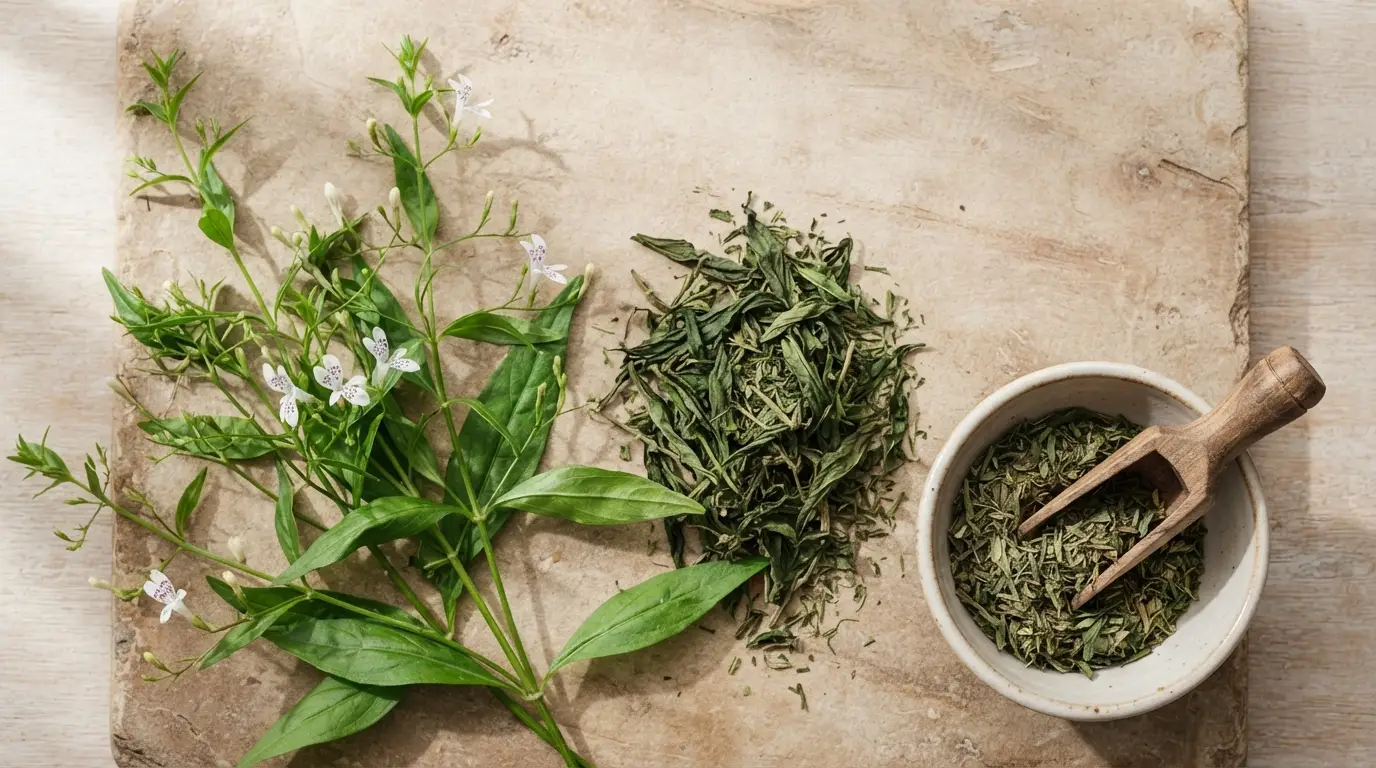
Andrographis paniculata is a bitter medicinal herb from the Acanthaceae family, often called “King of Bitters.” Its aerial parts (leaves and stems) contain andrographolide, a diterpene lactone that has been studied for its potential to support normal immune function and a healthy inflammatory response. The herb has a long history of use in Ayurveda and Traditional Chinese Medicine as a bitter tonic and general wellness botanical. (Source: Researchgate)
When Bitter Herbs Fit Into a Wellness Routine
Many people use bitter botanicals when they want plant-based support for everyday wellness. Instead of reaching for highly processed products, they look for traditional herbs with a clear history of use and a growing body of modern research.
Andrographis is one of the most studied bitter botanicals in phytotherapy. Below, you will find what it is, how it is traditionally used, which compounds it contains, typical dosing ranges reported in research, and important safety information.
What Is Andrographis – Botanical Overview
Andrographis paniculata is an annual plant native to South and Southeast Asia. Its full botanical name is Andrographis paniculata (Burm.f.) Nees, in the Acanthaceae family. The plant grows quickly, tastes sharply bitter, and prefers warm, humid climates.
Herbalists harvest and use the aerial parts – the leaves and stems, usually in the fall. These parts contain the highest levels of active compounds.
Common Names
King of Bitters is one andrographis common name you will see often, a nod to its sharp taste. Other names include:
- Kalmegh (in Ayurveda)
- Chuan Xin Lian (in Traditional Chinese Medicine)
- Green chiretta
- Indian echinacea (a marketing nickname)
That last nickname can cause confusion. The herb is not related to true Echinacea. It also differs from true chiretta (Swertia chirayita), despite the shared “chiretta” label. When you shop, the Latin name is your safeguard. It confirms you have the andrographis herb and not a look-alike.

Active Compounds in Andrographis
The chemistry is what gives this botanical its reputation. The primary compound is andrographolide, a diterpene lactone concentrated in the leaves.
Key constituents include:
- Andrographolide – the main diterpene lactone and most researched marker compound.
- Neoandrographolide – a related diterpenoid studied for antioxidant activity.
- 14-deoxyandrographolide – another diterpene in the same family.
- Arabinogalactan proteins and flavonoids – plant polyphenols that contribute to antioxidant activity.
Most quality supplements use a standardized andrographis extract. Research formulas are often standardized to 30–50% andrographolide, so each dose remains consistent. Standardization matters because raw leaf can vary from batch to batch.
How Andrographis Works in the Body?
In simple terms, the main compound appears to influence the body’s normal inflammatory signaling pathways.
Research suggests a pathway like this: andrographolide → modulates NF-κB and COX-2 signaling → influences inflammatory mediators. In laboratory studies, the compound has also been observed to affect nitric oxide production in active cells. This is why the herb is associated with support for a healthy inflammatory response, not with treatment of any disease.
On the immune side, andrographolide has been studied for its effects on white blood cell activity. In short, it may help support normal immune function. Because the action touches immune signaling, it also influences who should avoid the herb – more on that below.*
What the Research Suggests About Andrographis
Let us be clear and honest. This is a food-grade herb, not a drug. The points below describe how it may support normal body functions. None of this is a promise to treat, cure, or prevent any condition.*
May Support a Healthy Immune System*
The herb may support normal immune function, because its main compound has been studied for its effect on white blood cells. In one study on immune support, participants took 200 mg daily for 30 days of a standardized extract.*
May Support Respiratory Comfort*
This is the herb’s oldest traditional role. It has centuries of recorded use as a bitter botanical for seasonal respiratory comfort. A clinical study used 200 mg a day for five days of a standardized extract. Participants reported subjective comfort ratings that favored the herb over placebo.*
May Support A Healthy Inflammatory Response*
Andrographolide is the reason this herb is studied for inflammatory-response support. It may support a healthy inflammatory response, because it acts on the NF-κB pathway in laboratory models.*
May Support Everyday Joint Comfort*
The herb could support everyday joint comfort, because small trials on standardized extracts looked at joint function over several months. As always, results vary from person to person.*
May Support Liver and General Resilience*
The herb has a traditional link to liver support, and preclinical studies have examined andrographolide in this area. It may support the body’s own resilience. This area of research is early-stage, so treat it as promising rather than settled.*
Note on medical conditions. Searches often tie this herb to blood sugar, blood pressure, or digestive conditions. Those are medical conditions, and the herb is not a treatment for any of them. If you manage a diagnosed condition, talk with your clinician before using this herb.*
Andrographis Uses & Traditional Context
The andrographis paniculata uses stretch back hundreds of years. In Ayurveda, kalmegh was used as a bitter tonic for digestion and daily balance. In Traditional Chinese Medicine, Chuan Xin Lian was valued for “clearing heat,” a traditional framing for seasonal discomfort and overall balance.
Today, the most common andrographis uses center on everyday immune and respiratory support. Herbalists also value the bitterness itself, since bitter herbs have long been used to support digestion. These andrographis medicinal uses are cultural and historical context, not medical advice.*
Modern andrographis paniculata uses focus on standardized extracts taken for short periods. Tradition and research point in the same direction: seasonal, structure-and-function support for everyday health.*
How to Use Andrographis – Forms & Dosage
You will find this bitter herb in a few forms. Capsules are the most popular, because the taste is truly intense. Tinctures and bulk cut-and-sifted leaf exist for people who prefer traditional preparations.
Because dosing depends on the extract’s strength, standardization is key. Here is what the research has used.
| Area of interest | Body system support | Key compound | Amount studied | Traditional / research context |
| Immune support | May support normal immune function* | Andrographolide | 200 mg/day, 30 days | Bitter tonic in Ayurveda & TCM; studied for white-blood-cell activity* |
| Respiratory comfort | May support respiratory comfort during the colder months* | Andrographolide | 200 mg/day, 5 days | The herb’s oldest traditional role; in a short study, comfort ratings favored the extract* |
| Healthy inflammatory response | May support a healthy inflammatory response* | Andrographolide (NF-κB, COX-2) | Extracts studied in lab models | The hero compound’s most-studied action* |
| Everyday joint comfort | May support everyday joint comfort* | Andrographolide | 300–600 mg/day, up to 3 months | Small trials on standardized extract; results vary by person* |
| Liver support & resilience | May support normal liver function* | Andrographolide | Preclinical / early-stage | Traditional Ayurvedic bitter tonic; promising, not settled* |
| Digestive bitterness | Traditionally used to support normal digestion (bitter compound)* | Bitter diterpenes | Traditional use | Bitters have long been taken before meals* |
| Antioxidant activity | Contains compounds studied for antioxidant activity* | Neoandrographolide, flavonoids | Composition fact | Constituent-level statement, not a product claim* |
Amounts used in published research varied. Source: PMC
Simple usage tips:
- Take it with food: The bitterness is softer alongside a meal.
- Start low: A smaller dose lets you gauge how you feel.
- Keep it short-term and seasonal: The herb suits occasional use, not year-round dosing.
- Read the andrographolide percentage: A standardized andrographis supplement tells you exactly what you are getting.
An andrographis paniculata supplement should always name its standardization on the label. If it does not, you cannot judge the dose.
Andrographis Side Effects, Safety & Drug Interactions
Most people tolerate short-term use well. Still, honesty matters more than hype. Here are the real side effects to know.
Reported reactions include:
- Bitter or metallic taste, and sometimes reduced appetite.
- Headache, fatigue, or dizziness.
- Digestive upset – nausea, loose stools, or stomach discomfort.
- Skin rash or, rarely, allergic reactions.
At high doses, case reports describe swollen lymph nodes. Rare severe allergic reactions have also been linked to some extract products. If you notice hives, swelling, or trouble breathing, stop and seek medical care.
Medication Interactions
Consult your healthcare provider prior to use if you take prescription medications, particularly:
- Immune-modulating therapies: Review use with your clinician, as this botanical supports normal immune function.
- Circulatory or metabolic therapies: Speak with your provider to ensure compatibility with your wellness routine.
- Enzymatic-pathway medications: This herb affects liver enzymes, which may alter how the body processes certain prescription drugs
Who Should Avoid Andrographis?
Some people should not take this herb at all:
- Pregnant or breastfeeding people: Adverse and possible abortifacient effects have been documented, so avoid it entirely.
- People with autoimmune conditions: An immune-active herb may not suit you.
- Anyone scheduled for surgery: Stop well before, due to bleeding-related effects.
- Children under two: Herb To Body does not recommend this herb for infants or toddlers.
Conclusion
Andrographis paniculata is a bitter botanical studied for its role in supporting normal body functions. Research has used different extracts and doses, so findings from one product should not be applied to all supplements. As with any botanical, it is wise to speak with a qualified healthcare professional before use, especially if you are pregnant, breastfeeding, have a health condition, or take medication.
Sources
- Hossain S, Urbi Z, Karuniawati H, et al. Andrographis paniculata: phytochemistry, pharmacology, and clinical safety review. Life. 2021;11(4):348.
- Hossain S, et al. Pharmacokinetics and safety of Andrographis paniculata aqueous extract in healthy adults. Frontiers in Pharmacology. 2023;14:1230401.
- Worakunphanich W, et al. Safety of Andrographis paniculata: a systematic review and meta-analysis. Pharmacoepidemiology and Drug Safety. 2021;30(6):727–739.
- Therapeutic Goods Administration (Australia). Medicines containing Andrographis paniculata: safety advisory.
- Andrographis Natural Products Database – Drugs com
- Comprehensive Review of Andrographis paniculata (Burm. f.) Nees and Its Constituents as Potential Lead Compounds for COVID-19 Drug Discovery. Molecules (Basel, Switzerland), 27(14), 4479. https://doi.org/10.3390/molecules27144479
Frequently Asked Questions (FAQ)
Andrographis is a bitter medicinal herb traditionally used for everyday immune and respiratory support. Its compound, andrographolide, is studied for its potential to support a healthy inflammatory response. It supports normal body functions and is not a treatment for any disease.*
Andrographis suits short, seasonal use rather than year-round dosing. Most studies ran from five days to a few months. Take breaks and check with a professional for extended use.*
It may support a healthy immune system, respiratory comfort, and a healthy inflammatory response. These effects come mainly from andrographolide. Benefits vary by person and are not medical claims.*
Avoid it if you are pregnant, breastfeeding, trying to conceive, or have an autoimmune condition. Skip it before surgery and never give it to children under two. Talk with your provider if you take medication.*
Disclaimer: *These statements have not been evaluated by the Food and Drug Administration. This product is not intended to diagnose, treat, cure or prevent any disease.

Columbus Day 2026: History, Plants of the Columbian Exchange
Many foods and herbs we use today including chili peppers, cacao, vanilla, tomatoes, and potatoes,...
Oct

Vitamin C Powder: Forms, Dosage, Safety, and How to Choose
Vitamin C powder is a dissolvable supplement that is usually made with ascorbic acid or...
Oct

Goldenseal Root: Uses, Dosage, Safety & How to Buy It
What Is Goldenseal Root? Goldenseal root is a bitter yellow herb with a long history...
Oct
Andrographis Paniculata: Benefits, Herb Profile, Uses, Dosage & Safety
Andrographis paniculata is a bitter medicinal herb from the Acanthaceae family, often called “King of...
Sep

Patriot Day: History, Facts, and 9/11 Remembrance
Patriot Day is a day of remembrance. It is held every year on September 11th...
Sep

Olive Leaf: Benefits, Active Compounds, and How to Use It
We all use or have heard about olive oil. But did you know that the...
Sep
Labor Day Sale: Fresh Fall Botanicals
Update: The Herb To Body Labor Day 2026 sale ended on Monday, September 7, 2026,...
Sep
Astragalus Root: Benefits, Uses, Dosage & Safety
Astragalus root, also known as huang qi, comes from a plant in the pea family...
Aug