


Powder
Wheatgrass Juice Powder: Benefits, Nutrients, Uses, Taste Comparison & Buying Guide
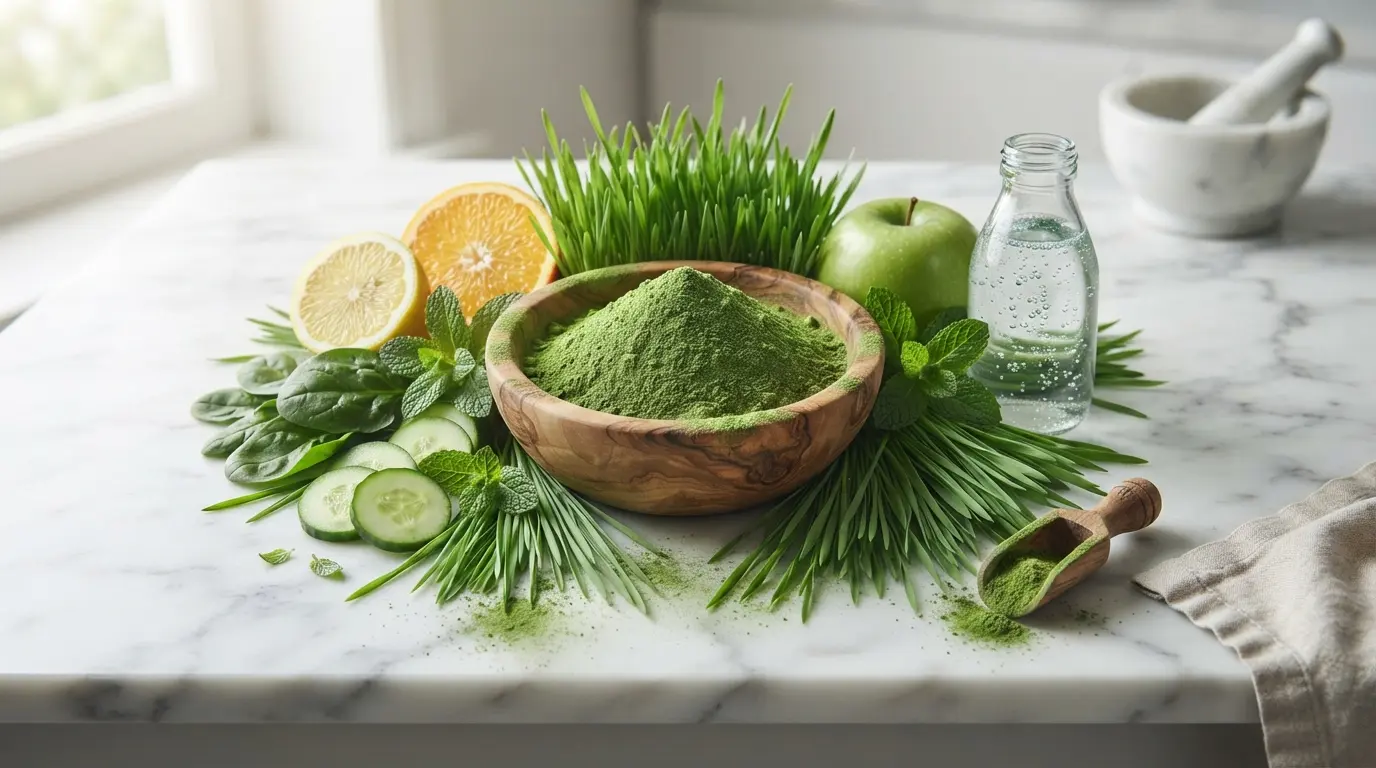
In a perfect world, we’d all eat fresh greens every single day. But reality hits hard – eating fresh nowadays feels like a weekend project. And busy schedules push healthy habits to the bottom of the to-do list. By mid-afternoon, energy crashes, focus fades, and you’re left craving more nutrient-dense plants without the daily hassle.
That’s exactly why wheatgrass juice powder has become a game-changer for health-conscious people who refuse to compromise.
This concentrated green superfood delivers the potent nutrition of young wheatgrass. No juicer required. No messy cleanup. No wasted produce. Just pure, bioavailable plant power mixed into water, smoothies, or your favorite drink – turning good intentions into a consistent daily habit.
What Is Wheatgrass Juice Powder?
Wheatgrass is the young grass of the wheat plant, Triticum aestivum. Growers cut the tender leaf blades early. At this young stage, the plant has not formed grain yet.
To create a true juice powder, the fresh grass is cold-pressed immediately after harvest or sourcing. This step pulls the nutrient-dense liquid juice away from the tough, indigestible fibrous cell walls. The resulting green juice is then dried at low temperatures to protect delicate plant proteins and enzymes.
Juice Powder vs. Whole-Leaf Powder vs. Fresh Juice
The difference between juice powder and regular whole-leaf powder is structurally significant:
- Whole-Leaf Wheatgrass Powder: Made by drying the entire grass. This product retains the tough cell wall fiber (cellulose), which acts as a filler.
- Wheatgrass Juice Powder: Bypasses the fiber entirely. Because the raw juice is dried directly. It dissolves completely in liquid with no sandy residue.
- Freshly Juiced Wheatgrass: While highly nutritious, fresh wheatgrass requires specialized, expensive juicers, regular sourcing of fresh trays, and immediate cleanup. It is highly vulnerable to mold and bacterial growth during domestic cultivation.
Want to try it? Shop our organic wheatgrass powder (Triticum aestivum).
Nutritional Profile: A Quantitative Comparison
The differences between these forms become clear when looking at their nutritional values
| Feature | Juice Powder | Whole-Leaf Powder | Fresh Juice |
| Fiber | Removed – fully dissolves | Retained – higher fiber | Removed |
| Nutrient Concentration | Highest (up to 20x more potent) | Moderate | High |
| Convenience | Excellent – mix & go | Good | Low – requires daily prep |
| Shelf Life | Long (sealed & stable) | Long | Very short |
| Mixability | Smooth, no grit | Can feel sandy | N/A |
| Enzyme & Nutrient Retention | Excellent (low-heat dried) | Reduced by grinding | High but perishable |
Juice powder removes the fiber, so each scoop is more concentrated. Whole-leaf powder keeps the fiber, so it feels more filling. Fresh juice is potent, yet it needs daily prep and quick cleanup. For a steady daily habit, powder wins on ease. If you like to rotate your greens, our chlorella powder and moringa make easy companions.
How to Use It?

Using the powder is simple. Start with one small scoop, about one teaspoon. Stir it into cold water. Add lemon or apple juice to soften the taste. You can also blend it into a smoothie. It pairs well with banana, pineapple, or mango.
Here are a few easy ways to enjoy it:
- Stir one teaspoon into a glass of cold water.
- Blend it with banana, spinach, and almond milk.
- Shake it into coconut water after a walk.
- Mix it into a citrus juice for a bright taste.
Small changes keep the habit fun. Also, cold liquids tend to taste better than warm ones. So keep your water chilled for the smoothest sip.
Many people take it in the morning. First, begin with a small amount. Then adjust over a few days as your taste adapts. Finally, keep the pouch sealed, cool, and dry.
Three Easy Recipes
- Citrus green shot. Shake one teaspoon into cold coconut water with fresh lemon or lime. The citrus softens the grassy note.
- Tropical smoothie. Blend one teaspoon with a frozen banana, mango, almond milk, and a handful of spinach.
- Cucumber cooler. Stir one teaspoon into chilled cucumber water with a mint leaf for a light post-workout drink.
What Does Wheatgrass Powder Taste Like?
Wheatgrass tastes green and earthy. A mild sweetness sits under a light, grassy bite. Mixed with cold water or juice, the flavor turns smooth and clean. As a result, most people find it easy to sip each morning.
Research-Noted Benefits of Wheatgrass Juice Powder
Beyond basic vitamins, wheatgrass juice powder contains active plant compounds. Below is what current research has examined.
What Does Wheatgrass Powder Do?
Chlorophyll gives wheatgrass more than its color. Below are common reasons people add this green to their day. Each one is general, not a medical claim.
- Everyday nutrient support: It may add vitamins and minerals to a light diet.
- Antioxidant plant compounds: Chlorophyll and flavonoids can act as antioxidants in the body.
- A plant source of iron: Its non-heme iron could help people who eat fewer animal foods.
- Iron paired with vitamin C: The plant’s vitamin C may support how the body takes in iron (Source: NIH).
- An easy greens habit: One scoop may help you reach your daily plant goals.
- Steady morning routine: Some people enjoy a calm, consistent start with their greens.
Safety, Side Effects, and Key Contraindications
Wheatgrass is a food, so most adults handle it well. Start small to let your body adjust. Some people notice mild stomach upset at first. This usually settles as the amount stays steady.
The grass is cut before grain forms. So pure wheatgrass is generally free of gluten. Still, cross-contact can happen during processing. If you avoid gluten, check the label and lab tests. Pregnant or nursing people should ask a doctor first. Anyone taking medication should do the same.
How to Prepare Your Wheatgrass Juice Powder?
Using wheatgrass juice powder is simple. Start with one teaspoon (approx. 3 grams) daily.
Because it is highly concentrated and fiber-free, cold liquids are best for mixing. High heat can damage the delicate live enzymes and chlorophyll. You need to make simple wheat grass powdered juice
- Cold Water.
- 1 tsp Wheatgrass Juice Powder.
- Squeeze of Fresh Lemon.
- The Perfect Morning Green Shot.
3 Quick Recipes to Enhance the Earthy Taste
If you find the earthy, green flavor of wheatgrass too strong on its own, try these simple, nutrient-dense combinations:
- The Citrus Green Shot: Shake 1 teaspoon of wheatgrass juice powder with 4 oz of cold coconut water and a generous squeeze of fresh lemon or lime juice. The natural citrus acids soften the grass flavor, making it taste clean and bright.
- The Tropical Green Smoothie: Blend 1 teaspoon of powder with 1 frozen banana, 1/2 cup of frozen mango, 1 cup of unsweetened almond milk, and a handful of baby spinach. The natural sugars in mango and banana pair perfectly with green superfoods.
- The Hydration Hydrator: Stir 1 teaspoon into a glass of chilled cucumber water with a fresh mint leaf for an incredibly refreshing post-workout recovery drink.
Avoid Heat: Never mix bioactive wheatgrass juice powder with hot water or hot tea, as temperatures above 118°F will destroy the SOD and P4D1 enzymes.
Why Choose Herb To Body Wheatgrass?

Not all green powders are made the same way. Low-cost brands may use high heat or add cheap fillers. Herb To Body holds a higher standard.
- We source organic or conventional grass.
- Cold-pressed juice powder, with the fiber removed.
- Low-temperature drying to protect color and enzymes.
- Third-party lab testing for heavy metals, microbes, and gluten.
- No added fillers or sweeteners.
- GMP-certified facility and made in the USA.
You can browse the full range of organic superfood powders and green powders to build your daily routine.
Conclusion
A daily greens habit does not need a juicer or a mess. One scoop mixes in seconds, and cleanup is just a spoon. If you want an easy way to add greens each morning, Herb To Body Wheatgrass Powder fits the routine. Check the label, start small, and make it your own.
Source
- Wheatgrass antioxidant activity in human subjects – PubMed
- Wheatgrass leaf juice and blood sugar/lipid research – NCBI.
- Chlorophyll and chlorophyllin research – PMC.
- NIH Iron Fact Sheet – Supports the statement that vitamin C enhances non-heme iron absorption. Pubmed
- USDA FoodData Central – useful for nutrient-profile reference.
Frequently Asked Questions (FAQ)
Keep the pouch tightly sealed in a cool, dry spot. Keep it away from heat, light, and moisture. This helps protect the bright green color.
It tastes earthy and grassy, not sweet. Cold water, citrus, or fruit make it smoother. Most people adjust to the flavor within a week.
Wheatgrass is famous for its deep green color. That color comes from chlorophyll. Interestingly, chlorophyll’s structure resembles hemoglobin, with magnesium at its center instead of iron. The plant also supplies vitamins A, C, and K. Moreover, it carries iron, magnesium, and B vitamins. Amino acids and plant enzymes show up too.
Whole-leaf powder is dried, ground grass and keeps its fiber. Juice powder is cold-pressed first, then dried, so the fiber is removed. This makes each scoop more concentrated and easier to mix.
Keep the pouch tightly sealed and store it in a cool, dry pantry away from direct sunlight and moisture. Exposure to heat, air, and light will oxidize the chlorophyll, changing its bright green color to a dull brown and reducing its nutritional value.
The young grass is cut before grain forms. So pure wheatgrass is generally gluten-free. If you are sensitive, check the label and lab results first.
Many people take it in the morning. You can drink it before food or with a light meal. Pick a time you will remember each day.
Many people drink it first thing in the morning. If your stomach is sensitive, take it with a light meal instead. Pick what feels best for you.
Regular powder keeps the fiber from the whole leaf. Juice powder removes the fiber for a concentrated green. Both come from the same young plant.
Start with about one teaspoon daily. Mix it with water or a smoothie. You can adjust the amount slowly over time. Always follow the serving size on your label.
Disclaimer: *These statements have not been evaluated by the Food and Drug Administration. This product is not intended to diagnose, treat, cure or prevent any disease.

Columbus Day 2026: History, Plants of the Columbian Exchange
Many foods and herbs we use today including chili peppers, cacao, vanilla, tomatoes, and potatoes,...
Oct

Vitamin C Powder: Forms, Dosage, Safety, and How to Choose
Vitamin C powder is a dissolvable supplement that is usually made with ascorbic acid or...
Oct

Goldenseal Root: Uses, Dosage, Safety & How to Buy It
What Is Goldenseal Root? Goldenseal root is a bitter yellow herb with a long history...
Oct
Andrographis Paniculata: Benefits, Herb Profile, Uses, Dosage & Safety
Andrographis paniculata is a bitter medicinal herb from the Acanthaceae family, often called “King of...
Sep

Patriot Day: History, Facts, and 9/11 Remembrance
Patriot Day is a day of remembrance. It is held every year on September 11th...
Sep

Olive Leaf: Benefits, Active Compounds, and How to Use It
We all use or have heard about olive oil. But did you know that the...
Sep
Labor Day Sale: Fresh Fall Botanicals
Update: The Herb To Body Labor Day 2026 sale ended on Monday, September 7, 2026,...
Sep

Astragalus Root: Benefits, Uses, Dosage & Safety
Astragalus root, also known as huang qi, comes from a plant in the pea family...
Aug

What Is Echinacea: Benefits, Active Compounds, Types, Uses and Who Should Avoid It?
When the cold season arrives, many people add a traditional botanical such as Echinacea to...
Aug

Elderberry (Sambucus nigra): What It’s Used For, Potential Benefits & Safety
Every autumn, the same scene plays out – someone at home starts sniffling. Through the...
Aug
Immune Supporting Herbs: Forms, Uses & Safety Guide
What is an Immune Support Herb? An immune-support herb is a plant traditionally used for...
Aug

Back to School Wellness: A Routine for the Whole School Year
The first bell of the school year changes a household’s routine overnight. Bedtimes shift earlier,...
Aug
Herbs for Women: Traditional Uses, Research Notes and Safety
Many women wellness seekers search for simple herbs to add to a daily routine. Some...
1 Comment
Aug

Oat Straw Tea: Benefits, Uses & How to Brew and Use Perfectly?
What Is Oat Straw Tea? Oat straw tea is a mild herbal tea made from...
Jul
Shikakai Powder: Benefits, Active Compounds, Uses and Safety
Long before bottled shampoo existed, people in South Asia reached for a dried legume pod...
Jul

Mugwort Tea: Benefits, Brewing, Flavor & the Safety Concern No One’s Telling You
Mugwort tea (Artemisia vulgaris), also known as the “Mother of Herbs,” holds a storied place...
Jul

Wormwood Herb: Benefits, Side Effects, Uses, Compounds & More
Wormwood (Artemisia absinthium) is one of the most famous and intensely bitter herbs in traditional...
Jul

Wheatgrass Juice Powder: Benefits, Nutrients, Uses, Taste Comparison & Buying Guide
In a perfect world, we’d all eat fresh greens every single day. But reality hits...
Jul
Yerba Mate: What Is It, Benefits, Caffeine Amount, and How to Make It
Yerba mate is a traditional caffeinated beverage from South America made from the dried leaves...
Jul

Alligator Pepper: Flavor, Uses, Botanical Profile, Substitute and Buying Tips
If you heard the name “alligator pepper,” what comes to mind? Is it the same...
Jul

Green Black Walnut Hull & Extract (Juglans nigra): Benefits, Uses & How It Differs
When you’re looking for black walnut hull, you quickly notice two very different products. One...
Jul

Fourth of July 2026: History, Traditions, and a Safe, Fun Day
The Fourth of July is easy to picture. The grill is going. Music is playing....
Jun

When Is Juneteenth 2026? Meaning, History, Colors & Herbal Deals
Many people know Juneteenth is a holiday, but they don’t know what to do. They...
Jun
Tongkat Ali Honey: Benefits, Taste, Uses & How to Take
Tongkat ali honey is honey mixed with tongkat ali root (Eurycoma longifolia, also called longjack)....
Jun

Best Father’s Day Gifts 2026 for a Health-Minded Dad
Most dads rarely ask for anything for themselves. They say “I’m fine” while rubbing a...
Jun
Black Seed (Nigella sativa): Compounds, Uses & Safety
Black seed is a versatile herb available year-round. It can be used in cooking, added...
Jun

Shilajit: What It Is, How It Works, and How to Choose the Right Form?
Shilajit is a natural mineral resin. It forms in high-altitude mountain ranges, mainly the Himalayas,...
Jun

Prekese (Aidan Fruit): Benefits, Active Compounds, Uses & Safety Guide
Prekese (Tetrapleura tetraptera) is a flowering tree in the Fabaceae (legume) family. It grows in...
May