


Shilajit
Shilajit: What It Is, How It Works, and How to Choose the Right Form?
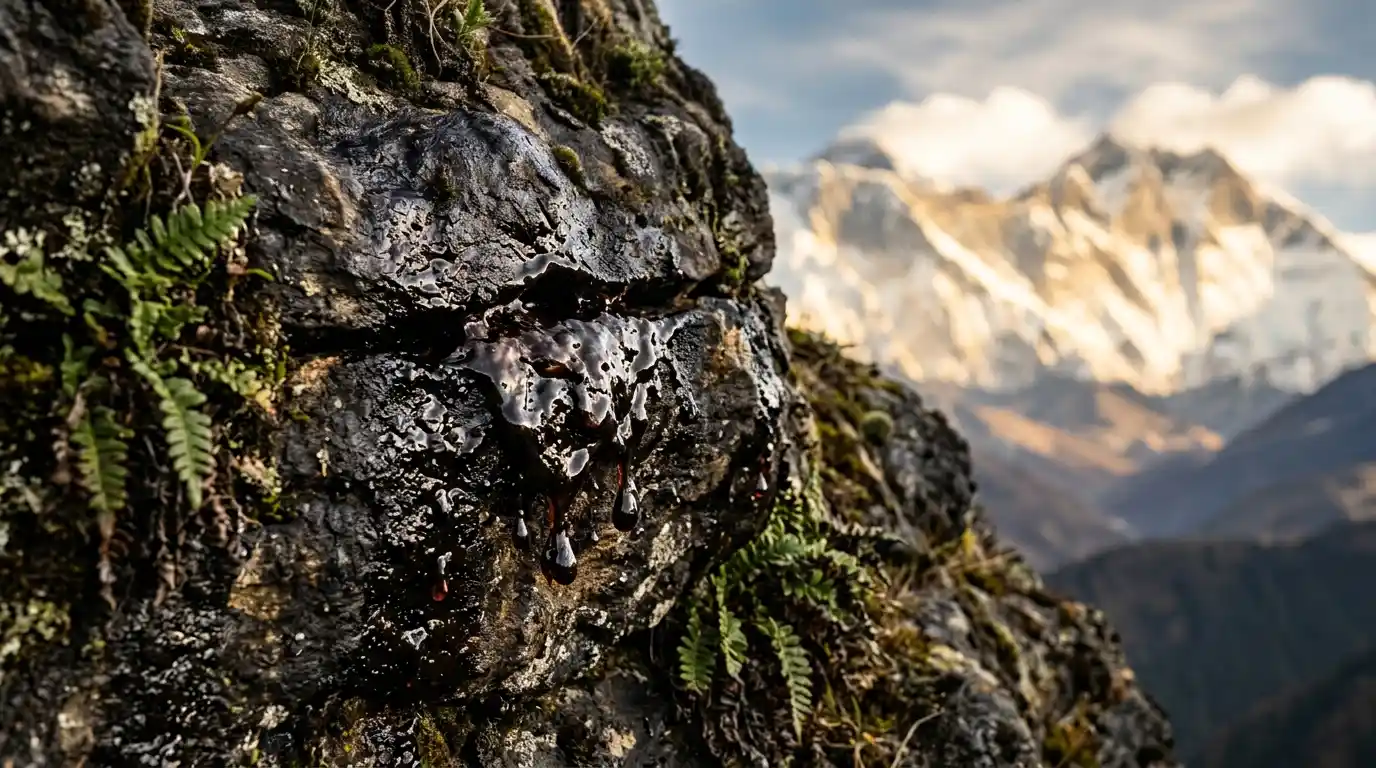
Shilajit is a natural mineral resin. It forms in high-altitude mountain ranges, mainly the Himalayas, over centuries. It contains fulvic acid, humic acid, and trace minerals in ionic form. People use it as a dietary supplement to support energy, mineral intake, and general wellness.*
Table of Contents
- What Is Shilajit?
- How Shilajit Forms
- Key Compounds in Shilajit
- Shilajit Benefits: What the Research Shows
- Shilajit for Men
- Shilajit for Women
- Forms of Shilajit Compared
- How to Use Shilajit
- Best Time to Take Shilajit
- Side Effects and Safety
- How to Buy Shilajit
- Frequently Asked Questions
- References
What Is Shilajit?
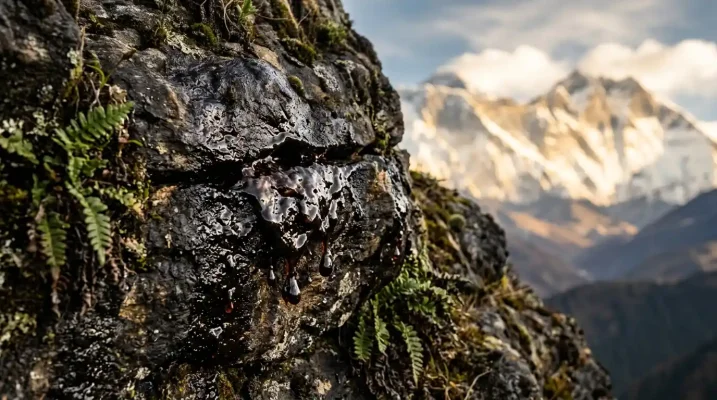
Shilajit is a dark, tar-like resin. It has been found in cracks in mountain rocks at elevations above 16,000 feet. The Himalayas are the most well-known source. It also appears in the Altai, Caucasus, and Tibetan ranges.
In Ayurvedic medicine, shilajit has been used for over 3,000 years. Sanskrit texts call it shilajatu, meaning “rock sweat” or “mountain tar.
Other names for shilajit:
Shelajit, shilajet, chiladjit, shilijat, shilagit, shilajeet, mumijo, mineral pitch, black asphaltum, Asphaltum punjabianum.
How Shilajit Forms?
Shilajit takes centuries to develop. Here is the process in simple terms:
- Ancient plant matter like ferns, mosses, and organic debris accumulates between rock layers.
- Extreme pressure and altitude slow decomposition.
- Microbial activity (primarily Aspergillus species) breaks down the organic material over hundreds to thousands of years.
- The result is a dense, mineral-rich substance that slowly seeps from rock faces.
This formation process is why shilajit is not a plant extract. It is not an herb. It is a naturally occurring organo-mineral compound.
Why altitude matters: Higher altitudes mean cleaner rock, less pollution exposure, and greater mineral density. Authentic Himalayan shilajit is sourced above 16,000 feet. Products sourced lower may carry more contaminants.
Key Compounds in Shilajit
| Compound | Role |
| Fulvic acid (FA) | Primary active compound. Supports mineral transport into cells.* |
| Humic acid | Secondary carrier compound. Supports gut mineral absorption.* |
| Dibenzo-α-pyrones (DBPs) | Antioxidant compounds unique to shilajit.* |
| Ionic trace minerals (80+) | Include iron, zinc, magnesium, selenium, copper, manganese, chromium, boron, potassium, calcium. |
What makes fulvic acid important?
Fulvic acid is a small-molecule organic acid. Because of its low molecular weight, it passes through cell membranes easily. This allows it to carry minerals directly into cells – a process called mineral chelation. Lab-verified fulvic acid content in quality shilajit resin is typically 15–20%.
What are the 85 minerals in shilajit?
Shilajit contains up to 85 ionic minerals, depending on source and purity. The primary minerals are iron, zinc, magnesium, copper, selenium, manganese, chromium, boron, and potassium. These are in ionic (electrically charged) form, which means the body can absorb them without additional breakdown.*
Shilajit Benefits: What the Research Shows
The research base for shilajit is growing. Most studies are small or animal-based. Human clinical trials exist but are limited. We present findings accurately without overstating them.
May Support Energy and Stamina Support*
Fulvic acid interacts with mitochondria, which are the energy-producing units in cells. A 2012 study in the Journal of Alzheimer’s Disease found fulvic acid supports mitochondrial membrane integrity. Healthy mitochondria produce ATP more efficiently. ATP is the molecule your body uses for physical energy.*
Antioxidant Activity*
Shilajit contains natural compounds called DBPs. Think of them as tiny helpers that protect your cells. Every day, your body makes “free radicals.” These are unstable particles that can damage cells and speed up aging. DBP possibly step in and calm these particles down. This helps keep your cells healthy.*
Mineral Delivery and Iron Absorption Support*
Early research backs this up. A 2010 study in the Journal of Medicinal Food looked at how shilajit affected iron levels in animals. The study found higher hemoglobin and red blood cell counts. Human research is still ongoing.*
Adaptogenic Properties*
An adaptogen helps your body stay balanced under stress. Shilajit qualifies by passing three classic rules: it’s mostly non-toxic, it helps the body handle many kinds of stress, and it supports your natural balance.*
Cognitive Support*
Fulvic acid, found in shilajit, may support healthy cognitive function. In lab studies, it slowed the clumping of tau protein – a process scientists are still studying. A 2012 Journal of Alzheimer’s Disease study explored this. Human evidence is still early.*
Bone Mineral Density Support*
Shilajit contains calcium, magnesium, and phosphorus in bioavailable form. These minerals are building blocks of bone. Animal studies suggest shilajit may support bone density when used alongside adequate dietary calcium.*
FDA Compliance Note: The statements in this section describe structure/function relationships only. They have not been evaluated by the Food and Drug Administration. Shilajit is not intended to diagnose, treat, cure, or prevent any disease.
Shilajit for Men
Men most commonly use shilajit for energy, workout recovery, and hormonal support.
Testosterone: A 2016 placebo-controlled study in Andrologia examined 96 healthy male volunteers aged 45–55 for 90 days. This study showing statistically significant increases in total testosterone.*
Male vitality: A 2010 Andrologia study found shilajit may help support healthy male reproductive function.*
Recovery and stamina: Many athletes use shilajit as a natural adaptogen that may support post-workout recovery, while its minerals can help support electrolyte balance.*
Explore: Himalayan Shilajit Resin Benefits for Men and Women
Shilajit for Women
Shilajit is not just for men. Its mineral content benefits women in specific ways.
- Iron support: Women lose iron each month through menstruation. Shilajit’s ionic iron and fulvic acid may support iron absorption and help maintain healthy hemoglobin levels.*
- Cycle energy: Many women report feeling less tired during their cycle. This fits with shilajit’s role in supporting mitochondrial energy.*
- Hormonal balance: As an adaptogen, shilajit may help the body manage stress hormones like cortisol. Since high cortisol can affect estrogen balance. Shilajit may help support overall hormonal equilibrium.*
- Bone health: Bone density can decline after menopause. Shilajit’s calcium and magnesium may help support healthy bone mineral density.*
- Skin and aging: Fulvic acid’s antioxidant properties may help neutralize free radicals linked to skin aging.*
- Who should not use it: Pregnant or breastfeeding women should avoid shilajit, as safety data for these groups is limited. Always talk with your healthcare provider before use.
Forms of Shilajit Compared
Shilajit comes in five main product forms. Each has different bioavailability, convenience, and use cases.
| Form | Fulvic Acid Content | Bioavailability | Best For | Convenience |
| Resin (Pure, unadulterated tar) | 15–20% (True natural baseline; up to 40%+ on basic TOC tests) | High | Purists seeking maximum traditional potency and raw purity | Low to Moderate (Requires measuring sticky tar, warming to soften) |
| Powder (Freeze-dried / Spray-dried) | 15–30% (Variable depending on filler/carrier use) | Moderate | Blending into smoothies, customized dosing, recipe incorporation | Moderate (Easy to scoop but requires mixing with liquid) |
| Extract (Capsules / Standardized) | 50%+ (Standardized) | High | On-the-go users, precise pre-measured doses, consistent potency | Highest (No taste, no mess, pre-measured) |
| Liquid Tincture (Shilajit Tonic / Drops) | 10–15% (Resin dissolved in liquid base) | Highest (Sublingual absorption bypasses gut) | Quick absorption, herbal tonic fans, liquid supplement preference | High (Ready to drink or drop under tongue, no mixing) |
| Shilajit Honey (Honey-infused) | 5–8% (Diluted naturally in food) | Moderate | Beginners, flavor-sensitive users, those avoiding bitter taste | High (Tastes great, easily spooned, no preparation) |
Resin (Most Authentic Form)
Resin is the closest to raw shilajit. Processing involves only filtration, gentle heat, and purification without any chemicals. It is dark brown to black, sticky when warm, and brittle when cold. Bioavailability is highest because natural compounds are preserved.
Powder (Most Versatile Form)
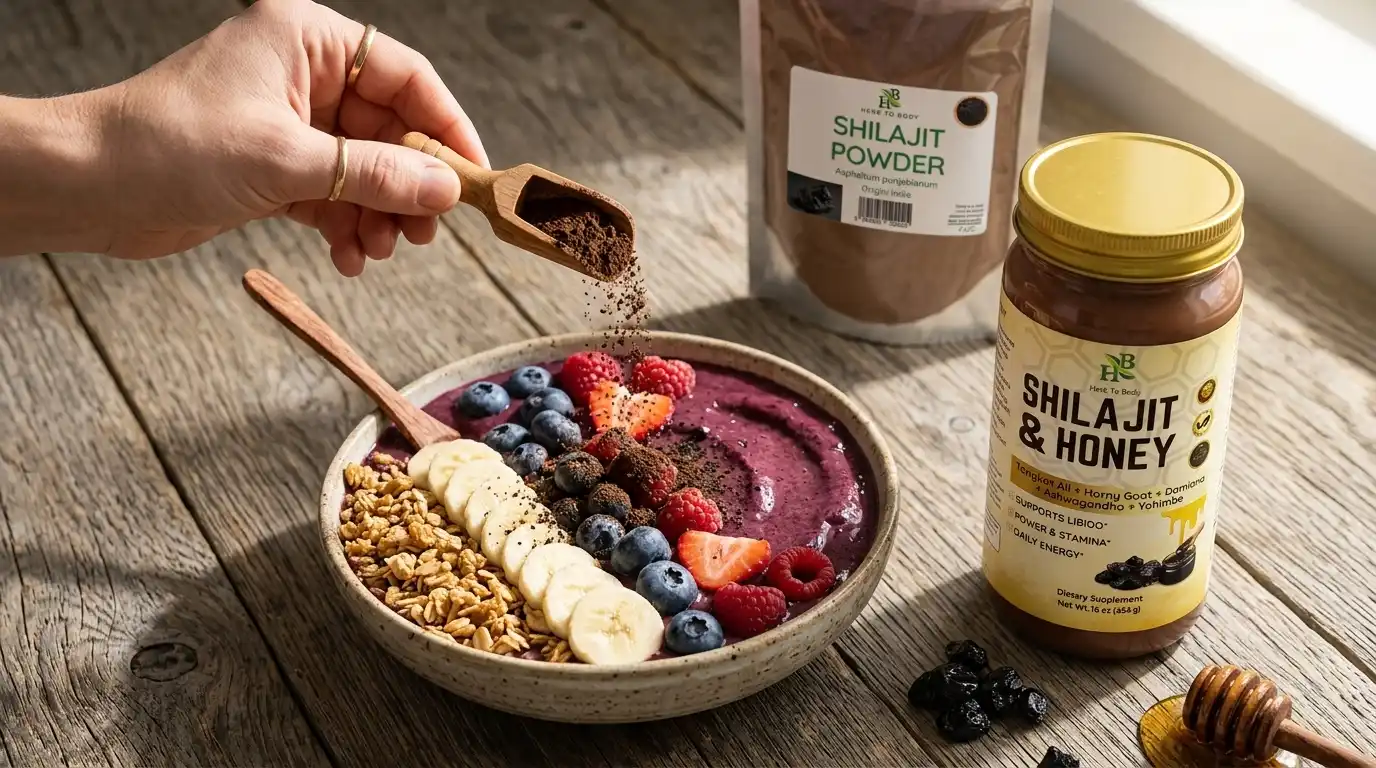
Shilajit powder is dehydrated and milled resin. It mixes into water, smoothies, or capsules easily. Some fulvic acid degrades during the drying process, so potency is slightly lower than resin. Look for powders with third-party fulvic acid verification.
Extract (Most Concentrated Form)
Shilajit extract isolates specific compounds, typically fulvic acid. It is sold in liquid drops or sachets. Extraction removes some naturally occurring co-factors that may play a synergistic role.
Shilajit Bitter (Herbal Tonic Form)
Shilajit bitter blends shilajit with complementary herbs and botanicals in a liquid tonic. It is ready to drink and offers a broader herbal profile. Best for people who prefer traditional herbal tonics over raw resin.
Shilajit Honey (Most Approachable Form)
Raw honey infused with shilajit. Honey’s ntural sugars and enzymes may enhance absorption of some compounds. Best for people sensitive to shilajit’s bitter taste. Easy to add to tea, toast, or take by the spoonful.
Full comparison: Shilajit Resin vs. Powder vs. Bitters vs. Honey vs. Capsule: Pros, Cons & Best Time to Take
How to Use Shilajit?
Dosage
Start at the lower end of the range. Your body adjusts over the first 1–2 weeks.
| Form | Starting Dose | Maintenance Dose |
| Resin | 100–200 mg (rice grain) | 300–500 mg (pea size) |
| Powder | 200–300 mg | 400–500 mg |
| Extract | Follow label | Follow label |
| Bitter | 1 tsp (5 mL) | 1–2 tbsp (15–30 mL) |
| Honey | ½ tsp | 1 tsp |
Minimum recommended age: 18 years. There is no clinical data on shilajit for minors. Do not give it to children. Always check the label before starting your supplementation.
How to Take Shilajit Resin?
- Scoop a pea-sized amount (about 300–500 mg) with a clean spoon.
- Drop it into warm (not boiling) water, milk, or herbal tea.
- Stir until fully dissolved – about 30 seconds.
- Drink immediately.
To mask the bitter taste: Mix with warm milk. Add honey. Blend into a smoothie with banana or mango. The earthy, mineral taste is natural and signals purity. Capsules or honey form may suit those who find the taste difficult.
How to Make Shilajit at Home (Preparation Methods)
You do not make shilajit at home, it forms naturally over centuries. What you can do is prepare it properly for consumption:
- With warm water: Most bioavailable. Take on an empty stomach.
- With warm milk: Traditional Ayurvedic method. Milk fat may enhance absorption.
- With herbal tea: Pairs well with ashwagandha or tulsi tea.
- With honey: Add to raw honey and stir. Take by spoon or dissolve in warm water.
Best Time to Take Shilajit
The best time depends on your goal.
| Goal | Timing |
| Energy and physical performance* | Morning, on an empty stomach |
| Workout recovery | 30–60 minutes before exercise, or immediately after |
| Consistent mineral delivery | Same time daily (consistency matters more than timing) |
| Sleep and stress support | Evening, 2 hours before bed (smaller dose) |
Read more: Pros, Cons, Best Time to Take Shilajit by Form
Side Effects and Safety
Purified shilajit is generally well-tolerated by healthy adults at recommended doses. Raw, unpurified shilajit is not safe, it may contain heavy metals, free radicals, fungal spores, and other contaminants. Only buy lab-tested, purified products.
Common side effects (mild and uncommon):
- Digestive discomfort when first starting.
- Headache or dizziness (usually eases within a week).
- Nausea on an empty stomach (try taking it with food).
- Loose stool (try lowering your dose).
Who should not use shilajit:
| Condition | Reason |
| Hemochromatosis (iron overload) | Shilajit may increase iron absorption and worsen iron buildup* |
| Thalassemia or sickle cell anemia | Iron-related blood disorders – avoid |
| High blood pressure | Shilajit may lower blood pressure and interact with blood pressure medication |
| Autoimmune conditions | Shilajit may stimulate immune activity – ask your doctor first |
| Pregnancy | Not enough safety data – do not use |
| Breastfeeding | Not enough safety data – do not use |
| Active gout | High purine content may raise uric acid levels |
Drug interactions:
There are no large-scale human studies on shilajit drug interactions. Use caution and talk with your doctor if you take blood pressure medication, iron supplements (risk of too much iron), or any prescription medication.
Always consult your healthcare provider before adding shilajit to your routine if you take prescription medications or have a diagnosed health condition.
How to Buy Shilajit?
What to Look For?
Source: Look for Himalayan origin above 16,000 feet. Avoid products that don’t state the source altitude or region.
Processing: Minimal is better. Authentic shilajit is purified through filtration, gentle heat, and dehydration only – no solvents, no chemical extraction.
Lab testing: Every batch should have a COA. The COA should show heavy metals below FDA action levels (lead < 10 µg/day per California Prop 65 guidelines), no harmful microbes, and fulvic acid content for resin products.
Price: Quality shilajit costs $20–$80 for a standard size (15–30g resin). Prices far below this range typically reflect adulteration or poor sourcing.
Label claims: Always check the label before you buy. Shilajit is a supplement it supports wellness when used consistently.*
Why Herb To Body
- Himalayan-sourced above 16,000 feet.
- Lab-tested for heavy metals, microbial safety, and fulvic acid content.
- Available in all five forms: resin, powder, extract, bitter, honey.
- Made in the USA.
- Wholesale available for bulk buyers.
Shop All Shilajit Products at Herb To Body
Conclusion
Shilajit is a mineral may support daily energy and wellness. For safe results, always choose purified, lab-tested forms over raw products. This dietary supplement is not intended to diagnose, treat, cure, or prevent any disease.
Sources – Reference
- Carrasco-Gallardo, C., Guzmán, L., & Maccioni, R. B. (2012). Shilajit: A Natural Phytocomplex with Potential Procognitive Activity. International Journal of Alzheimer’s Disease. doi:10.1155/2012/674142
- Pandit, S., Biswas, S., Jana, U., et al. (2016). Clinical evaluation of purified Shilajit on testosterone levels in healthy volunteers. Andrologia, 48(5), 570–575.
- Agarwal, S. P., Khanna, R., Karmarkar, R., et al. (2007). Shilajit: A review. Phytotherapy Research, 21(5), 401–405.
- Ghosal, S. (1990). Chemistry of Shilajit, an immunomodulatory Ayurvedic rasayan. Pure and Applied Chemistry, 62(7), 1285–1288.
- Biswas, T. K., et al. (2010). Clinical evaluation of processed Shilajit in healthy volunteers. Andrologia, 42(1), 48–56.
- Joukar, S., et al. (2014). Effect of mumie (shilajit) on blood coagulation activity. Cardiovascular Toxicology, 14(1), 36–41.
- Ayurvedic Pharmacopoeia of India. Government of India, Ministry of Ayush.
Frequently Asked Questions (FAQ)
Shilajit may help support energy, mineral intake, antioxidant activity, and overall wellness. Research also points to its adaptogen properties and its role in male hormone health and iron absorption.*
At recommended doses (300–500 mg of resin per day). Purified shilajit is considered safe for daily use by healthy adults. A common Ayurvedic habit is to use it for 8–12 weeks, then take a 2-week break.*
Resin is the purest and least processed. Powder is the most convenient. Honey-blended is easiest on the taste buds. There is no single best form when it comes down to your lifestyle. Compare all forms here.
Shilajit is not a weight loss product. It may help indirectly by supporting energy, activity, and nutrient absorption. Do not expect direct fat loss.*
Shilajit is sold online and in some health food stores. Buying online from a verified, lab-tested source is the most reliable option, since local stores rarely carry tested resin. Shop shilajit online at Herb To Body.
The fulvic acid in shilajit acts like a mineral courier, carrying ionic minerals into your cells. This may support energy, electrolyte balance, and antioxidant defense. Its minerals also help fill gaps common in modern diets.*
Many people notice an energy lift within 1–2 weeks. Bigger changes in stamina, focus, or recovery often show up after 4–8 weeks of steady daily use.
The two work well together. Both are adaptogens – shilajit adds mineral support, while ashwagandha targets stress and cortisol. They are often paired in Ayurvedic formulas.
Keep it at room temperature, away from moisture, heat, and sunlight. Do not refrigerate resin – cold makes it brittle and hard to measure. Seal the container tightly after each use.
Shilajit tastes bitter, earthy, and mineral-rich. That strong taste is a good sign – it points to high fulvic acid content. Sweet-tasting shilajit is usually diluted or impure.
Disclaimer: *These statements have not been evaluated by the Food and Drug Administration. This product is not intended to diagnose, treat, cure or prevent any disease.

Columbus Day 2026: History, Plants of the Columbian Exchange
Many foods and herbs we use today including chili peppers, cacao, vanilla, tomatoes, and potatoes,...
Oct

Vitamin C Powder: Forms, Dosage, Safety, and How to Choose
Vitamin C powder is a dissolvable supplement that is usually made with ascorbic acid or...
Oct

Goldenseal Root: Uses, Dosage, Safety & How to Buy It
What Is Goldenseal Root? Goldenseal root is a bitter yellow herb with a long history...
Oct
Andrographis Paniculata: Benefits, Herb Profile, Uses, Dosage & Safety
Andrographis paniculata is a bitter medicinal herb from the Acanthaceae family, often called “King of...
Sep

Patriot Day: History, Facts, and 9/11 Remembrance
Patriot Day is a day of remembrance. It is held every year on September 11th...
Sep

Olive Leaf: Benefits, Active Compounds, and How to Use It
We all use or have heard about olive oil. But did you know that the...
Sep

Labor Day Sale: Fresh Fall Botanicals
Update: The Herb To Body Labor Day 2026 sale ended on Monday, September 7, 2026,...
Sep
Astragalus Root: Benefits, Uses, Dosage & Safety
Astragalus root, also known as huang qi, comes from a plant in the pea family...
Aug
What Is Echinacea: Benefits, Active Compounds, Types, Uses and Who Should Avoid It?
When the cold season arrives, many people add a traditional botanical such as Echinacea to...
Aug
Elderberry (Sambucus nigra): What It’s Used For, Potential Benefits & Safety
Every autumn, the same scene plays out – someone at home starts sniffling. Through the...
Aug
Immune Supporting Herbs: Forms, Uses & Safety Guide
What is an Immune Support Herb? An immune-support herb is a plant traditionally used for...
Aug

Back to School Wellness: A Routine for the Whole School Year
The first bell of the school year changes a household’s routine overnight. Bedtimes shift earlier,...
Aug
Herbs for Women: Traditional Uses, Research Notes and Safety
Many women wellness seekers search for simple herbs to add to a daily routine. Some...
1 Comment
Aug
Oat Straw Tea: Benefits, Uses & How to Brew and Use Perfectly?
What Is Oat Straw Tea? Oat straw tea is a mild herbal tea made from...
Jul
Shikakai Powder: Benefits, Active Compounds, Uses and Safety
Long before bottled shampoo existed, people in South Asia reached for a dried legume pod...
Jul

Mugwort Tea: Benefits, Brewing, Flavor & the Safety Concern No One’s Telling You
Mugwort tea (Artemisia vulgaris), also known as the “Mother of Herbs,” holds a storied place...
Jul

Wormwood Herb: Benefits, Side Effects, Uses, Compounds & More
Wormwood (Artemisia absinthium) is one of the most famous and intensely bitter herbs in traditional...
Jul

Wheatgrass Juice Powder: Benefits, Nutrients, Uses, Taste Comparison & Buying Guide
In a perfect world, we’d all eat fresh greens every single day. But reality hits...
Jul
Yerba Mate: What Is It, Benefits, Caffeine Amount, and How to Make It
Yerba mate is a traditional caffeinated beverage from South America made from the dried leaves...
Jul

Alligator Pepper: Flavor, Uses, Botanical Profile, Substitute and Buying Tips
If you heard the name “alligator pepper,” what comes to mind? Is it the same...
Jul

Green Black Walnut Hull & Extract (Juglans nigra): Benefits, Uses & How It Differs
When you’re looking for black walnut hull, you quickly notice two very different products. One...
Jul

Fourth of July 2026: History, Traditions, and a Safe, Fun Day
The Fourth of July is easy to picture. The grill is going. Music is playing....
Jun

When Is Juneteenth 2026? Meaning, History, Colors & Herbal Deals
Many people know Juneteenth is a holiday, but they don’t know what to do. They...
Jun
Tongkat Ali Honey: Benefits, Taste, Uses & How to Take
Tongkat ali honey is honey mixed with tongkat ali root (Eurycoma longifolia, also called longjack)....
Jun

Best Father’s Day Gifts 2026 for a Health-Minded Dad
Most dads rarely ask for anything for themselves. They say “I’m fine” while rubbing a...
Jun
Black Seed (Nigella sativa): Compounds, Uses & Safety
Black seed is a versatile herb available year-round. It can be used in cooking, added...
Jun
Shilajit: What It Is, How It Works, and How to Choose the Right Form?
Shilajit is a natural mineral resin. It forms in high-altitude mountain ranges, mainly the Himalayas,...
Jun

Prekese (Aidan Fruit): Benefits, Active Compounds, Uses & Safety Guide
Prekese (Tetrapleura tetraptera) is a flowering tree in the Fabaceae (legume) family. It grows in...
May