


prekese
Prekese (Aidan Fruit): Benefits, Active Compounds, Uses & Safety Guide
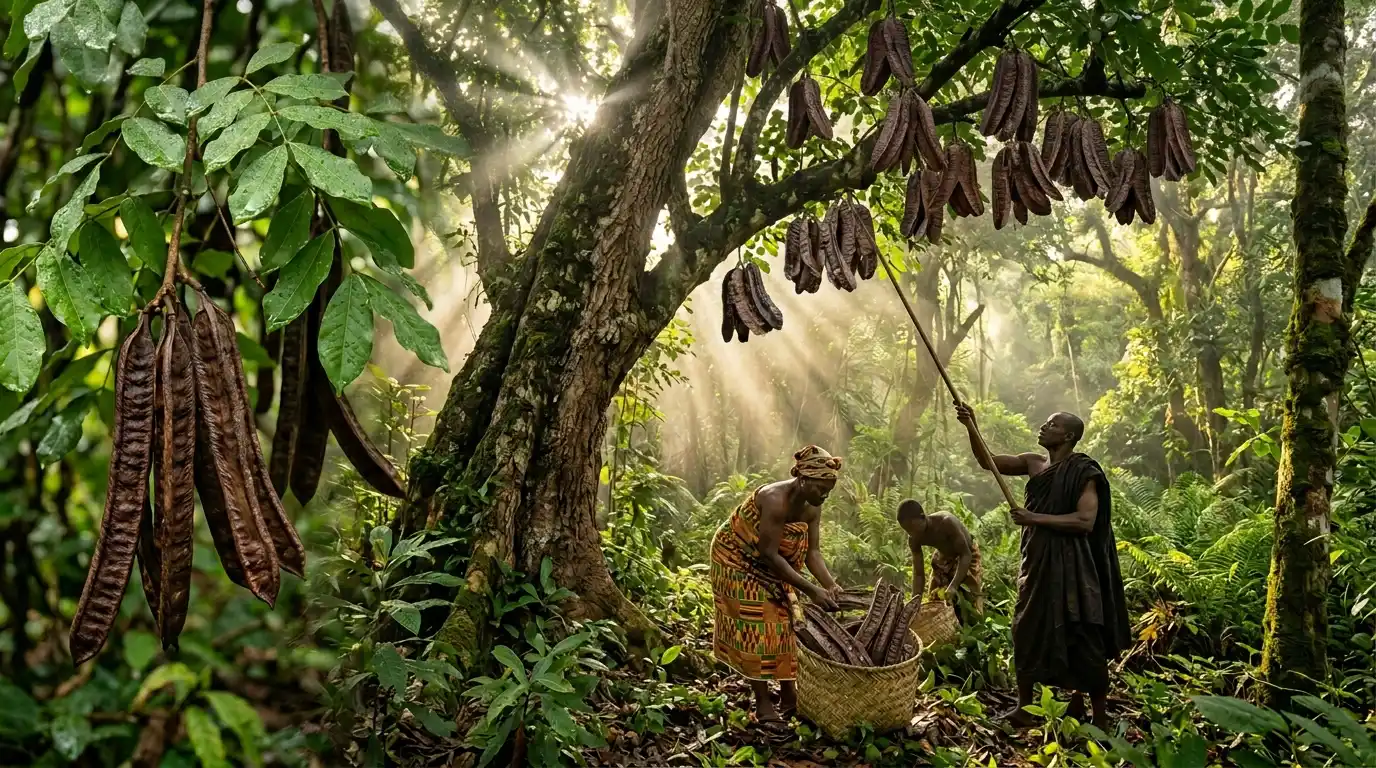
Prekese (Tetrapleura tetraptera) is a flowering tree in the Fabaceae (legume) family. It grows in the humid lowland forests of West and Central Africa. Its dried seed pods are dark brown, four-winged, and strongly aromatic. This fruits are the part used both in cooking and in traditional medicine. They have been used across Ghana, Nigeria, Cameroon, and Uganda for centuries.
The pod is commonly known as prekese in Twi (Ghana), aidan or aridan in Yoruba (Nigeria), oshosho in Igbo (Nigeria), and essang in parts of Cameroon. In English it is also called Aidan fruit.
The pods have a strong, complex smell – earthy, sweet, and faintly resinous. This is why they appear in West African soups and stews as a spice, and in traditional medicine as a prepared decoction.
Today, prekese is used as a dried whole pod, ground powder, brewed tea, and cold-infused water. It is also sold commercially in some West African and diaspora markets.
What Is Prekese: Botanical Identity and Origins
| Attribute | Detail |
| Botanical name | Tetrapleura tetraptera (Schum. & Thonn.) Taub. |
| Plant family | Fabaceae (Leguminosae) |
| Part used | Dried seed pod (fruit) |
| Common names | Prekese (Twi/Ghana), Aidan fruit / Aridan (Yoruba/Nigeria), Oshosho (Igbo), Essang (Cameroon) |
| Native region | West and Central Africa – especially Ghana, Nigeria, Cameroon, Sierra Leone, and Côte d’Ivoire |
| Growth form | Deciduous tree, reaching about 20–25 metres |
| Harvest season | Pods are harvested at maturity and sun-dried for storage and trade |
Aromatic compounds are found across the pulp, seed, and wing structures. The pulp holds the highest concentration of phytochemicals.
What Does Prekese Look Like?
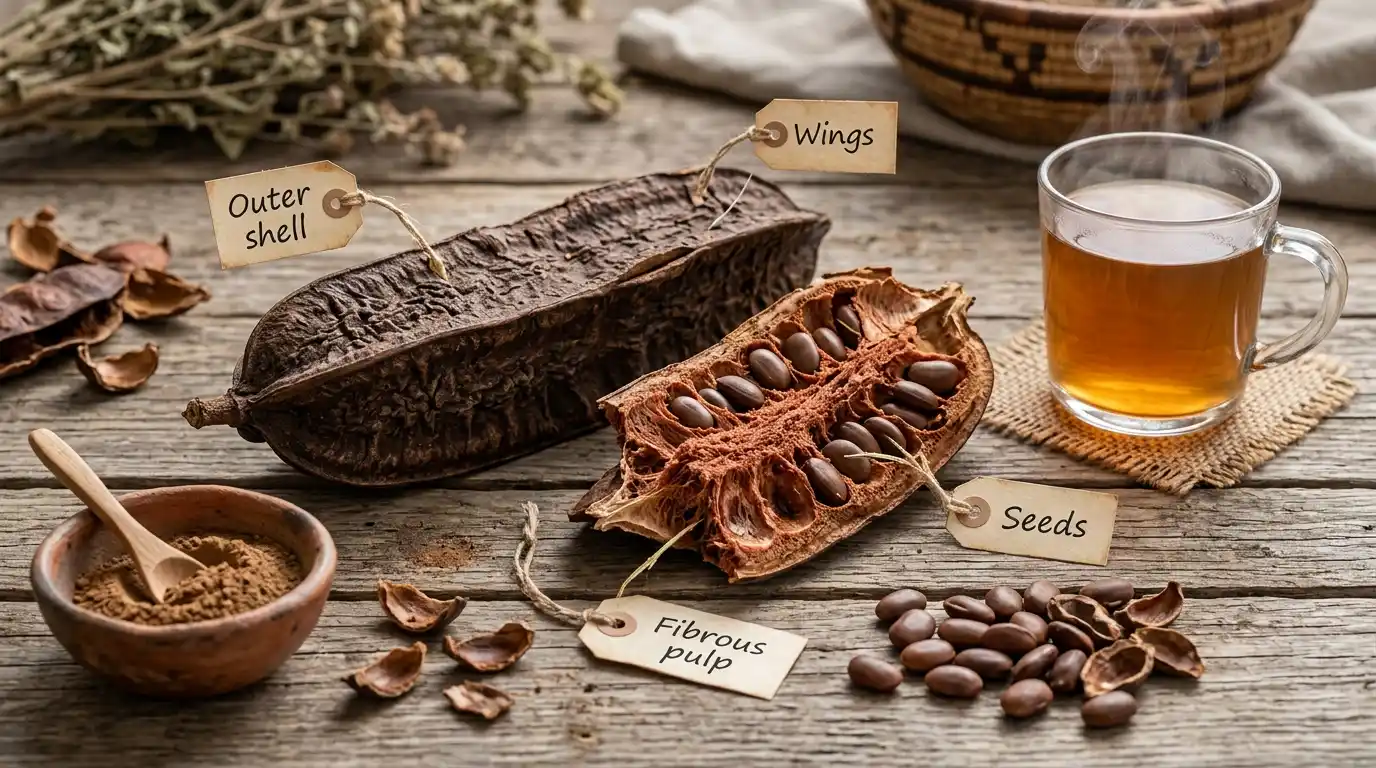
A dried prekese pod is hard to mistake. It is elongated, typically 15 to 25 cm long, dark brown to near-black, with four raised wings along its length.
Inside, small hard seeds are set in a dry, fibrous pulp. When broken open, the pulp releases an earthy-sweet smell immediately. Seeds are smooth, oval, and mid-brown.
- Whole pods feel dense and woody. A pod that bends or feels soft has absorbed moisture and may have mould.
- Powder is medium-brown with a strong smell. Pale powder or powder with no smell is a quality concern.
- Cold infusion (prekese water) is light amber. Hot-brewed decoction is deeper amber-brown with a more concentrated aroma.
- Commercial syrup is dark and viscous. Check the label for the botanical name (Tetrapleura tetraptera) and any added ingredients.
What Does Prekese Taste Like?
Taste descriptions online are often inconsistent, largely because flavour changes significantly with brewing strength.
- Raw pod (dry): Earthy, woody, and faintly sweet. The smell is stronger than the direct taste at this stage.
- Standard brew (1 pod per litre, 15 min): Often described as earthy, mildly sweet, woody, and slightly resinous – with a mild astringent finish from the tannin content. The sweetness comes from natural pod compounds, not added sugars.
- Concentrated decoction (2+ pods, 25+ min): More astringency and a bitter edge from the alkaloid content. This is the strength used in most traditional preparations. Some people prefer it diluted.
- With ginger: Ginger is commonly combined with prekese in traditional preparations. It rounds out the bitterness and adds warmth.
- With cloves: Deeper and more medicinal in taste. Cloves increase perceived astringency, keep the brew time short with this combination.
- With lemon or lime: Citrus reduces the earthiness and lightens the flavour. Many people find this easier to drink daily.
Brew time affects taste more than it does with most herbal teas. A 10-minute brew is mild. A 25-minute brew is traditional strength. Start short and adjust.
Nutritional Profile of Prekese
Prekese is used mainly as a spice and in traditional preparations rather than as a primary food.
Proximate Composition of Dried Pod
| Component | Approximate value |
| Moisture | 8.4–10.2% |
| Crude protein | 6.2–8.1% |
| Crude fat | 3.8–5.4% |
| Crude fibre | 18.6–22.3% |
| Ash (mineral content) | 5.1–7.2% |
| Carbohydrates | 55–62% |
Mineral Content of Dried Pod
| Mineral | Approximate value | Role in the body |
| Potassium | 820–940 mg | Fluid balance, muscle and nerve function |
| Calcium | 310–380 mg | Bone structure, muscle contraction |
| Iron | 18–24 mg | Haemoglobin production, oxygen transport |
| Magnesium | 95–115 mg | Muscle and nerve function, energy production |
| Zinc | 3.2–4.8 mg | Immune function, protein synthesis |
| Phosphorus | 180–220 mg | Energy metabolism, bone mineralisation |
| Sodium | 35–55 mg | Maintains fluid balance; low relative to many plant foods |
Source: Asogwa et al. (2022), Imaga et al. (2010), USDA Dr. Duke’s Phytochemical Database. Values are for the dried pod. Brewed tea extracts a fraction of these minerals depending on water volume and brew time.
The iron content is high relative to most plant foods. This is relevant to the pod’s traditional use in postpartum recovery, where replenishing iron after delivery blood loss is a documented priority.*
Active Compounds in Prekese
Tetrapleura tetraptera contains several documented phytochemical classes, especially saponins, flavonoids, tannins, phenolic compounds, and, in some analyses, alkaloids and volatile constituents. Peer-reviewed reviews report that these compounds are associated mainly with antioxidant, antimicrobial, and anti-inflammatory activity in laboratory or preclinical studies, but these findings should not be presented as confirmed clinical effects in humans. The pod’s aroma also supports its use as a culinary spice, while its mineral content is covered separately in nutritional analyses.
Source: Tetrapleura tetraptera Phytochemistry of Extracts of Plant Parts
Traditional Uses of Prekese: What the Research Shows
This section describes documented traditional uses alongside the current state of research. Where only preclinical (laboratory or animal) evidence exists, that is stated directly. None of the statements below are intended to diagnose, treat, cure, or prevent any disease.
Traditional Use for Everyday Comfort*
Across West Africa, prekese pod decoctions are traditionally used topically or orally for general comfort and wellness support, including use during periods of body aches or irritation. This is one of the more consistently documented traditional applications in ethnobotanical surveys. Laboratory studies have found that aqueous and ethanolic extracts of the pod may influence inflammatory pathways in animal models, but human clinical trials are not yet available.*
Evidence level: Traditional use plus preclinical support. Human clinical data is limited. (source: sciencedirect and journaljpri)
Traditional Use for Heart Wellness*
Ethnobotanical surveys in Ghana and Nigeria list T. tetraptera among the plants traditionally used in routines for blood pressure support. Research reviews also note that the pod contains compounds such as flavonoids, including quercetin, which have been studied for effects on vascular pathways in laboratory and broader nutritional research.
A traditional practice described in some surveys is a morning infusion made from one pod in water; this is a traditional preparation, not a clinical recommendation
Evidence level: Extensive ethnobotanical documentation with mechanistic research support. Human clinical trials on the whole pod are limited.
Traditional Use for Metabolic Wellness*
Tannins and phenolic compounds in T. tetraptera have been studied in laboratory settings for their effects on carbohydrate-digesting enzymes such as alpha-glucosidase. In West African traditional practice, prekese is also used as part of dietary routines for general wellness and metabolic support, often as a tea or infused water before meals. These statements reflect traditional use and preclinical research only. (Source: Nutritive value, biological properties, health benefits and applications of Tetrapleura tetraptera – PMC NCBI NLM).
Note: This product is not intended to diagnose, treat, cure, or prevent any disease.
Traditional Role in Postpartum Recovery*
Postpartum use is one of the most documented traditional applications of prekese across West Africa. In Ghana, Nigeria, and Cameroon, it is commonly used in soups and broths prepared for new mothers after delivery. Traditional explanations for this use include the pod’s nutritional profile and its role in local wellness practices, but no human clinical trials have specifically evaluated postpartum outcomes.* No human clinical trial data specific to postpartum outcomes have been published.
Traditional Use in Weight Management*
Prekese tea is sometimes used in West African traditional routines as a low-calorie beverage choice within weight-management practices. Preclinical research on saponin-containing plants suggests possible relevance to fat metabolism, but human data specific to T. tetraptera and weight outcomes are not available. A common traditional preparation is one pod brewed in 500 ml of water and consumed before breakfast.*
Evidence level: Preclinical support only. No human clinical data specific to T. tetraptera and weight outcomes published in PMC central.
Laboratory Research*
Laboratory studies on T. tetraptera pod extracts have shown inhibitory activity against bacteria such as Staphylococcus aureus and Escherichia coli, and activity against common laboratory yeast strains has also been reported in vitro. Traditional uses include external and internal wellness preparations, but these laboratory findings have not yet been confirmed in human trials.*
Evidence level: In vitro studies only. Human clinical data is not yet published.
Traditional Use in Digestive Complaints*
In West African traditional medicine, prekese is used for general digestive comfort, including bloating and cramping. The pod’s aromatic compounds are consistent with traditional carminative use, and its tannin content aligns with traditional use for digestive upset. These uses are based on ethnobotanical and traditional knowledge rather than clinical trials.*
Traditional Use in Reproductive Health*
Traditional West African medicine includes prekese in preparations used for both male and female reproductive wellness. For women, it is also associated with postpartum traditions; for men, it is linked in folk practice with vitality and general reproductive support. These are documented traditional uses, and no clinical trials have evaluated prekese for reproductive health outcomes.*
Traditional Use in Kidney and Urinary Support*
Some traditional preparations in West Africa include prekese in urinary wellness formulations. Human clinical evidence for this use remains limited. Because kidney function affects mineral handling, people with existing kidney disease should consult a healthcare provider before use.*
How to Use Prekese?
Available Forms

| Form | Preparation | Best for |
| Whole pod | Boiled decoction or cold soak overnight | Traditional tea, soups, most aromatic use |
| Prekese Powder | Mixed into warm water or food | Convenient daily use, more consistent serving size |
| Cold infusion (prekese water) | Pod soaked in cold water for several hours | Milder-tasting drink, lower astringency |
| Hot decoction | Boiled for 15–20 minutes | Stronger extraction, traditional preparation |
| Syrup (commercial) | Ready to use | Check for botanical name, added sugar, and preservatives |
Traditional preparation methods commonly include boiling the pod, soaking it in water, or using it in food and beverages. Publicly available preparation guides and review literature both describe boiling, infusion, and beverage applications as common uses
General Use
These guidelines are based on traditional practice and published literature, not medical dosing instructions. A typical starting amount is 1 small to medium pod in 500 ml to 1 litre of water, once daily. Research reviews show that the fruit is commonly used in food and beverage applications, but they do not establish a universal clinical dose.
Traditional Amounts
| Goal | Form | Amount | Frequency | Notes |
| General daily use | Tea or cold infusion | 1 small pod in 500 ml to 1 litre | Once daily | Good starting amount |
| Traditional morning infusion | Cold-infused water | 1 medium pod in 1 litre, overnight | Once daily | Traditional practice, not a clinical recommendation |
| Traditional tea | Hot decoction | 1 medium pod in 500 ml | Once daily | Often used as a household beverage |
| Powder use | Mixed into warm water | About 3–4 g to start | Once daily | Begin with a smaller amount to assess tolerance |
| Strong decoction | Long boil | 2 pods in 500 ml | Not for continuous daily use | More concentrated and more astringent |
This table is a practical summary, but it should not be treated as medical guidance. The literature supports traditional use and preclinical activity, while human dosing studies are still limited.
How to Make Prekese Tea: Step-by-Step
- Rinse 1 to 2 pods under clean water.
- Break or chop the pod to help release flavor and soluble compounds.
- Add to 500 to 750 ml of water.
- Bring to a boil, then simmer for 15 to 20 minutes.
- Strain and serve warm or cooled.
This preparation aligns with commonly described traditional methods, including boiled tea and infused drinks. Community recipes and product-style preparation guides also describe chopping the pod before brewing because whole pods extract more slowly.
Explore more: Aidan Fruit Tea Benefits, Uses and Brewing
Can You Drink Prekese Tea on an Empty Stomach?
Prekese tea is sometimes taken before meals in traditional practice, but it may not suit everyone on an empty stomach. Because the pod contains tannins and other astringent compounds, stronger preparations can cause stomach discomfort in sensitive users. A cautious approach is to start with a weaker brew after food and only move to pre-meal use if it feels comfortable.
Combination Recipes
| Combination | Traditional purpose | Brewing notes |
| Prekese + ginger | Digestive comfort, warming flavour | Ginger is commonly paired with prekese in traditional drinks; it balances the earthy taste. |
| Prekese + cloves | Aromatic, traditional wellness blend | Use modest amounts because both ingredients can make the drink more intense and astringent. |
| Prekese + garlic | Strong savory preparation | Best used sparingly in food-based preparations rather than as a daily drink. |
| Prekese + cinnamon | Sweet-spice flavour profile | Cinnamon can soften bitterness and is often used in beverage blends. |
| Prekese + lemon | Flavour balance, brightening the drink | Lemon adds acidity and makes the infusion taste lighter. |
| Prekese + hibiscus | Traditional beverage base | Produces a deep red drink and is commonly used in West African-style herbal beverages. |
Ginger, cloves, cinnamon, lemon, and hibiscus are all commonly used in traditional beverage making, and prekese is frequently combined with other aromatic ingredients in culinary contexts.
Prekese in West African Cooking
Prekese is also used as a culinary spice in West African cooking and beverages. It is commonly combined with ginger, cloves, cinnamon, lemon, and hibiscus to create aromatic teas and soups with a rich, earthy flavour. In cooking, it is usually used in small amounts as a flavoring ingredient rather than as a concentrated herbal preparation.
Dishes That Use Prekese
- Pepper soup: Prekese is used in Nigerian pepper soup blends and is often combined with other aromatic spices. Review sources describe it as a spice used in food preparations rather than a medicine.
- Palm nut soup and banga-style soups: Prekese is simmered with soup bases to add depth and aroma. This use is consistent with its role as a flavoring spice.
- Sobolo or hibiscus drink: Prekese is sometimes added to hibiscus-based beverages with ginger and other spices. Recipe sources and community food guides commonly show this combination.
- Light soups and stews: Prekese is used as a background aromatic, similar to bay leaf in other cuisines. That framing is more accurate than describing it as a treatment ingredient.
Culinary vs. Prepared Doses
In cooking, prekese is typically used in small amounts, often half a pod to one pod for a large pot. That is different from a concentrated decoction, where the same botanical is steeped more heavily in a smaller volume of water. Culinary use is better described as a spice application, while stronger liquid preparations are better described as traditional beverages.
Spiritual and Cultural Uses of Prekese
However, Prekese holds cultural significance in some West African communities beyond its use as a food ingredient or traditional wellness botanical. The descriptions below are framed as recorded cultural practices, not medical claims.
Bathing and cleansing rituals
In some Akan and Yoruba traditions, prekese has been used in ritual bathing and cleansing practices.
Burning and fumigation
Dried prekese pods are sometimes burned in traditional settings. Where the smoke is used in household or ceremonial practices like blessing, prayer, or symbolic protection.
Postpartum ceremonies
In some parts of Ghana and Nigeria, prekese appears in postpartum customs as part of welcoming and care traditions.
Herbalist formulations
Traditional healers may include prekese in compound formulations alongside other plants. Published literature often documents these preparations only in general terms.
What to Know About Prekese?
Prekese has a long history of food and medicinal use across West Africa and is generally well-tolerated at traditional preparation amounts.
| Section | Corrected version |
| Safety overview | Prekese is generally well tolerated when used in typical culinary amounts, but safety data for concentrated or medicinal-style use are limited. |
| Reported side effects | Possible digestive discomfort, including nausea, stomach upset, or irritation, especially with strong decoctions or on an empty stomach. * |
| Allergy caution | People with known plant allergies should use caution with any new botanical product, especially concentrated preparations.* |
| Pregnancy | Do not use if pregnant or nursing. |
| Blood pressure | Use caution if you have low blood pressure or take blood pressure medication, since traditional use includes blood-pressure support but human dose-response data are not established.* |
| Blood sugar | Use caution if you take diabetes medication, because preclinical studies suggest glucose-related effects but clinical interaction data are limited.* |
| Kidney disease | Consult a healthcare provider before use if you have kidney disease, because safety data are limited and mineral handling depends on kidney function.* |
Note: This content is for educational purposes only and does not constitute medical advice. Always consult a qualified healthcare provider before starting any herbal supplement.
Where to Buy Prekese?
Online
Prekese is available online through African and Caribbean food retailers, specialist herbal suppliers, and dedicated herbal product sites including Herb To Body.
When buying online, check for: the botanical name (Tetrapleura tetraptera) on the label, country of origin (Ghana or Nigeria are primary commercial sources), and whether the seller can provide confirming identity and absence of heavy metals.
African and Caribbean Grocery Stores
Prekese is available in African grocery stores in cities with significant West African diaspora communities – London, New York, Houston, Minneapolis, Atlanta, Toronto. Ask for “prekese,” “aidan fruit,” or “aridan.”
What to Look for When Buying
Whole pods:
- Dark brown to near-black, pale or faded pods indicate age or poor drying.
- Hard and woody pods that bend have absorbed moisture.
- Strong aromatic smell when broken, no smell means volatile compounds have been lost.
- No visible moisture, mould, or white patches.
Powder:
- Medium-brown colour, very dark may indicate over-roasting; pale suggests dilution.
- Strong characteristic smell – odourless powder is old or not genuine.
- Single ingredient on the label – no fillers, no unexplained additives.
- COA available on request, confirming botanical identity.
Storage: sealed container, away from heat and light. Whole pods stay potent for 12–24 months if properly dried. Ground powder retains quality for 6–12 months.
Prekese vs Similar West African Botanicals
| Herb | Botanical name | Primary traditional use | Flavour | Key difference |
| Prekese | Tetrapleura tetraptera | Used as a spice and in traditional preparations; commonly associated with digestive support and postpartum use in West African traditions. | Sweet, earthy, aromatic, slightly resinous | Aromatic four-ridged pod; used whole as a spice and for herbal preparations. |
| Hwentia / Uda | Xylopia aethiopica | Used in traditional seasoning, pepper soup, digestive preparations, and postpartum care. | Smoky, peppery, bitter | Seed/fruit spice with a stronger peppery bite; more pungent than prekese. |
| Uziza | Piper guineense | Used as a culinary spice and in some traditional reproductive and digestive preparations. | Spicy, peppery, pungent | Leaf and seed spice; not a pod, and botanically closer to pepper relatives. |
| Moringa | Moringa oleifera | Used mainly for nutritional support and as a leafy vegetable. | Mild, green, slightly bitter | Leaf-based plant used more for nutrition than for spice aroma. |
| Hibiscus / Zobo | Hibiscus sabdariffa | Used for drinks, traditional cardiovascular support, and food preparations. | Tart, floral, refreshing | Flower-based ingredient, commonly used in beverages rather than as a pod spice. |
How to Choose Quality Prekese
Not all prekese products on the market are the same. Key points to check:
- Whole pods: Fully dried, dark brown to near-black, intact wings, strong earthy-sweet smell on breaking. Avoid pale, odourless, or soft pods.
- Powder: Medium-brown, strongly aromatic, single ingredient. Ask for a COA confirming T. tetraptera identity and absence of heavy metals and microbial contamination.
- Source region: Ghana and Nigeria are the main commercial sources. Products from West African supply chains are more likely to carry documented phytochemical profiles.
Every batch of Herb To Body prekese is tested for identity, contaminant screening, and quality.
Bottom Line
Prekese (Tetrapleura tetraptera) is a traditional West African spice with a long history of culinary and herbal use, and preliminary research suggests it contains bioactive compounds and nutrients that may support general wellness. However, current evidence is mainly preclinical or ethnobotanical, and it should not be used as a substitute for medical treatment or professional healthcare advice.
Sources
- Ojinnaka et al. (2024) – Nutritive value, biological properties, health benefits and applications of Tetrapleura tetraptera – supports nutritional profile, phytochemicals, and general traditional‑use background.
- Ajiboye et al. (2004) – Anti‑inflammatory and hypoglycaemic effects of Tetrapleura tetraptera fruit aqueous extract – preclinical data on inflammation and blood‑sugar‑related effects.
- Dossa et al. (2016) – Tetrapleura tetraptera: Ethnopharmacology, Chemistry and Biological Activities – ethnobotanical uses and biological‑activity overview.
- Igbinosa et al. (2016) – Phytochemical Screening, In‑vitro Antimicrobial Activity and Antioxidant Characteristics of Tetrapleura tetraptera Extracts – in vitro antimicrobial and antioxidant data.
- Abdulrahman et al. (2023) – Phytochemical composition, bioactive properties, and toxicological profile of Tetrapleura tetraptera – updated phytochemical and toxicological profile.
- WHO Africa – Traditional Medicine Documentation Series – general context on traditional‑medicine practice.
- Plant‑database profile for Tetrapleura tetraptera (e.g., Duke‑style plant listings) – phytochemical and ethnobotanical overview.
- Adesina et al. (2016) – Phytochemical composition, nutritional values, traditional uses of Tetrapleura tetraptera – additional nutritional‑value and traditional‑use data.
Frequently Asked Questions (FAQ)
Prekese is a West African botanical traditionally used as a culinary spice and in herbal preparations. The dried pod is commonly brewed as tea, soaked in water, or added to soups, and it naturally contains plant compounds such as saponins, flavonoids, tannins, and minerals.
Traditional West African preparations for men use prekese in formulations associated with vitality and reproductive function. These are traditional uses; no human clinical trials on prekese and male reproductive health are published.*
- For general daily use: Morning with food.*
- For relaxation: 30–60 minutes before bed, based on traditional practice.*
Consistency at the same time each day is more relevant than the specific hour.
Both come from the dried pod of Tetrapleura tetraptera. Whole pods preserve aromatic compounds better and allow control of brew strength. Powder is more convenient and delivers a consistent serving size, though volatile compounds diminish faster once the pod is ground. For tea, whole pods produce a more aromatic result. For food and smoothies, powder is more practical.
Generally well-tolerated at traditional preparation amounts. Most common: mild stomach discomfort when concentrated tea is taken on an empty stomach. People with low blood pressure, those on blood sugar or blood pressure medications, pregnant individuals, and those with legume allergies should consult a healthcare provider before regular use.*
Documented traditional applications for women include: postpartum nutritional support, where the pod’s iron and mineral content is relevant to recovery after delivery blood loss; and traditional use for menstrual regularity.*
You can boil prekese (Tetrapleura tetraptera) in water and drink it, but only in moderate amounts and after proper preparation.
How it’s usually done
- Add chopped prekese pods to clean water and bring to a boil for about 10–20 minutes, then strain and let it cool.
- Drink a small cup once daily (2 weeks at a time and then take a 1 week break, since the safety data are limited), avoid large quantities or taking it on an empty stomach, as it may cause nausea in some people.*
Important cautions
- If you are pregnant, breastfeeding, have a medical condition, or are on medication, check with a doctor first, as prekese can affect blood pressure and uterine blood flow in some uses.*
May not. Some traditional protocols recommend taking it before meals. The tannin content can cause mild nausea in some people on a completely empty stomach. If you are new to prekese, start with a weaker brew after a light meal before trying a pre-meal routine.
Disclaimer: *These statements have not been evaluated by the Food and Drug Administration. This product is not intended to diagnose, treat, cure or prevent any disease.

Columbus Day 2026: History, Plants of the Columbian Exchange
Many foods and herbs we use today including chili peppers, cacao, vanilla, tomatoes, and potatoes,...
Oct

Vitamin C Powder: Forms, Dosage, Safety, and How to Choose
Vitamin C powder is a dissolvable supplement that is usually made with ascorbic acid or...
Oct

Goldenseal Root: Uses, Dosage, Safety & How to Buy It
What Is Goldenseal Root? Goldenseal root is a bitter yellow herb with a long history...
Oct
Andrographis Paniculata: Benefits, Herb Profile, Uses, Dosage & Safety
Andrographis paniculata is a bitter medicinal herb from the Acanthaceae family, often called “King of...
Sep

Patriot Day: History, Facts, and 9/11 Remembrance
Patriot Day is a day of remembrance. It is held every year on September 11th...
Sep
Olive Leaf: Benefits, Active Compounds, and How to Use It
We all use or have heard about olive oil. But did you know that the...
Sep
Labor Day Sale: Fresh Fall Botanicals
Update: The Herb To Body Labor Day 2026 sale ended on Monday, September 7, 2026,...
Sep
Astragalus Root: Benefits, Uses, Dosage & Safety
Astragalus root, also known as huang qi, comes from a plant in the pea family...
Aug
What Is Echinacea: Benefits, Active Compounds, Types, Uses and Who Should Avoid It?
When the cold season arrives, many people add a traditional botanical such as Echinacea to...
Aug

Elderberry (Sambucus nigra): What It’s Used For, Potential Benefits & Safety
Every autumn, the same scene plays out – someone at home starts sniffling. Through the...
Aug
Immune Supporting Herbs: Forms, Uses & Safety Guide
What is an Immune Support Herb? An immune-support herb is a plant traditionally used for...
Aug

Back to School Wellness: A Routine for the Whole School Year
The first bell of the school year changes a household’s routine overnight. Bedtimes shift earlier,...
Aug
Herbs for Women: Traditional Uses, Research Notes and Safety
Many women wellness seekers search for simple herbs to add to a daily routine. Some...
1 Comment
Aug

Oat Straw Tea: Benefits, Uses & How to Brew and Use Perfectly?
What Is Oat Straw Tea? Oat straw tea is a mild herbal tea made from...
Jul
Shikakai Powder: Benefits, Active Compounds, Uses and Safety
Long before bottled shampoo existed, people in South Asia reached for a dried legume pod...
Jul

Mugwort Tea: Benefits, Brewing, Flavor & the Safety Concern No One’s Telling You
Mugwort tea (Artemisia vulgaris), also known as the “Mother of Herbs,” holds a storied place...
Jul

Wormwood Herb: Benefits, Side Effects, Uses, Compounds & More
Wormwood (Artemisia absinthium) is one of the most famous and intensely bitter herbs in traditional...
Jul

Wheatgrass Juice Powder: Benefits, Nutrients, Uses, Taste Comparison & Buying Guide
In a perfect world, we’d all eat fresh greens every single day. But reality hits...
Jul
Yerba Mate: What Is It, Benefits, Caffeine Amount, and How to Make It
Yerba mate is a traditional caffeinated beverage from South America made from the dried leaves...
Jul

Alligator Pepper: Flavor, Uses, Botanical Profile, Substitute and Buying Tips
If you heard the name “alligator pepper,” what comes to mind? Is it the same...
Jul
Green Black Walnut Hull & Extract (Juglans nigra): Benefits, Uses & How It Differs
When you’re looking for black walnut hull, you quickly notice two very different products. One...
Jul

Fourth of July 2026: History, Traditions, and a Safe, Fun Day
The Fourth of July is easy to picture. The grill is going. Music is playing....
Jun

When Is Juneteenth 2026? Meaning, History, Colors & Herbal Deals
Many people know Juneteenth is a holiday, but they don’t know what to do. They...
Jun
Tongkat Ali Honey: Benefits, Taste, Uses & How to Take
Tongkat ali honey is honey mixed with tongkat ali root (Eurycoma longifolia, also called longjack)....
Jun

Best Father’s Day Gifts 2026 for a Health-Minded Dad
Most dads rarely ask for anything for themselves. They say “I’m fine” while rubbing a...
Jun