


herbs and powder
Wormwood Herb: Benefits, Side Effects, Uses, Compounds & More
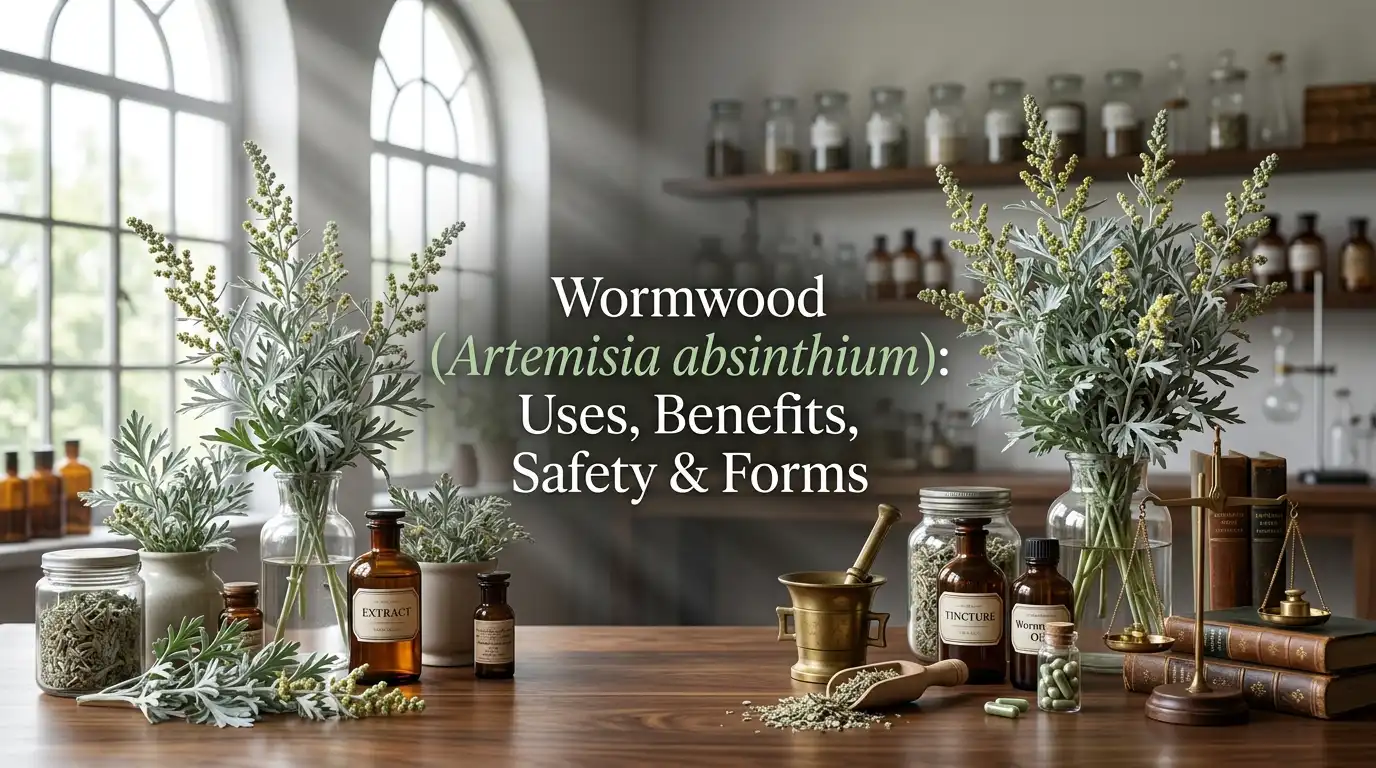
Wormwood (Artemisia absinthium) is one of the most famous and intensely bitter herbs in traditional botanical medicine. Historically prized as a digestive tonic and the primary flavoring agent in vermouth and absinthe, wormwood contains potent active compounds that offer unique health support.
However, because it naturally contains thujone – a chemical compound that can affect the central nervous system, wormwood must be understood and used with care.
What is Wormwood?
Native to temperate regions of Europe, Asia, and northern Africa, wormwood is a woody perennial shrub recognizable by its silvery-grey stems, deeply laciniate leaves, and small yellow flower heads.
The plant’s common name stems from its centuries-old use in European folk tradition, which is where the name comes from. The plant part that matters most is the aerial part – the leaves and flowering tops. These hold the compounds responsible for that bitter taste. Because several plants share the “wormwood” name, the Latin binomial keeps things clear.
| Attribute | Detail |
| Botanical Name | Artemisia absinthium |
| Plant Family | Asteraceae (Daisy / Sunflower family) |
| Common Names | Common wormwood, absinthe wormwood, ajenjo |
| Parts Used | Aerial parts (leaves and upper flowering tops) |
| Key Active Constituents | Absinthin, thujone (alpha- and beta-thujone), chamazulene, sesquiterpene lactones |
| Primary Taste Profile | Bitter, aromatic, herbaceous |
| Common Formats | Liquid tinctures, teas, powders, dried cut herb |
| Safety Standard | Short-term use only; strict thujone thresholds |
Species Comparison: Wormwood vs. Sweet Wormwood vs. Mugwort

One of the most common mistakes in herbal supplementation is confusing Artemisia absinthium with its closely related relatives. While all belong to the Artemisia genus, their chemical compositions and primary uses differ significantly.
| Species | Botanical Name | Distinct Chemical Feature | Primary Traditional & Modern Uses |
| Common Wormwood | Artemisia absinthium | High in absinthin & thujone; extremely bitter. | Digestive tonic, bitter flavoring (absinthe/vermouth), short-term bitter blends.* |
| Sweet Wormwood | Artemisia annua | Contains artemisinin, lower bitterness, sweet aroma. | Key source of antimalarial medications; immune support research.* |
| Mugwort | Artemisia vulgaris | Milder bitterness; volatile oils including cineole & thujone trace. | Traditional medicine, mild digestive support, and herbal use.* |
Key Takeaway: Always check the botanical Latin name on product labels. If you are looking for classic bitter digestive support or traditional bitter blends, ensure you choose Artemisia absinthium.
The Compounds Behind The Bitterness
Wormwood’s character comes down to a few key molecules. Notably, it contains absinthin, one of the most bitter substances found in nature. Alongside it sit artemisinin-type sesquiterpene lactones and a volatile oil rich in thujone.
- Wormwood is very bitter: Bitterness is one of the main reasons people have used it traditionally before meals.
- Absinthin (main bitter compound): When you taste it, it may trigger your mouth and stomach to prepare for digestion.
- Thujone: In small amounts, it helps give wormwood its strong character, but too much can overstimulate the nervous system. Too much thujone can be harmful, high or long-term use may cause side effects like shakiness or seizures.
- Wormwood contains a few other plant compounds: Often grouped as flavonoids and related natural substances.
- May contain antioxidants: They are sometimes discussed for antioxidant-type effects.
- Use for short-term use: Wormwood is valued mostly for its bitterness, but it should be used carefully and only for short periods.
Potential Benefits & Use: What is Wormwood Good For?
Before the benefits, one ground rule. Nothing below is a treatment for any condition. These are traditional and research-context uses, described with care.
1. Digestive and Appetite Support*
Wormwood has a long history of traditional use before meals. The European Medicines Agency notes its traditional use for temporary loss of appetite and mild stomach or gut discomfort in adults. This reflects its long use as a bitter tonic.*
2. Topical Use
Wormwood is traditionally included in topical herbal preparations. Keep the wording general and avoid claims about pain, joints, or other conditions.*
3. Traditional Herbal Use
Wormwood contains plant compounds that have been studied in the laboratory. It is commonly used as a bitter herb in traditional botanical formulas.
4. Laboratory Research*
Wormwood contains plant compounds studied in laboratory research, but product copy should avoid antimicrobial, antifungal, or cleansing claims.(Source – pmc.ncbi.nlm.nih)
5. The classic herbal trio
Wormwood, black walnut (Juglans nigra), and cloves appear together in old formulas.
6. Aromatic and Culinary history
The herb-flavored vermouth and absinthe long before it reached supplement shelves.
How Wormwood Is Used: Forms And Preparation
Wormwood shows up in several forms, each suiting a different preference.
- Wormwood tea: Dried aerial parts steeped briefly in hot water. The taste is intensely bitter, so most people use small amounts.
- Tinctures and extracts: A wormwood extract concentrates the bitter compounds into drops, often blended with other bitters.
- Dried cut herb: Loose herb for custom blends, including the black walnut and clove trio.
- Capsules: For those who prefer to skip the taste entirely.
Because thujone content matters, start low and go slow. Following a product label or a qualified herbalist’s guidance.
The Wormwood, Black Walnut & Clove Pairing
Search interest often links two herbs at once, and for good reason. The “wormwood and black walnut” pairing (frequently with cloves) is one of the most recognized combinations in traditional Western herbalism. Folk practitioners grouped these bitter, astringent botanicals together for generations.
Why Are They Paired?
In traditional Western herbalism, wormwood is frequently paired with Black Walnut Hull (Juglans nigra) and Cloves (Syzygium aromaticum).
- Black Walnut Hulls: Rich in juglone and astringent tannins, which help create an unfavorable environment for unwanted organisms in the gastrointestinal tract.*
- Wormwood (A. absinthium): Provides potent sesquiterpene lactones that support digestive motility and biliary flow.*
- Cloves: High in eugenol, an aromatic essential oil that soothes the intestinal lining and provides carminative support.*

What Are The Black Walnut and Wormwood Benefits?
Historically, the trio was taken as a seasonal bitter blend. Black walnut hulls (Juglans nigra) add tannins and a deep astringency, while wormwood brings its signature bitterness. Together they form a flavor and tradition, not a medical protocol.
If you want to build the classic combination thoughtfully, our black walnut collection pairs naturally with single-ingredient wormwood. Sourcing each herb separately lets you control quality and ratios yourself.
If you want to work with genuine, lab-tested Artemisia absinthium – on its own or alongside our black walnut for the classic blend – browse our single-ingredient wormwood and choose the form that suits your routine.
Wormwood vs Mugwort: Look Alike But Different Herb
These two relatives get mixed up. Both are Artemisia species, both are bitter, and both carry folklore. Still, they are distinct. Wormwood is generally the more bitter and more thujone-rich of the pair. When a recipe calls for one, the botanical name settles which plant you actually need.
| Feature | Mugwort | Wormwood |
| Botanical name | Artemisia vulgaris | Artemisia absinthium |
| Taste | Milder, earthy, slightly bitter | Much more bitter, sharper |
| Key caution | Generally milder | Higher thujone, so use more carefully |
| Common use | Folk herbal use, cooking, incense | Bitter herb, traditional bitters, absinthe/vermouth history |
| Look | Often greener, softer-looking leaves | More silvery-gray, feathery leaves |
How to Choose & Use Wormwood Products?
Wormwood is available in several distinct delivery formats:
- Liquid Tinctures / Extracts: Ideal for digestive stimulation. Taking a small dose (diluted in water) 10–15 minutes before meals allows bitter receptors on the tongue to trigger digestive secretions.
- Encapsulated Powders: Preferred by individuals who wish to bypass the intense bitter taste. Ensure capsules explicitly state thujone levels or follow strict short-term dosage limits.
- Loose Cut Herb (Tea): Traditional preparation made by steeping 1/2 teaspoon of dried herb in hot water for 5–10 minutes. Due to its extreme bitterness, it is often blended with peppermint or fennel.
- Essential Oil (External Only): Never ingest pure wormwood essential oil. Undiluted essential oil contains concentrated thujone and presents severe toxicity risks.
Wormwood Side Effects And Safety
This section matters more than any benefit. Wormwood contains thujone, which can be harmful in large or prolonged doses. Consequently, safety is not optional context – it is the main event.
Keep these points in mind:
- Pregnant or breastfeeding people: Wormwood may be unsafe in pregnancy and should be avoided during breastfeeding as a precaution.
- Do not use long-term: Extended or high-dose use raises thujone-related risks, including neurological effects.
- Skip it with seizure history: Thujone can affect the nervous system.
- Watch for allergy: People sensitive to ragweed or daisies may react.
- Check with a professional: If you take medications or have a health condition, ask a clinician first.
Flavor of Wormwood
It has a strong, sharp herbal flavor. Think of it like a mix of sage, mint, and earth. But the bitter taste is the main thing. It feels dry and a bit like medicine in your mouth.
Why Choose Herb To Body Wormwood?
- Single-Ingredient: No hidden fillers, artificial binders, or synthetic additives.
- Clear Botanical Verification: We state the exact Latin name (Artemisia absinthium) on every batch so you know you are receiving true wormwood.
- Designed for Custom Blending: Easily combine our single-ingredient wormwood with our Black Walnut Hull collection to create your own traditional bitter protocol.
- Lab-tested for quality: Third-party checks on every batch.
- Wildcrafted sourcing: Harvested with traditional care.
- Made in the USA: GMP-certified facility standards.
Final Thoughts
Wormwood (Artemisia absinthium) is a potent botanical with long history. When used short-term and at appropriate amounts, its bitter properties offer unique support for digestion and gut wellness.
Explore our single-ingredient Wormwood products at Herb To Body today, or pair them with our Black Walnut range to build your custom bitter regimen.
Sources – Reference
- National Center for Complementary and Integrative Health (NCCIH), NIH – herbs and bitter-tonic traditions.
- U.S. Food and Drug Administration – thujone regulation in foods and beverages – FDA Gov
- Wormwood (Artemisia absinthium L.) a curious plant with both neurotoxic and neuroprotective properties. – National library of medicine
- Artemisia absinthium L.-Importance in the History of Medicine
- Bioactive Compounds, Pharmacological Actions, and Pharmacokinetics of Wormwood (Artemisia absinthium) – PMC
- Healthline: Wormwood benefits and side effects
- Artemisia absinthium – Wikipedia
Frequently Asked Questions (FAQ)
Traditionally, wormwood was used as a digestive bitter and appetite aid. These are folk and traditional uses; wormwood is not a treatment for any medical condition.*
This pairing is a traditional herbal blend, often with cloves. People take it as a seasonal bitter combination. They are often used together in short-term seasonal digestive blends, not a medical protocol.*
Mugwort is Artemisia vulgaris; wormwood is Artemisia absinthium. Wormwood is more bitter and higher in thujone. The botanical name is the reliable guide.
Wormwood tea has a long history as a bitter tonic. Most described benefits come from tradition rather than clinical trials, so keep expectations modest and servings small.*
Classic wormwood (Artemisia absinthium) is intensely bitter and contains thujone for digestive and bitter uses. Sweet wormwood (Artemisia annua) contains artemisinin and is used in distinct therapeutic contexts, including antimalarial research.
Wormwood contains thujone and should never be consumed daily over long periods. Traditional herbal standards recommend keeping wormwood use short-term (2 to 4 weeks maximum).
Disclaimer: *These statements have not been evaluated by the Food and Drug Administration. This product is not intended to diagnose, treat, cure or prevent any disease.

Columbus Day 2026: History, Plants of the Columbian Exchange
Many foods and herbs we use today including chili peppers, cacao, vanilla, tomatoes, and potatoes,...
Oct

Vitamin C Powder: Forms, Dosage, Safety, and How to Choose
Vitamin C powder is a dissolvable supplement that is usually made with ascorbic acid or...
Oct

Goldenseal Root: Uses, Dosage, Safety & How to Buy It
What Is Goldenseal Root? Goldenseal root is a bitter yellow herb with a long history...
Oct
Andrographis Paniculata: Benefits, Herb Profile, Uses, Dosage & Safety
Andrographis paniculata is a bitter medicinal herb from the Acanthaceae family, often called “King of...
Sep

Patriot Day: History, Facts, and 9/11 Remembrance
Patriot Day is a day of remembrance. It is held every year on September 11th...
Sep
Olive Leaf: Benefits, Active Compounds, and How to Use It
We all use or have heard about olive oil. But did you know that the...
Sep
Labor Day Sale: Fresh Fall Botanicals
Update: The Herb To Body Labor Day 2026 sale ended on Monday, September 7, 2026,...
Sep
Astragalus Root: Benefits, Uses, Dosage & Safety
Astragalus root, also known as huang qi, comes from a plant in the pea family...
Aug
What Is Echinacea: Benefits, Active Compounds, Types, Uses and Who Should Avoid It?
When the cold season arrives, many people add a traditional botanical such as Echinacea to...
Aug

Elderberry (Sambucus nigra): What It’s Used For, Potential Benefits & Safety
Every autumn, the same scene plays out – someone at home starts sniffling. Through the...
Aug
Immune Supporting Herbs: Forms, Uses & Safety Guide
What is an Immune Support Herb? An immune-support herb is a plant traditionally used for...
Aug

Back to School Wellness: A Routine for the Whole School Year
The first bell of the school year changes a household’s routine overnight. Bedtimes shift earlier,...
Aug
Herbs for Women: Traditional Uses, Research Notes and Safety
Many women wellness seekers search for simple herbs to add to a daily routine. Some...
1 Comment
Aug
Oat Straw Tea: Benefits, Uses & How to Brew and Use Perfectly?
What Is Oat Straw Tea? Oat straw tea is a mild herbal tea made from...
Jul
Shikakai Powder: Benefits, Active Compounds, Uses and Safety
Long before bottled shampoo existed, people in South Asia reached for a dried legume pod...
Jul

Mugwort Tea: Benefits, Brewing, Flavor & the Safety Concern No One’s Telling You
Mugwort tea (Artemisia vulgaris), also known as the “Mother of Herbs,” holds a storied place...
Jul
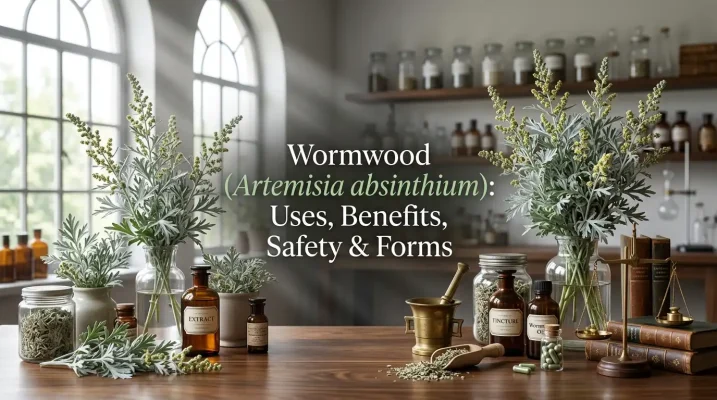
Wormwood Herb: Benefits, Side Effects, Uses, Compounds & More
Wormwood (Artemisia absinthium) is one of the most famous and intensely bitter herbs in traditional...
Jul

Wheatgrass Juice Powder: Benefits, Nutrients, Uses, Taste Comparison & Buying Guide
In a perfect world, we’d all eat fresh greens every single day. But reality hits...
Jul
Yerba Mate: What Is It, Benefits, Caffeine Amount, and How to Make It
Yerba mate is a traditional caffeinated beverage from South America made from the dried leaves...
Jul

Alligator Pepper: Flavor, Uses, Botanical Profile, Substitute and Buying Tips
If you heard the name “alligator pepper,” what comes to mind? Is it the same...
Jul
Green Black Walnut Hull & Extract (Juglans nigra): Benefits, Uses & How It Differs
When you’re looking for black walnut hull, you quickly notice two very different products. One...
Jul

Fourth of July 2026: History, Traditions, and a Safe, Fun Day
The Fourth of July is easy to picture. The grill is going. Music is playing....
Jun

When Is Juneteenth 2026? Meaning, History, Colors & Herbal Deals
Many people know Juneteenth is a holiday, but they don’t know what to do. They...
Jun
Tongkat Ali Honey: Benefits, Taste, Uses & How to Take
Tongkat ali honey is honey mixed with tongkat ali root (Eurycoma longifolia, also called longjack)....
Jun

Best Father’s Day Gifts 2026 for a Health-Minded Dad
Most dads rarely ask for anything for themselves. They say “I’m fine” while rubbing a...
Jun
Black Seed (Nigella sativa): Compounds, Uses & Safety
Black seed is a versatile herb available year-round. It can be used in cooking, added...
Jun

Shilajit: What It Is, How It Works, and How to Choose the Right Form?
Shilajit is a natural mineral resin. It forms in high-altitude mountain ranges, mainly the Himalayas,...
Jun

Prekese (Aidan Fruit): Benefits, Active Compounds, Uses & Safety Guide
Prekese (Tetrapleura tetraptera) is a flowering tree in the Fabaceae (legume) family. It grows in...
May