

Herbs
Herbs for Women: Traditional Uses, Research Notes and Safety
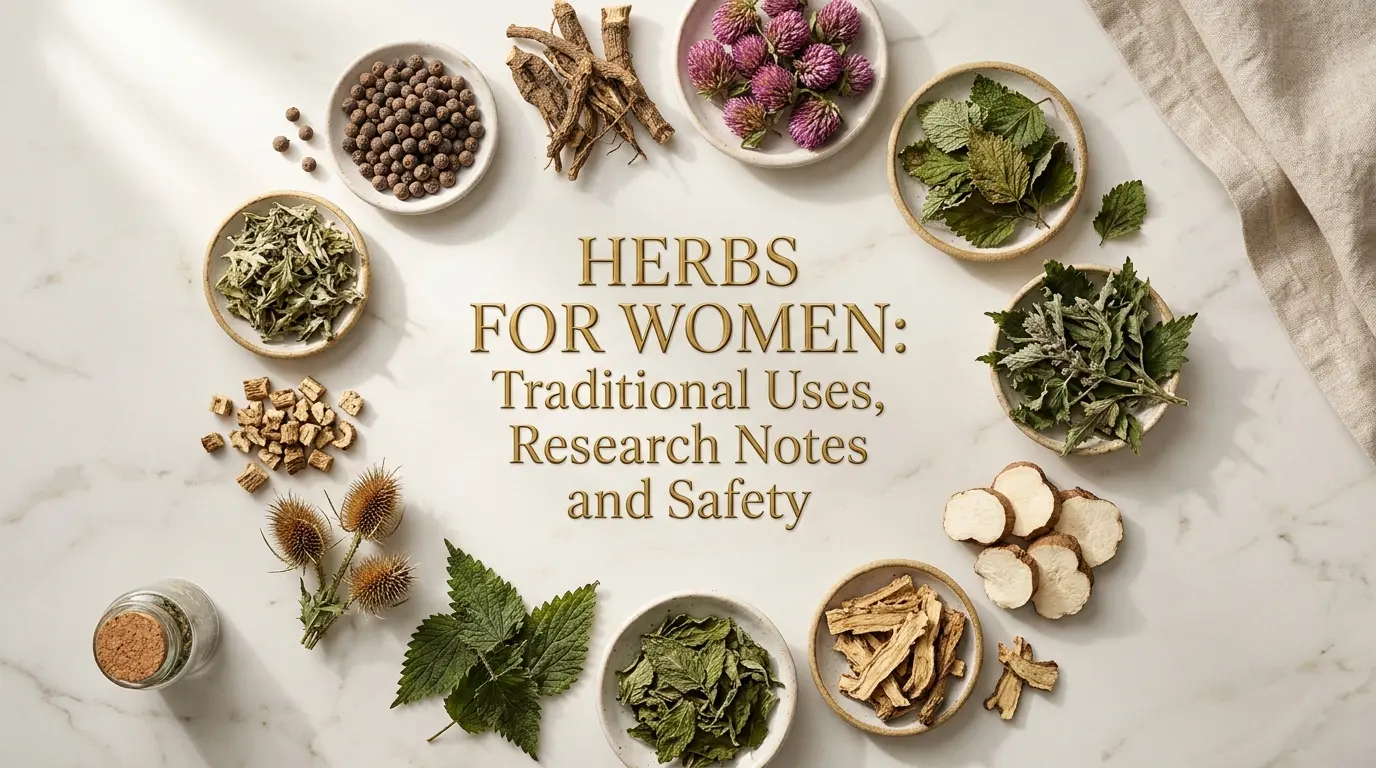
Many women wellness seekers search for simple herbs to add to a daily routine. Some prefer tea, while others choose powders, capsules, or dried plant materials.
Finding clear information can be difficult. Online herb lists often leave out important details. Which plant was studied? Which plant part was used? What did the research actually measure?
This guide keeps those details simple. Each herb includes:
- Botanical name.
- The plant part used.
- Its traditional use.
- Common product forms.
- A plain research summary.
Why Women Explore Herbal Options
Women may choose herbs for many personal reasons. Some enjoy a warm herbal tea, while others prefer a capsule or powder that fits a busy schedule.
People usually try to explore herbs during different stages of life and changing routines. However, tiredness, sleep changes, mood changes, and other concerns may have many possible causes.
Herbs cannot explain the cause of a health concern. If something is new, worsening, or affecting daily life, speak with a qualified healthcare professional before using an herb.
This guide focuses on plant identity, traditional use, preparation styles, research findings, and safety information.
How These Herbs Are Grouped
Most herb lists place every plant in one long group. That can make the information hard to compare. This guide uses three simple categories.
Herbs studied in people: Some herbs have appeared in human research. Study quality, plant material, serving amounts, and results vary.
Herbs with limited research: Some herbs have early laboratory or small human studies. These findings do not establish a specific use.
Herbs known mainly through tradition: Some herbs appear in teas, powders, capsules, and traditional botanical blends. Their history does not confirm a specific effect.
A plant may fit more than one group. Human research does not automatically apply to every product or preparation.
Botanical names, plant parts and constituents at a glance
| Herb | Botanical name | Plant part | Compounds named in the literature |
| Chasteberry | Vitex agnus-castus | Fruit; also leaf, stem, flower | Agnuside, aucubin, casticin, diterpenes |
| Black cohosh | Actaea racemosa | Root and rhizome | Actein, 27-deoxyactein, fukinolic acid, cimicifugic acids |
| Red clover | Trifolium pratense | Flowering tops | Biochanin A, formononetin, genistein, daidzein |
| Raspberry leaf | Rubus idaeus | Leaf | Fragarine, ellagitannins, quercetin, kaempferol |
| Motherwort | Leonurus cardiaca | Aerial parts | Leonurine, stachydrine, ursolic acid, iridoids |
| Wild yam | Dioscorea villosa | Root and rhizome | Diosgenin, dioscin |
| Dong quai | Angelica sinensis | Root | Ferulic acid, ligustilide, butylidenephthalide |
| Spearmint | Mentha spicata | Leaf | Carvone, limonene, rosmarinic acid |
| Nettle | Urtica dioica | Leaf and root | Leaf: flavonoids, iron, vitamin K. Root: lignans, beta-sitosterol |
| Blessed thistle | Cnicus benedictus | Aerial parts | Cnicin, polyacetylenes |
| Angelica root | Angelica archangelica | Root | Coumarins, volatile oils |
| Mugwort | Artemisia vulgaris | Leaf and aerial parts | Thujone, camphor, sesquiterpene lactones |
Naming a compound describes the plant’s chemistry. It does not show an effect in people.
Herbs Studied in Women

Chasteberry (Vitex agnus-castus)
Chasteberry is the ripe fruit of a Mediterranean shrub, though some products also draw from the leaves, stems, or flowers. Laboratory research has examined its plant compounds and their interaction with certain biological pathways, though these findings describe early research rather than a guaranteed effect from shop-bought products. Human studies have used varying extracts and serving amounts, and NCCIH reports that available evidence remains limited in quality. (Source: nccih.nih)
The fruit is sold two ways. Chaste tree berries whole keep their shape, so you can check these, while chaste tree berries powder suits different uses and blending.
How it may help: Chasteberry has a long history in European herbalism as a daily botanical for women.
Black Cohosh (Actaea racemosa)
Black cohosh is a North American plant related to the buttercup. Products usually use the root and rhizome.
Researchers have studied its triterpene glycosides and other plant compounds. Early work looked at estrogen-related pathways, while later research examined other pathways. No single mechanism has been confirmed across black cohosh products.
Black cohosh has more human research than many herbs. A 2023 review examined 22 articles involving 2,310 women and compared different black cohosh preparations. The review reported some findings across the measured outcomes. It also included products used alone and products combined with other ingredients, so the results may not apply to every commercial preparation. (Source: Pubmed).
For home preparation, cut and sifted black cohosh root suits decoctions, while you can use black cohosh root powder.
How it may help: Black cohosh is traditionally used during midlife transitions. Human studies report mixed results, and outcomes appear to shift by product and study design.
Red Clover (Trifolium pratense)
Red clover is a legume whose flowering tops are used in herbal preparations. (Source: pubs acs) It contains isoflavones like biochanin A, formononetin, genistein, and daidzein, which share a chemical structure similar to estrogen and are categorized as phytoestrogens. While laboratory research explores these compounds, NCCIH reports that clinical evidence in humans remains inconclusive, with study results varying widely across different extracts. (Source: NCCIH)
The flowering tops are the part to look for. Red clover tops cut and sifted are suited to infusions, and red clover herb cut and sifted includes more of the aerial plant.
How it may help: Red clover supplies plant isoflavones that researchers continue to study. Clinical evidence remains inconclusive.
Speak with a healthcare professional before use if you have a medical condition, take medication, or are pregnant or nursing.
Raspberry Leaf (Rubus idaeus)
Raspberry leaf consists of the dried leaves of the raspberry plant rather than the fruit. It naturally contains plant compounds such as fragarine, ellagitannins, quercetin, and kaempferol, though concentration depends on the plant source and preparation method.
Raspberry leaf is commonly prepared as an herbal infusion, which is why raspberry leaf cut and sifted is the usual choice. Raspberry leaf powder works better for and blends like use in smoothies, juice and water.
How it may help: Raspberry leaf is long valued as a traditional women’s infusion, taken as a simple daily tea.
Motherwort (Leonurus cardiaca)
Motherwort belongs to the mint family, with preparations utilizing the aerial parts, including the leaves and flowering stems. It naturally contains plant compounds such as leonurine, stachydrine, ursolic acid, and iridoids.
While motherwort has a long history in traditional women’s herbalism, human research remains very limited. Due to its traditional use alongside cardiac and nerve preparations, those taking heart or sedative medications should consult a clinician before use.
How it may help: Motherwort herb use in traditional calming tea blends.
Wild Yam (Dioscorea villosa)
Wild yam root contains diosgenin and dioscin, two steroidal saponins.
Diosgenin is used as a starting material in industrial laboratory processes. That is a manufacturing step, not something your body performs. Wild yam creams, teas, and capsules do not appear to produce progesterone in people.
One placebo-controlled study gave wild yam cream to a small group of women over three months. Researchers measured hormone markers in blood and saliva and found no clear difference between the cream and the placebo. [Komesaroff et al., 2001]
Wild yam appears in older Western herbal traditions and in modern botanical blends. Human evidence remains limited. It is sold as different form like wild yam root cut and sifted and as wild yam root powder.
How it may help: Wild yam is best understood as a traditional botanical rather than a hormone product. Its place is in folk preparations and blends, not in confirmed physiological effects.
Dong Quai (Angelica sinensis)
Dong Quai root naturally contains active plant compounds such as ferulic acid and ligustilide. Historically known in traditional Chinese herbalism as “female ginseng,” it has a long history of use within multi-herb botanical formulas designed for daily wellness, almost exclusively combined with complementary plants rather than taken alone.
It should not be confused with European Angelica root (Angelica archangelica), which serves primarily as an aromatic digestive bitter.
How it may help: Traditionally, dong quai used within multi-herb blends. Traditionally used within multi-herb Chinese formulas rather than on its own.
Other Traditional Botanical Ingredients
Spearmint (Mentha spicata)
Spearmint leaf is commonly prepared as tea. One small, short study examined spearmint tea and certain blood measurements in a group of women. It does not establish a specific use.
How it may help: A light culinary tea, traditionally enjoyed after meals.
Nettle (Urtica dioica)
Nettle leaf and nettle root are distinct plant parts with different chemical profiles and applications. The leaf is commonly prepared as a nutrient-dense herbal infusion, whereas root preparations focus on entirely separate physiological areas.
That difference matters at the point of purchase. Nettle leaf cut and sifted is the infusion material, while nettle root cut and sifted and nettle root powder are different products with a different traditional use.
How it may help: Traditionally taken as a mineral-rich infusion that naturally supplies iron and flavonoids.
Blessed Thistle (Cnicus benedictus)
Blessed thistle utilizes the aerial parts of the plant, which naturally contain the bitter compound cnicin along with other plant constituents. It frequently appears in traditional tea blends and botanical formulations, though scientific evidence for specific health claims remains limited.
How it may help: May promote healthy digestion. A traditional bitter used in tea and botanical blends.
Angelica Root (Angelica archangelica)
European Angelica root is a completely different species from Dong Quai (Angelica sinensis). The root is widely featured in traditional herbal preparations as an aromatic bitter, though concentrated extracts should be discussed with a clinician if taking blood-thinning medications.
How it may help: A warming aromatic bitter, traditionally taken before meals.
Mugwort (Artemisia vulgaris)
Mugwort leaves and aerial parts are traditionally brewed into bitter teas, naturally containing active compounds like thujone and camphor. It is a distinct species from wormwood (Artemisia absinthium), and its safety has not been established during pregnancy or breastfeeding.
It is a distinct species from wormwood (Artemisia absinthium), with different thujone content and different traditional dosing. Mugwort is sold as mugwort herb cut and sifted for tea and as mugwort herb powder for blends.
How it may help: Mugwort appears in traditional bitter tea blends across several herbal traditions.
How to Track Your Experience
This guide is not a personal use plan. Study lengths differ by herb, preparation, and research question. Follow the product label rather than copying a study schedule.
If you choose to keep notes:
- Write down the product, amount, and date.
- Introduce one new herb at a time.
- Record any unwanted reaction.
- Stop use and seek medical advice if a concerning reaction occurs.
- Speak with a healthcare professional if a concern continues or worsens.
A journal can record what happened. It cannot show whether an herb caused the change.
Preparation Formats
Format changes what a preparation holds and how you measure a dose.
- Tinctures and bitters: You can make your own tincture or bitters at home. On the other way you can buy premade botanical herbal bitters from or start with a ready-made bottle from the bulk liquid bitters range.
- Cut-and-sifted whole herb: You can see the plant material you bought, so you can check it against a reference sample by eye. Most of the herbs and roots range is sold this way.
- Powders: Suited to capsules, smoothies, and blending. Once material is milled you cannot identify it by eye, so supplier paperwork carries more weight. Pre-filled capsules skip the measuring step.
- Teas and infusions: Suited to raspberry leaf, nettle leaf and spearmint, where water-soluble compounds are the point. Steeping time and water temperature both change what ends up in the cup.
Safety Summary
Read the product label before use.
- Ask a qualified healthcare professional before use during pregnancy or nursing.
- Check for interactions if you take medication.
- Use extra care with chasteberry, black cohosh, dong quai, mugwort, motherwort, and other concentrated herbal products.
- Do not assume that two herbs are interchangeable because they share a common name or plant family.
- Choose products with clear botanical names, plant parts, lot numbers, and testing information.
- Stop use if you notice an adverse reaction.
- Keep herbs away from children and pets.
- Follow the product label and do not exceed the stated serving.
Why Choose Herb To Body?
- Proper Botanical identity, named: Every listing carries the common name and the Latin binomial. You can tell angelica root from dong quai, and mugwort from wormwood, before you add to cart.
- The plant part, specified: We specifically mention which part of plants we are using.
- Your format, your quantity. Most botanicals come cut-and-sifted for tea, powdered for capsules, or ready-made as bitters, in 4oz through 1lb sizes. Browse the full range or open a wholesale account for bulk pricing.
Batch paperwork speaks to identity and purity. It says nothing about whether an herb works, and we will not pretend otherwise.
Conclusion
A few of these herbs have been studied in women, though the results shift by different form, by product, and by study. Others rest on tradition alone.
An herb is worth buying from someone who can tell you exactly what it is.
Sources
- Dietz BM, Hajirahimkhan A, Dunlap TL, Bolton JL. [Botanicals and Their Bioactive Phytochemicals for Women’s Health]. Pharmacological Reviews, 2016. – PubMed
- Herbs Commonly Used by Women: An Evidence-Based Review]. PubMed.
- Chasteberry for Premenstrual Syndrome – PubMed.
- Black Cohosh Extracts in Women With Menopausal Symptoms – NIH GOVT.
- Wild Yam Extract and Menopausal Symptoms – PubMed.
- Mugwort: Usefulness and Safety – NCCIH
Frequently Asked Questions (FAQ)
No herb has been shown to balance hormones. Chasteberry, black cohosh, and red clover have been studied in women, though results vary by product and remain limited.
No drink balances hormones. Raspberry leaf, nettle leaf, and spearmint are traditionally taken as infusions.*
No herb is proven to heal. Commonly used botanicals include chasteberry, black cohosh, red clover, raspberry leaf, nettle, spearmint, mugwort, motherwort, dong quai, and blessed thistle.
Ayurvedic tradition uses botanicals such as shatavari, ashwagandha, and amalaki. These sit outside this guide, and traditional use alone does not confirm an effect in people.
There is no single best herb. The choice depends on the plant part, the preparation, and your own health history. Ask a qualified healthcare professional first.
Research has not established that any herb raises hormone levels. Red clover contains plant isoflavones shaped like estrogen, though a shared shape shows no effect in people.*
Disclaimer: *These statements have not been evaluated by the Food and Drug Administration. This product is not intended to diagnose, treat, cure or prevent any disease.

Vitamin C Powder: Forms, Dosage, Safety, and How to Choose
Vitamin C powder is a dissolvable supplement that is usually made with ascorbic acid or...
Oct

Goldenseal Root: Uses, Dosage, Safety & How to Buy It
What Is Goldenseal Root? Goldenseal root is a bitter yellow herb with a long history...
Oct
Andrographis Paniculata: Benefits, Herb Profile, Uses, Dosage & Safety
Andrographis paniculata is a bitter medicinal herb from the Acanthaceae family, often called “King of...
Sep

Patriot Day: History, Facts, and 9/11 Remembrance
Patriot Day is a day of remembrance. It is held every year on September 11th...
Sep
Olive Leaf: Benefits, Active Compounds, and How to Use It
We all use or have heard about olive oil. But did you know that the...
Sep
Labor Day Sale: Fresh Fall Botanicals
Update: The Herb To Body Labor Day 2026 sale ended on Monday, September 7, 2026,...
Sep
Astragalus Root: Benefits, Uses, Dosage & Safety
Astragalus root, also known as huang qi, comes from a plant in the pea family...
Aug
What Is Echinacea: Benefits, Active Compounds, Types, Uses and Who Should Avoid It?
When the cold season arrives, many people add a traditional botanical such as Echinacea to...
Aug
Elderberry (Sambucus nigra): What It’s Used For, Potential Benefits & Safety
Every autumn, the same scene plays out – someone at home starts sniffling. Through the...
Aug
Immune Supporting Herbs: Forms, Uses & Safety Guide
What is an Immune Support Herb? An immune-support herb is a plant traditionally used for...
Aug

Back to School Wellness: A Routine for the Whole School Year
The first bell of the school year changes a household’s routine overnight. Bedtimes shift earlier,...
Aug
Herbs for Women: Traditional Uses, Research Notes and Safety
Many women wellness seekers search for simple herbs to add to a daily routine. Some...
1 Comment
Aug
Oat Straw Tea: Benefits, Uses & How to Brew and Use Perfectly?
What Is Oat Straw Tea? Oat straw tea is a mild herbal tea made from...
Jul
Shikakai Powder: Benefits, Active Compounds, Uses and Safety
Long before bottled shampoo existed, people in South Asia reached for a dried legume pod...
Jul

Mugwort Tea: Benefits, Brewing, Flavor & the Safety Concern No One’s Telling You
Mugwort tea (Artemisia vulgaris), also known as the “Mother of Herbs,” holds a storied place...
Jul
Wormwood Herb: Benefits, Side Effects, Uses, Compounds & More
Wormwood (Artemisia absinthium) is one of the most famous and intensely bitter herbs in traditional...
Jul

Wheatgrass Juice Powder: Benefits, Nutrients, Uses, Taste Comparison & Buying Guide
In a perfect world, we’d all eat fresh greens every single day. But reality hits...
Jul
Yerba Mate: What Is It, Benefits, Caffeine Amount, and How to Make It
Yerba mate is a traditional caffeinated beverage from South America made from the dried leaves...
Jul

Alligator Pepper: Flavor, Uses, Botanical Profile, Substitute and Buying Tips
If you heard the name “alligator pepper,” what comes to mind? Is it the same...
Jul
Green Black Walnut Hull & Extract (Juglans nigra): Benefits, Uses & How It Differs
When you’re looking for black walnut hull, you quickly notice two very different products. One...
Jul

Fourth of July 2026: History, Traditions, and a Safe, Fun Day
The Fourth of July is easy to picture. The grill is going. Music is playing....
Jun

When Is Juneteenth 2026? Meaning, History, Colors & Herbal Deals
Many people know Juneteenth is a holiday, but they don’t know what to do. They...
Jun
Tongkat Ali Honey: Benefits, Taste, Uses & How to Take
Tongkat ali honey is honey mixed with tongkat ali root (Eurycoma longifolia, also called longjack)....
Jun
Best Father’s Day Gifts 2026 for a Health-Minded Dad
Most dads rarely ask for anything for themselves. They say “I’m fine” while rubbing a...
Jun
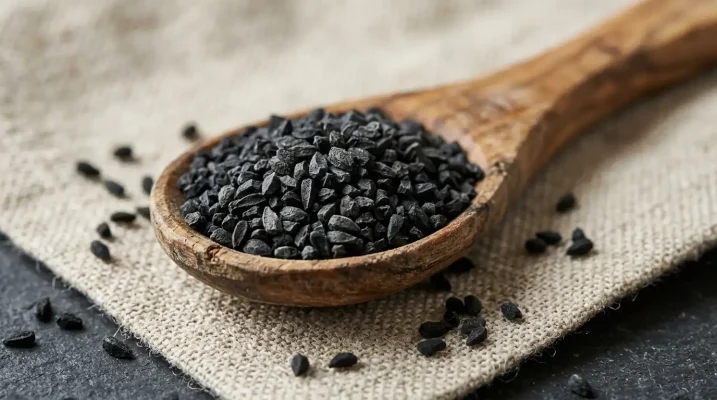
Black Seed (Nigella sativa): Compounds, Uses & Safety
Black seed is a versatile herb available year-round. It can be used in cooking, added...
Jun

Shilajit: What It Is, How It Works, and How to Choose the Right Form?
Shilajit is a natural mineral resin. It forms in high-altitude mountain ranges, mainly the Himalayas,...
Jun

Prekese (Aidan Fruit): Benefits, Active Compounds, Uses & Safety Guide
Prekese (Tetrapleura tetraptera) is a flowering tree in the Fabaceae (legume) family. It grows in...
May
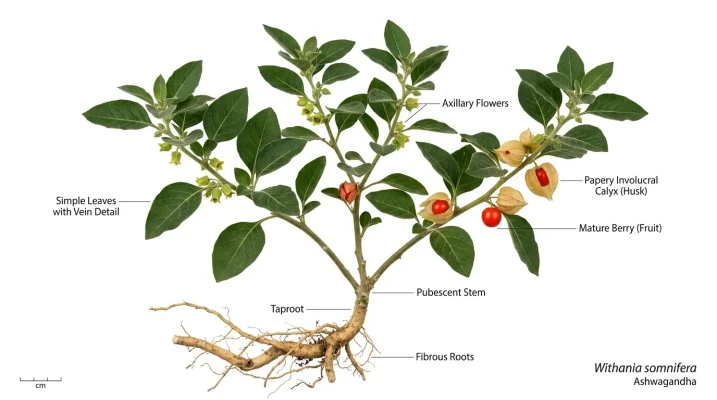
Ashwagandha (Withania somnifera): Benefits, Dosage & Safety Guide
Ashwagandha is a small woody shrub. It grows in dry regions of India, northern Africa,...
May
Is there a difference in whether you use spearmint or peppermint?