


Soursop, Soursop Living Bitter
Soursop Leaf vs. Soursop Bitter: Which is Better for Your Body?
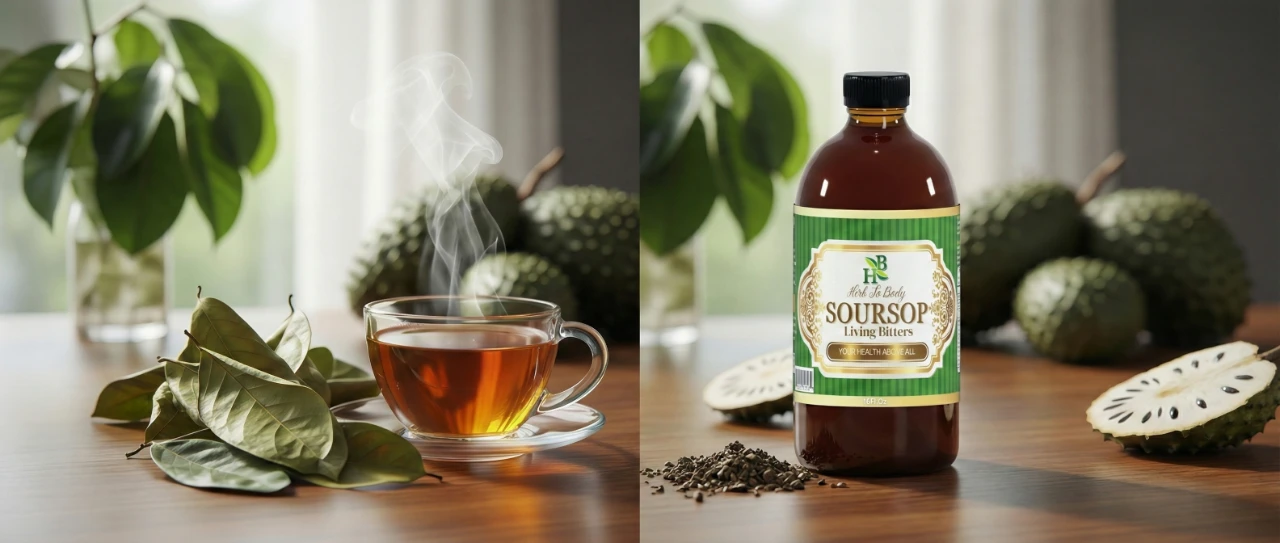
Most people get confused when it comes to choosing between soursop leaves and soursop bitter. Whether you know it as Graviola, Guanabana or Annona muricata, this tropical plant is widely used in traditional wellness routines.
But if you’re looking to buy some, you’ll notice a clear split in how it’s sold. You can buy the dried soursop leaves to make tea, or you can get a bottle of Soursop Living Bitters.
They aren’t the same thing. One isn’t a “stronger” version of the other, they actually target different systems in your body. Here is the straightforward breakdown of how to choose the right one for your specific needs.
The Whole Soursop Leaf
When you use the Soursop Leaves, you’re using the plant in its most basic, unedited form. For a long time, people have used these leaves as a daily tonic to keep their systems resilient.
The compounds in these leaves are called Annonaceous acetogenins. Researchers study these compounds for both their biological activity and their safety.
Why Many People Choose Graviola Tea?
- The Gentle Approach: When you steep soursop tea, you’re getting a water-based extraction. It’s a foundational way to support your immune system without being tough on your gut.*
- Evening Ritual: Many people enjoy a warm cup in the evening as part of a quiet routine.
- Purity: You don’t have to worry about additives. It’s just the leaf and the water.*
Soursop Living Bitters: Designed for Daily Digestive Support*
Soursop Bitters are a different tool entirely. While they contain soursop, they are usually a “compound,” meaning the soursop is blended with other herbs like black seed, ginger, and bitter melon to create a liquid tonic.
The secret isn’t just the soursop – it’s the bitter profile.
The “Bitter” Advantage
Bitter flavors have traditionally been used to support digestion. Some researchers suggest that tasting bitter notes may help prompt the body’s normal digestive response, including bile and enzyme release.*
- Digestive Activation: If you experience occasional heaviness or bloating after meals, bitters can help support healthy digestion.*
- Quick to Take: If you often feel heavy or bloated after a meal, a serving of bitters takes seconds, while tea needs time to steep.*
The Comparison: Leaves vs. Bitters
| Goal | Soursop Leaves | Soursop Living Bitters |
| Main Function | Evening tea routine | Taken before meals |
| Key Compounds | Acetogenins, alkaloids, flavonoids | Soursop + Synergistic Herbs |
| Best Used | Evening | Morning / Before Meals |
| The Vibe | Calm, earthy ritual | Intense, functional kickstart |
How to Get the Best Results?
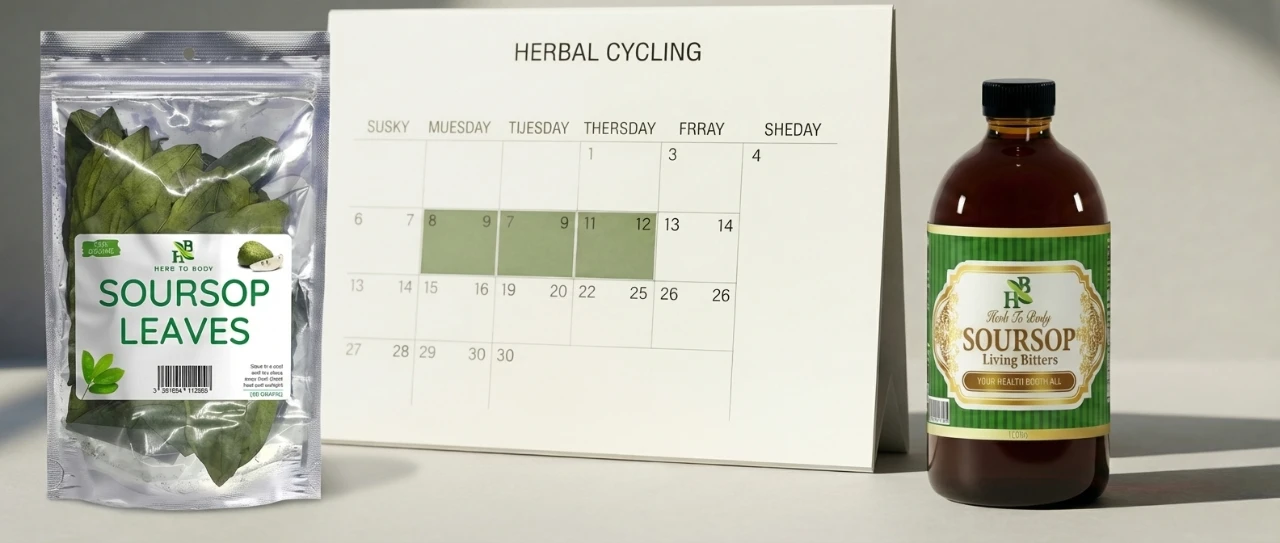
The 6 to 8 Week Cycle
Because soursop contains annonacin, avoid prolonged or high-dose daily use. Follow the product label and consult a qualified healthcare professional before regular or long-term use.
Proper Brewing (For the Leaves)
Steep 3 dried leaves in 1 cup (8 oz) of freshly boiled water, covered, for 10 to 15 minutes, then strain.
Read More: Guide to Soursop Leaves, Bitter, Powder Benefits, Uses
A Note on Responsible Use
While soursop is a natural botanical, it is potent. Do not use if you are pregnant or breastfeeding, or if you have Parkinson’s disease or another movement disorder. Consult your healthcare provider before use if you take any prescription medication or have a medical condition. Additionally, always ensure your tea is made from leaves only; soursop seeds contain high concentrations of annonacin and should not be consumed.
Note: Long-term, continuous consumption of soursop leaves without breaks is not recommended due to the presence of annonacin. Please follow the 6 to 8 week cycle suggested above.
The Bottom Line
For everyday wellness, many people choose Soursop Leaves as part of a simple daily routine. If you’re looking for a bitter botanical blend to complement a balanced diet and digestive comfort, explore Herb To Body Soursop Bitters.
Frequently Asked Questions (FAQ)
Yes, but it is often better to use them at different times of the day. Many people take bitters in the morning before meals and enjoy tea in the evening.
You can, but the second brew will be significantly weaker. For the best flavor and strength, use fresh leaves for each cup.
If you have a sensitive gut, start with the tea. If you choose bitters, stick to the label serving of 1 tbsp (15 mL) and stop use if you notice stomach discomfort.*
Yes. Graviola is the Portuguese name, Guanabana is Spanish, and Soursop is English. They all refer to Annona muricata.
Soursop tea has not been well studied for sleep in people. Many people simply enjoy a warm cup in the evening. However, we recommend avoiding long-term, continuous use. To maintain safety, please follow a cycling schedule (6 to 8 weeks on, then a 1 to 2 week break) and consult your healthcare provider.*
Disclaimer: *These statements have not been evaluated by the Food and Drug Administration. This product is not intended to diagnose, treat, cure or prevent any disease.

Columbus Day 2026: History, Plants of the Columbian Exchange
Many foods and herbs we use today including chili peppers, cacao, vanilla, tomatoes, and potatoes,...
Oct

Vitamin C Powder: Forms, Dosage, Safety, and How to Choose
Vitamin C powder is a dissolvable supplement that is usually made with ascorbic acid or...
Oct

Goldenseal Root: Uses, Dosage, Safety & How to Buy It
What Is Goldenseal Root? Goldenseal root is a bitter yellow herb with a long history...
Oct
Andrographis Paniculata: Benefits, Herb Profile, Uses, Dosage & Safety
Andrographis paniculata is a bitter medicinal herb from the Acanthaceae family, often called “King of...
Sep

Patriot Day: History, Facts, and 9/11 Remembrance
Patriot Day is a day of remembrance. It is held every year on September 11th...
Sep

Olive Leaf: Benefits, Active Compounds, and How to Use It
We all use or have heard about olive oil. But did you know that the...
Sep
Labor Day Sale: Fresh Fall Botanicals
Update: The Herb To Body Labor Day 2026 sale ended on Monday, September 7, 2026,...
Sep
Astragalus Root: Benefits, Uses, Dosage & Safety
Astragalus root, also known as huang qi, comes from a plant in the pea family...
Aug

What Is Echinacea: Benefits, Active Compounds, Types, Uses and Who Should Avoid It?
When the cold season arrives, many people add a traditional botanical such as Echinacea to...
Aug

Elderberry (Sambucus nigra): What It’s Used For, Potential Benefits & Safety
Every autumn, the same scene plays out – someone at home starts sniffling. Through the...
Aug
Immune Supporting Herbs: Forms, Uses & Safety Guide
What is an Immune Support Herb? An immune-support herb is a plant traditionally used for...
Aug

Back to School Wellness: A Routine for the Whole School Year
The first bell of the school year changes a household’s routine overnight. Bedtimes shift earlier,...
Aug
Herbs for Women: Traditional Uses, Research Notes and Safety
Many women wellness seekers search for simple herbs to add to a daily routine. Some...
1 Comment
Aug

Oat Straw Tea: Benefits, Uses & How to Brew and Use Perfectly?
What Is Oat Straw Tea? Oat straw tea is a mild herbal tea made from...
Jul
Shikakai Powder: Benefits, Active Compounds, Uses and Safety
Long before bottled shampoo existed, people in South Asia reached for a dried legume pod...
Jul

Mugwort Tea: Benefits, Brewing, Flavor & the Safety Concern No One’s Telling You
Mugwort tea (Artemisia vulgaris), also known as the “Mother of Herbs,” holds a storied place...
Jul

Wormwood Herb: Benefits, Side Effects, Uses, Compounds & More
Wormwood (Artemisia absinthium) is one of the most famous and intensely bitter herbs in traditional...
Jul

Wheatgrass Juice Powder: Benefits, Nutrients, Uses, Taste Comparison & Buying Guide
In a perfect world, we’d all eat fresh greens every single day. But reality hits...
Jul
Yerba Mate: What Is It, Benefits, Caffeine Amount, and How to Make It
Yerba mate is a traditional caffeinated beverage from South America made from the dried leaves...
Jul

Alligator Pepper: Flavor, Uses, Botanical Profile, Substitute and Buying Tips
If you heard the name “alligator pepper,” what comes to mind? Is it the same...
Jul

Green Black Walnut Hull & Extract (Juglans nigra): Benefits, Uses & How It Differs
When you’re looking for black walnut hull, you quickly notice two very different products. One...
Jul

Fourth of July 2026: History, Traditions, and a Safe, Fun Day
The Fourth of July is easy to picture. The grill is going. Music is playing....
Jun

When Is Juneteenth 2026? Meaning, History, Colors & Herbal Deals
Many people know Juneteenth is a holiday, but they don’t know what to do. They...
Jun

Tongkat Ali Honey: Benefits, Taste, Uses & How to Take
Tongkat ali honey is honey mixed with tongkat ali root (Eurycoma longifolia, also called longjack)....
Jun

Best Father’s Day Gifts 2026 for a Health-Minded Dad
Most dads rarely ask for anything for themselves. They say “I’m fine” while rubbing a...
Jun
Black Seed (Nigella sativa): Compounds, Uses & Safety
Black seed is a versatile herb available year-round. It can be used in cooking, added...
Jun

Shilajit: What It Is, How It Works, and How to Choose the Right Form?
Shilajit is a natural mineral resin. It forms in high-altitude mountain ranges, mainly the Himalayas,...
Jun

Prekese (Aidan Fruit): Benefits, Active Compounds, Uses & Safety Guide
Prekese (Tetrapleura tetraptera) is a flowering tree in the Fabaceae (legume) family. It grows in...
May
Recommend