


Sea Moss
Green Sea Moss: Nutrition, Benefits & Safety Guide (2026)
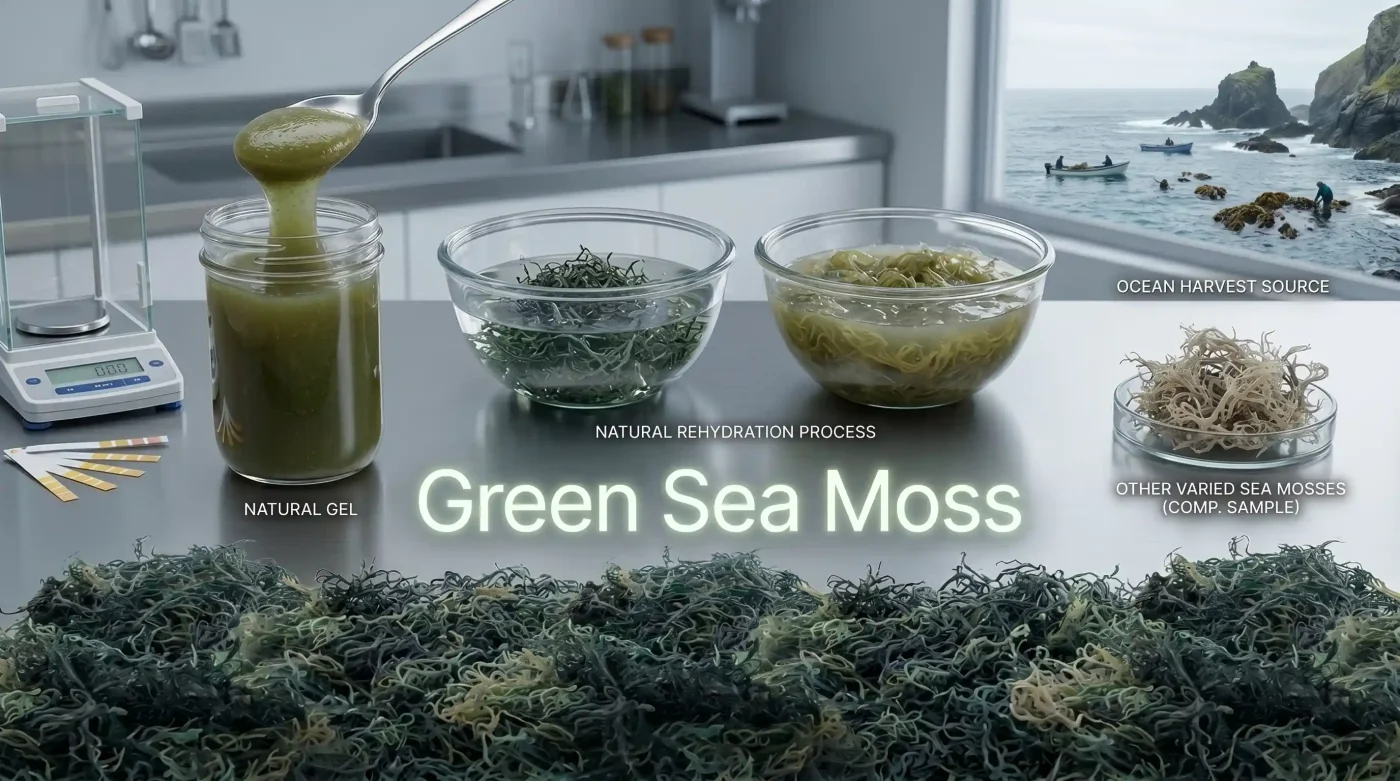
Marine superfoods have become very popular, but green sea moss is often misunderstood because of its name and color. While gold and purple sea moss are more common in the market, the green variety stands out because it may retain more of its natural chlorophyll, which gives it its distinctive green color.
This guide examines the benefits attributed to green sea moss, corrects common misconceptions about its polysaccharide profile, compares it to other variants and competing superfoods, and provides a safety framework for iodine exposure and drug interactions. To understand what sea moss does across all its forms, including capsules, gel, and bitters, see our broader sea moss overview.
What is Green Sea Moss? (Chondrus crispus vs. Gracilaria)
To understand green sea moss, we must first categorize it botanically. “Sea moss” is a colloquial term used to describe several species of red algae (Rhodophyta). The two most common species sold commercially are:
- Chondrus crispus: A cold-water species native to the rocky Atlantic coasts of North America and Europe. It is the primary source of kappa- and lambda-carrageenan.
- Gracilaria: A warm-water species commonly harvested in the Caribbean and Africa. It is the predominant species in many commercial markets and is often associated with agar.
Understanding the difference between Chondrus crispus and Gracilaria is vital for sourcing. Both species can present as green. You can explore our wildcrafted raw sea moss collection to see sourcing details by batch.
Why is it Green?
Green sea moss is green because it retains more of its natural chlorophyll. By utilizing shade-drying facilities, harvesters protect the moss from direct sun exposure. Standard gold sea moss is laid out under the sun, which reduces chlorophyll and shifts the color toward gold or beige.
The Science of Shade-Drying: Why Green Retains Chlorophyll
The primary differentiator of green sea moss is the shade-drying process. In standard gold sea moss production, the algae is laid out under the sun, which can reduce chlorophyll and shift the color toward gold or beige.
By utilizing shade-drying facilities, harvesters protect the moss from direct sun exposure. This preservation of pigment is what gives the moss its deeper green color and stronger sea flavor. Chlorophyll has antioxidant interest in research, but direct human evidence from sea moss specifically remains limited.
The Chlorophyll Advantage: Why Green Sea Moss is Unique
The primary distinguishing factor of green sea moss is its retention of chlorophyll, the green pigment responsible for photosynthesis. This is what separates it from gold sea moss and purple sea moss, both of which undergo more pigment loss during the drying process.
Read More About: Purple Sea Moss Nutrition, Health Benefits, Risks & How to Use It?
Nutritional Profile Per Serving
Sea moss is notable less for its macronutrient content and more for its broad trace mineral profile. The values below are approximations based on published data for raw Chondrus crispus and Gracilaria species. Actual nutrient levels vary significantly based on species, harvest location, water quality, and drying method.
Approximate values per 2 tablespoons (a0g) of raw dried sea moss:
- Calories: 5 kcal
- Protein: 0.2 g
- Carbohydrates: 1.a g
- Dietary Fiber: 0.1 g
- Iodine: 40–300+ mcg (highly variable)
- Iron: 0.9 mg
- Magnesium: 14 mg
- Calcium: 7 mg
- Potassium: 6 mg
- Zinc: Trace
- Vitamin B2 (Riboflavin): Trace
Important note: Pool-grown or tank-farmed sea moss may have a substantially different mineral profile compared to wildcrafted sea moss, as mineral uptake depends on the mineral composition of the surrounding water.
Benefits of Green Sea Moss (Marine Chlorophyll)
Antioxidant Properties*
Studies indicate chlorophyll and chlorophyll-derived compounds from marine algae may exhibit antioxidant activity, helping neutralize free radicals and reduce oxidative stress.*
May Support Immune Function*
Research suggests carrageenan may support the activity of macrophages and natural killer cells, which play a role in the body’s first line of immune defense.*
Prebiotic Polysaccharides*
The prebiotic benefit of carrageenan is contested in current research. Individuals with inflammatory bowel conditions should consult a healthcare professional before regular sea moss consumption.*
Source: Carrageenan as a Potential Factor of Inflammatory Bowel Diseases – PubMed
Collagen Support and Skin Health*
Sea moss contains sulfur compounds, zinc, and trace amounts of vitamins that may support the body’s natural collagen production. Collagen is a structural protein important for skin elasticity, joint integrity, and connective tissue.*
Nutrient Comparison: Green vs. Gold vs. Purple Sea Moss
All variants contain essential trace minerals, but their phytonutrient profiles differ. Mineral density varies based on harvest location and water quality.
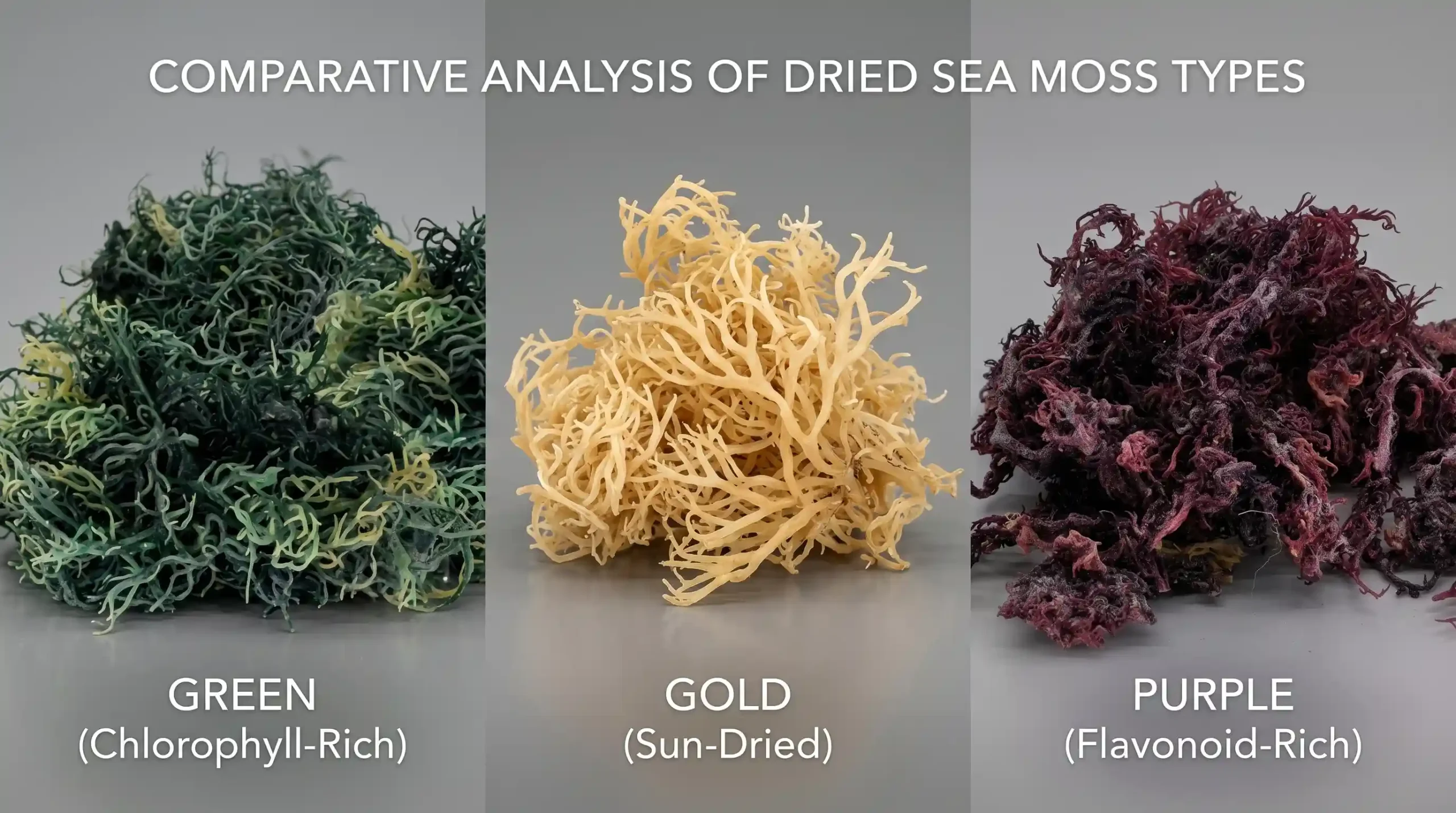
Comparative Nutrient Density Table
| Feature | Green Sea Moss | Purple Sea Moss | Gold Sea Moss |
| Drying Method | Shade-dried | Shade-dried | Sun-dried |
| Species Source | Chondrus crispus / Gracilaria | Gracilaria | Gracilaria |
| Primary Phytonutrient | Chlorophyll | Pigments, possibly anthocyanin-like compounds | Baseline pigments |
| Key Benefit | Antioxidant support | General nutrient variety | Easy to blend |
| Taste/Odor | Strong ocean flavor | Earthy flavor | Mild flavor |
| Mineral Density | Variable | Variable | Variable |
| Health Focus | General wellness | General wellness | Everyday use |
Note: Nutrient density varies based on harvest location and water quality.
Shop all three side by side: Purple Sea Moss, Gold Sea Moss, Full Sea Moss Range
Green Sea Moss vs. Spirulina vs. Chlorella
Consumers comparing chlorophyll-rich supplements often look at spirulina and chlorella alongside sea moss. They are not interchangeable.
- Spirulina is a blue-green algae that is higher in protein and has a more established research base for general nutrition support.
- Chlorella is a green algae that is often discussed in detox-focused supplements, but its claims should still be kept cautious and evidence-based.
- Green sea moss is most notable for its broad mineral spectrum, carrageenan content, and culinary versatility as a natural gel-former.
In simple terms: protein = spirulina, chlorophyll-rich algae = chlorella, mineral variety and gel use = sea moss.
How Much Green Sea Moss Should You Take Daily?
One of the most common questions from new sea moss users is how much to take. There is no universally established clinical dose, but the following general framework is widely used in practice:
- Starting dose: 1 teaspoon of gel per day for the first 1–2 weeks to assess tolerance, particularly gastrointestinal response.
- Standard dose: 1–2 tablespoons of gel per day (approximately 4–8 grams of raw dried sea moss equivalent).
- Upper practical limit: Most practitioners suggest not exceeding 4 tablespoons per day, given the iodine load. See the Iodine Safety section below.
Because sea moss contains meaningful amounts of iodine, which accumulates in the body, many practitioners recommend a cyclical approach: five days on, two days off, or three weeks on, one week off. This helps prevent iodine accumulation from daily compounding.
Forms and rough dose equivalences:
- 1 tablespoon of gel = 2 grams raw dried sea moss.
- 1 sea moss capsule (500–1,000 mg) ≈ 0.5–1 gram raw sea moss.
- 1 teaspoon powder = 2–3 grams raw sea moss.
For those who prefer liquid form, our Super Sea Moss Bitter is a pre-made herbal tonic that delivers sea moss alongside complementary botanicals.
How Long Until You See Results?
Managing expectations around sea moss is important. The timeline for noticeable effects varies by individual, diet, and health status.
- Digestive changes: Some individuals notice changes in bowel regularity or reduced bloating within 1–2 weeks of consistent use, attributed to its fiber and prebiotic content.
- Skin hydration and appearance: Anecdotal reports of improved skin hydration typically appear after 4–6 weeks of consistent use. This aligns with the timeline for general micronutrient repletion affecting skin cell turnover.
- Energy and general wellbeing: Changes in energy levels, if attributed to mineral repletion (iron, magnesium), may be noticed within 2–4 weeks, though this is highly individual.
- Thyroid-related effects: Because sea moss affects iodine levels, people with thyroid conditions may notice changes. Could be positive or adverse, within 2–4 weeks. Thyroid medication users should monitor closely.
Results are not guaranteed and depend heavily on baseline nutritional status, diet quality, and health conditions. For a broader look at how each sea moss form delivers these nutrients differently, read What Does Sea Moss Do?
Supplement Forms: Raw vs. Gel vs. Capsules vs. Powder
| Form | Primary Advantages | Trade-offs & Cons | Best For |
| Raw Dried | Most complete nutrient profile; minimal processing; maximum sourcing transparency. | High prep time (12–24h soak); strongest ocean flavor. | Purists who want full control over preparation. |
| Sea Moss Gel | High versatility; easy to mix into smoothies/teas; acts as a natural thickener. | Requires refrigeration; shorter shelf life (3–4 weeks); flavor can still be oceanic. | Daily smoothie drinkers and culinary use. |
| Capsules | Maximum convenience; precise dosing; completely flavorless; travel-friendly. | Most processed; likely reduced chlorophyll; quality is hidden inside the shell. | Busy lifestyles and those who dislike the taste of seaweed. |
| Powder | Faster to use than gel; dissolves easily; allows for flexible dosing. | Milling and drying may reduce chlorophyll; requires third-party purity checks. | Quick nutritional boosts and on-the-go mixing. |
Still deciding which form fits your lifestyle? Read our detailed guide: Sea Moss Gel vs. Capsules vs. Powder vs. Bitters – Which Form Is Right for You?
Safety First: Iodine Toxicity and Thyroid Health Risks
Sea moss contains high levels of iodine, which requires careful intake management.
Iodine Intake Guidelines
- Recommended Daily Allowance (RDA): 150 mcg.
- Upper Limit (UL): 1,100 mcg.
- A single tablespoon of sea moss gel may contain anywhere from approximately 40 mcg to 300+ mcg of iodine, depending on species and harvest location.
The Risk
Excess iodine intake may lead to:
- Hypothyroidism.
- Goiter.
- Thyroid dysfunction in susceptible individuals.*
Actionable Advice
- Keep intake modest and avoid relying on sea moss as a daily iodine source indefinitely without monitoring.
- Monitor total iodine intake from all dietary sources, including iodized salt, dairy, seafood, and supplements.
- Seek medical advice if you have a thyroid condition or take thyroid medication.
The Carrageenan Controversy: What You Need to Know
Carrageenan is often misunderstood in sea moss marketing. Whole sea moss contains undegraded carrageenan, a food-grade polysaccharide that is generally recognized as safe in food. Safety concerns usually come from degraded carrageenan (poligeenan), a chemically altered form not found in whole sea moss and associated with inflammatory findings in studies. People with IBD should still use caution and consult a clinician.
Who Should Avoid Sea Moss?
- Pregnant or breastfeeding women.
- Children.
- People with hyperthyroidism, Graves’ disease, or Hashimoto’s thyroiditis.*
- People with shellfish or seaweed allergies.*
- People with kidney disease (high potassium and mineral load).*
- Anyone on thyroid medication without first consulting their doctor.*
- People with inflammatory bowel disease (IBD) who have not consulted a physician.*
Potential Side Effects
Sea moss can absorb both beneficial minerals and harmful heavy metals from its growing environment. Possible side effects include:
- Gastrointestinal discomfort.*
- Bloating or diarrhea.*
- Iodine-related nausea.*
- Thyroid imbalance in sensitive individuals.*
- Heavy metal exposure (arsenic, lead) if sourced from contaminated waters. Underscoring the importance of third-party lab testing.
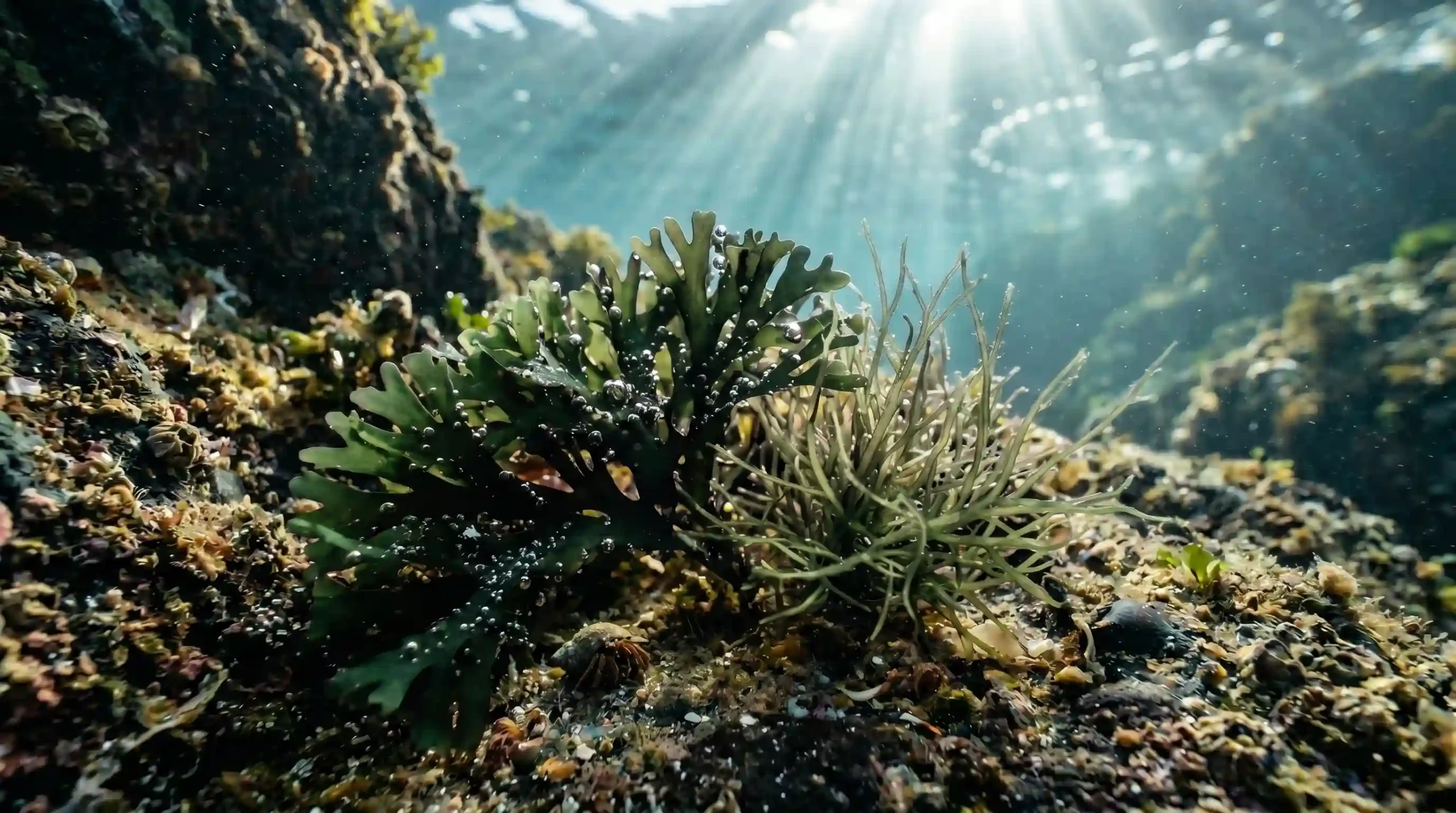
Sourcing Matters: Wildcrafted vs. Pool-Grown Sea Moss
As demand spikes, sea moss grown in tanks or controlled systems has flooded the market. Use this checklist to ensure your green sea moss is authentic:
- Look for sea debris: Wildcrafted green sea moss will often have small bits of dried sea grass or sand trapped in its branches. Pool-grown moss is usually cleaner.
- Examine the branches: Wild moss has irregular, thin, and varied branch thicknesses. Pool-grown moss is often more uniform in texture.
- Check for salt crystals: A natural salty film is normal, but heavy salt coating should prompt closer quality checks.
- Verify third-party testing: Reputable suppliers should provide lab reports for heavy metals such as arsenic, lead, cadmium, and mercury.
Sustainability and Ethical Sourcing
The surge in global sea moss demand has placed pressure on natural reef and coastal ecosystems in the Caribbean, West Africa, and Ireland. Overharvesting of wild Chondrus crispus along Atlantic coastlines has prompted some regional conservation concerns.
When evaluating sourcing:
- Ask whether the supplier uses rotational harvesting, which allows ecosystems to regenerate between harvest cycles.
- Atlantic sourcing tends to be smaller-scale and more traceable than Caribbean bulk supply chains.
- Pool-grown sea moss can reduce pressure on wild ecosystems if it is properly labeled and not sold as wildcrafted.
- Third-party certifications and lab certificates showing the absence of heavy metals signal stronger quality control.
For wholesale and bulk needs, our Full Spectrum Sea Moss (10lb) is a traceable, tested option for high-volume buyers.
How to Make Green Sea Moss Gel
Step 1: Wash
Rinse thoroughly 3–4 times.
Remove debris, sand, and salt.
Step 2: Soak
Submerge in spring or filtered water.
Optional: add lime juice.
Soak for 12–24 hours.
Step 3: Blend
Add to a blender with fresh water.
Blend until smooth.
Step 4: Set
Refrigerate for 2 hours.
The gel will thicken naturally.
Topical Application: The Green Sea Moss & Manuka Mask
Green sea moss can be used topically, but evidence for skin benefits is limited. Its mineral content may help support a moisturizing mask routine, but it should not be treated as a medical skincare treatment.
The 2026 Recipe:
- 2 tbsp Green Sea Moss Gel
- 1 tsp Manuka Honey – or try our Super Sea Moss Honey for a ready-made sea moss and honey blend
- 1 drop Frankincense Essential Oil
Instructions: Apply to clean skin for 15 minutes. The chlorophyll may contribute color and antioxidant interest, while the honey helps with texture and hydration.
Storage and Shelf Life
- Refrigerator: 3–4 weeks in an airtight glass container
- Freezer: Up to 3 months (freeze in ice cube trays for easy portioning)
- Signs of Spoilage: Visible mold (white, pink, or black spots), sour or rancid odor, or excessive liquid separation. Discard immediately if any of these appear.
The Flavor Neutralization Sea Moss
Because green sea moss has a stronger ocean-like scent than gold varieties, it can be made more palatable for smoothies and teas.
- The 24-hour soak: Place 2 oz of dry moss in filtered or spring water.
- The acid buffer: Add the juice of 1–2 key limes to the soaking water.
- Blend into smoothies with citrus, banana, or mango to mask the oceanic flavor.
Check More: Gold Sea Moss Benefits & Dosage
Conclusion
Green sea moss offers a genuinely distinct nutritional profile compared to sun-dried alternatives. Its chlorophyll retention, antioxidant content, broad mineral density, and the research profile of carrageenan in Chondrus crispus specifically make it a compelling addition to a whole-food diet. Whether used for immune support or culinary flexibility, the key to success is sourcing transparency and dosage moderation.
Sources – Reference
- WebMD. Sea Moss: Health Benefits and Side Effects.
- News-Medical. Does Eating Sea Moss Provide Health Benefits?
- PubMed Central. Carrageenan as a Potential Factor of Inflammatory Bowel Diseases.
- PubMed Central. An Overview to the Health Benefits of Seaweeds Consumption.
Frequently Asked Questions (FAQ)
Yes, but a cyclical approach such as 5 days on and 2 days off is often recommended to help monitor iodine exposure.
Pregnant women should be cautious because of iodine content and should consult a clinician first.*
Sea moss is genuinely mineral-rich, but the specific claim of “92 minerals” is not consistently verified in peer-reviewed research. Mineral content varies widely by species, water quality, and processing. It does provide meaningful amounts of iodine, potassium, magnesium, calcium, iron, and zinc.
There is no direct clinical evidence that sea moss causes weight loss. Its fiber may support satiety, but it is not a weight-loss treatment.*
Yes. It usually has a stronger, more ocean-like flavor than gold sea moss.
Look for irregular branches, a little sea debris, and a light salty film. Pool-grown moss is often too uniform and clean.
Disclaimer: *This article is for informational purposes only. Sea moss is a food and dietary supplement – not a medication. These statements have not been evaluated by the Food and Drug Administration. This product is not intended to diagnose, treat, cure, or prevent any disease. Consult a qualified healthcare provider before making changes to your supplement routine, particularly if you have a thyroid condition, are pregnant, or are taking medication.

Columbus Day 2026: History, Plants of the Columbian Exchange
Many foods and herbs we use today including chili peppers, cacao, vanilla, tomatoes, and potatoes,...
Oct

Vitamin C Powder: Forms, Dosage, Safety, and How to Choose
Vitamin C powder is a dissolvable supplement that is usually made with ascorbic acid or...
Oct

Goldenseal Root: Uses, Dosage, Safety & How to Buy It
What Is Goldenseal Root? Goldenseal root is a bitter yellow herb with a long history...
Oct
Andrographis Paniculata: Benefits, Herb Profile, Uses, Dosage & Safety
Andrographis paniculata is a bitter medicinal herb from the Acanthaceae family, often called “King of...
Sep

Patriot Day: History, Facts, and 9/11 Remembrance
Patriot Day is a day of remembrance. It is held every year on September 11th...
Sep

Olive Leaf: Benefits, Active Compounds, and How to Use It
We all use or have heard about olive oil. But did you know that the...
Sep

Labor Day Sale: Fresh Fall Botanicals
Update: The Herb To Body Labor Day 2026 sale ended on Monday, September 7, 2026,...
Sep

Astragalus Root: Benefits, Uses, Dosage & Safety
Astragalus root, also known as huang qi, comes from a plant in the pea family...
Aug

What Is Echinacea: Benefits, Active Compounds, Types, Uses and Who Should Avoid It?
When the cold season arrives, many people add a traditional botanical such as Echinacea to...
Aug

Elderberry (Sambucus nigra): What It’s Used For, Potential Benefits & Safety
Every autumn, the same scene plays out – someone at home starts sniffling. Through the...
Aug

Immune Supporting Herbs: Forms, Uses & Safety Guide
What is an Immune Support Herb? An immune-support herb is a plant traditionally used for...
Aug

Back to School Wellness: A Routine for the Whole School Year
The first bell of the school year changes a household’s routine overnight. Bedtimes shift earlier,...
Aug

Herbs for Women: Traditional Uses, Research Notes and Safety
Many women wellness seekers search for simple herbs to add to a daily routine. Some...
1 Comment
Aug

Oat Straw Tea: Benefits, Uses & How to Brew and Use Perfectly?
What Is Oat Straw Tea? Oat straw tea is a mild herbal tea made from...
Jul
Shikakai Powder: Benefits, Active Compounds, Uses and Safety
Long before bottled shampoo existed, people in South Asia reached for a dried legume pod...
Jul

Mugwort Tea: Benefits, Brewing, Flavor & the Safety Concern No One’s Telling You
Mugwort tea (Artemisia vulgaris), also known as the “Mother of Herbs,” holds a storied place...
Jul

Wormwood Herb: Benefits, Side Effects, Uses, Compounds & More
Wormwood (Artemisia absinthium) is one of the most famous and intensely bitter herbs in traditional...
Jul

Wheatgrass Juice Powder: Benefits, Nutrients, Uses, Taste Comparison & Buying Guide
In a perfect world, we’d all eat fresh greens every single day. But reality hits...
Jul