


Sea Moss
What Does Sea Moss Do? Benefits, Raw & Supplement Forms & Uses Guide
You’ve probably seen sea moss showing up everywhere from social media to smoothie bars, on supplement shelves. Maybe you’re curious but not quite sure what the trend is actually about.
That’s a fair place to be. Sea moss has been used for hundreds of years across Caribbean and Irish coastal communities, long before it became a trending health topic. And while some of the claims floating around online are exaggerated, the science behind sea moss is genuinely interesting.
This guide walks you through everything: what sea algae actually is, what the research says about its benefits, the differences between gold, purple, and raw varieties, the four main product forms, how to choose a quality product, and what a safe daily amount looks like.
No hype. Just honest, practical information so you can decide if sea moss is right for you.
What Is Sea Moss?
Sea moss – scientifically known as Chondrus crispus. It’s a type of red algae that grows along the rocky Atlantic coastlines of North America, Europe, and the Caribbean. It belongs to the same family as other edible sea vegetables and has been harvested for centuries as both food and traditional staple.
You might also hear it called Irish moss, a name rooted in its long history along the coasts of Ireland and Scotland, where communities used it as a food source during the Great Famine of the 1840s. In the Caribbean, particularly in Jamaica, Trinidad, and St. Lucia, sea moss has been a staple in tonics, drinks, and traditional cooking for generations.
What makes seamoss nutritionally interesting is its mineral density. It contains up to 92 of the 102 minerals the human body uses – including iodine, potassium, calcium, magnesium, iron, and zinc. Along with vitamins A, C, E, K, and several B vitamins. It also contains unique bioactive compounds not found in most land plants.
Gold, Purple, Green & Beyond: Every Sea Moss Variety Explained
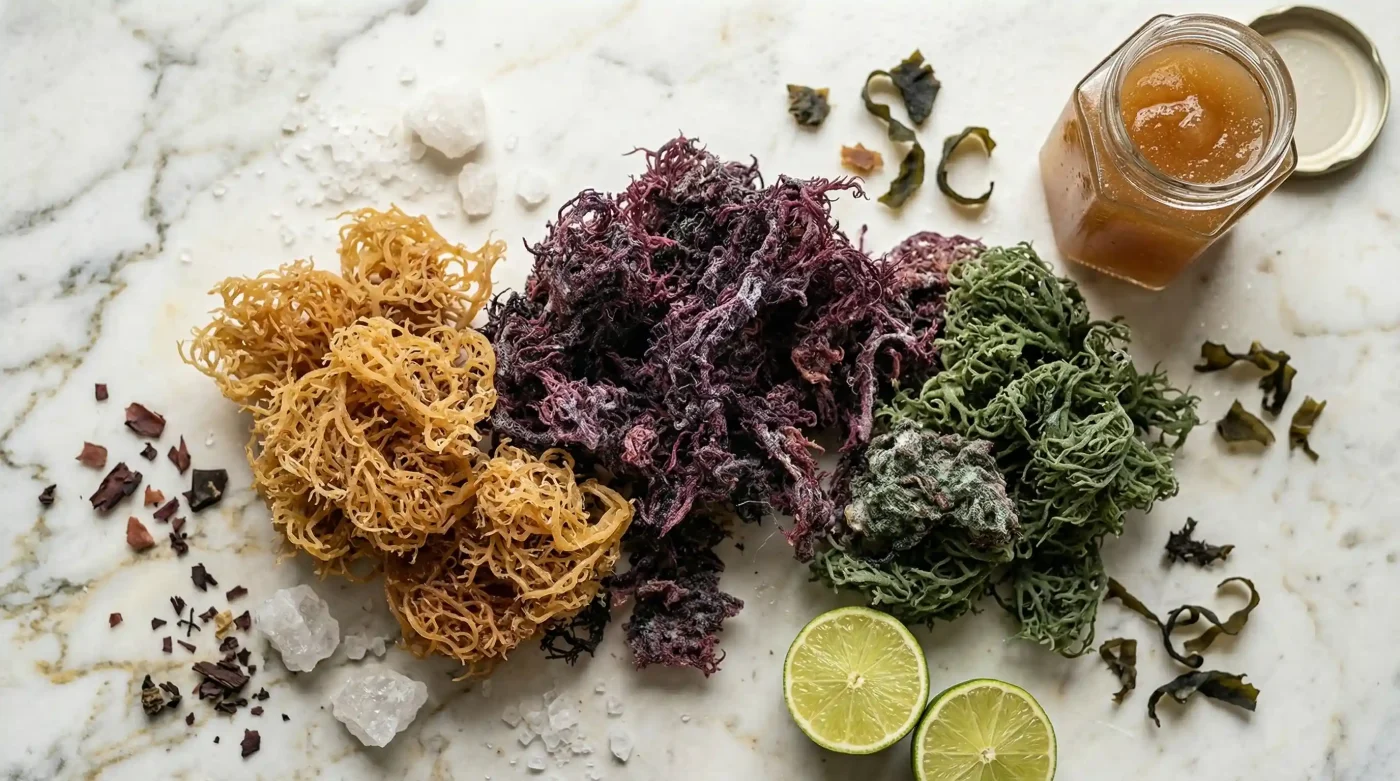
Seamoss comes in more color varieties than most people realise. Each type reflects the algae’s growing environment, pigment profile, and mineral concentration. Here’s what sets each one apart.
Gold Sea Moss
The most widely available variety, harvested from warm, sun-exposed Atlantic and Caribbean waters. Its golden-yellow color comes from natural phycoerythrin pigments and sun exposure during growth. Gold sea moss has a mild, slightly briny flavor and is the standard base for most commercial gel, powder, and capsule products. It’s high in iodine, potassium, and prebiotic carrageenan.
Available as: Wildcrafted Gold Sea Moss (4oz), Gold Sea Moss 1LB, Gold Seamoss Gel Jar
Purple Sea Moss
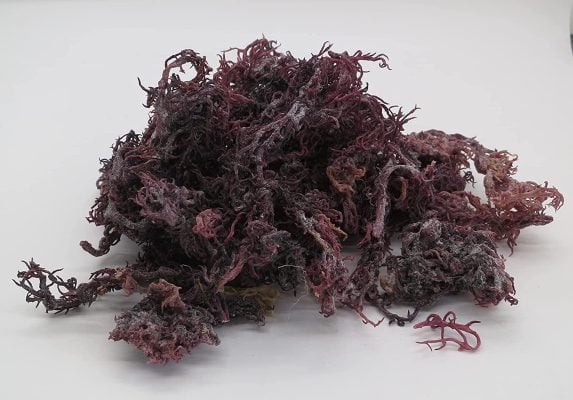
Purple sea moss gets its deep violet-to-burgundy color from anthocyanins – the same antioxidant pigment family found in blueberries and red cabbage. These compounds are well-studied for their ability to neutralize free radicals and support cardiovascular and cognitive health. Purple sea moss tends to have a stronger flavor than gold and is generally considered to carry a richer antioxidant profile, which is reflected in its slightly higher price.
Available as: Wildcrafted Purple Sea Moss (4oz), Purple SeaMoss 1LB, Purple Sea Moss Gel Jar
Green Irish Sea Moss
Green sea moss is less common than gold or purple but is gaining attention for its distinct chlorophyll content. The green pigment indicates higher chlorophyll concentration, which is associated with alkalizing properties and a slightly different phytonutrient profile. It has an earthier, more pronounced flavor than gold sea moss. Green sea moss is wildcrafted from Atlantic coastal regions and is a good option for people who specifically want chlorophyll-rich algae.
Available as: Green Irish Sea Moss Wildcrafted (4oz), Green Irish Sea Moss 1LB
Multi-Color Irish Sea Moss
Multi-color sea moss is a blended variety that contains gold, purple, and green sea moss in a single batch. It delivers a broader cross-section of the pigment compounds – anthocyanins from the purple, chlorophyll from the green, and the baseline mineral density of gold – without committing to a single variety. It’s a practical choice for people who want variety without managing multiple products.
Available as: Multi-Color Irish Sea Moss (4oz), Multi-Color Irish Sea Moss 1LB
Full Spectrum Sea Moss
Full spectrum seamoss refers to a premium blend designed to include the widest possible range of sea moss varieties and their associated compounds in a single product. Rather than isolating one color or pigment profile, full spectrum combines multiple algae types to deliver the complete range of minerals, polysaccharides, and antioxidant pigments together. It’s particularly relevant for wholesale and commercial buyers who want a single consistent supply that covers the full nutritional breadth of sea moss.
Available as: Full Spectrum Sea Moss 10LB bulk
Irish Sea Moss Cut & Sifted (C/S)
Cut and sifted sea moss is raw dried sea moss that has been pre-cut into smaller, more uniform pieces before packaging. This makes it easier to measure, faster to soak, and more consistent for commercial food preparation and supplement manufacturing. The nutritional profile is identical to whole dried sea moss – the difference is purely in preparation convenience.
Available as: Irish Sea Moss C/S
Raw vs. Processed Sea Moss
Raw sea moss refers to dried, unprocessed algae. Typically sun-dried after harvesting. When you make sea moss gel at home, you’re starting with raw sea moss. Processed forms include commercially prepared gel, capsules, and powder.
The main advantage of raw sea moss is that nothing has been added or removed. The trade-off is preparation time and the need to source a reputable supplier. Our step-by-step sea moss gel guide walks you through the process from scratch.
All Sea Moss Varieties at a Glance
| Variety | Color | Key Pigment | Flavor | Standout Property | Best For |
| Gold | Golden yellow | Phycoerythrin | Mild, briny | High iodine, standard gel base | Everyday mineral support |
| Purple | Violet–burgundy | Anthocyanins | Stronger, earthy | Highest antioxidant profile | Antioxidant focus, premium use |
| Green | Deep green | Chlorophyll | Earthy, robust | Chlorophyll-rich, alkalizing | Alkaline diet, chlorophyll intake |
| Multi-Color | Mixed tones | All three above | Balanced | Broad pigment spectrum in one product | Variety without multiple orders |
| Full Spectrum | Mixed premium | Full range | Varies | Maximum compound diversity | Commercial, wholesale use |
| Cut & Sifted | Golden (standard) | Phycoerythrin | Mild | Pre-cut for faster soaking | Food production, bulk prep |
Raw & Bulk Sea Moss (Make Your Own Gel or Use as-Is)
| Product | Size | Price | Best For | Link |
| Purple Sea Moss Wildcrafted | 4oz / 1LB | $15.99 / $37.99 | Antioxidant-focused gel making | Raw Purple Sea Moss |
| Gold Sea Moss Wildcrafted | 4oz / 1LB | $14.49 / $33.49 | Standard daily gel or powder base | Raw Gold Sea Moss |
| Green Irish Sea Moss | 4oz / 1LB | $17.99 / POA | Chlorophyll-rich & alkaline focus | Raw Green Irish Sea Moss |
| Multi-Color Irish Sea Moss | 4oz / 1LB | $14.49 / $39.99 | Broad-spectrum daily use | Multicolor Raw Sea Moss |
| Full Spectrum Sea Moss | 10LB bulk | $450.00 | Wholesale / commercial buyers | Raw Full Spectrum Sea Moss |
| Irish Sea Moss Cut & Sifted | Bulk | $20.48 | Faster soaking, food production | Irish Sea Moss C/S |
What’s Inside Sea Moss: Key Compounds That Matter
Understanding what sea moss actually contains helps you evaluate claims more clearly. The benefits attributed to sea moss don’t come from a single ingredient they come from a combination of minerals, polysaccharides, and pigment compounds working together. Lets see what does sea moss do for the body.

Carrageenan
Carrageenan is the most studied compound in sea moss. It’s a sulfated polysaccharide a type of complex carbohydrate. That gives sea moss gel its characteristic thick texture. Laboratory studies have looked at carrageenan for its compound profile. Some research suggests it may act as a prebiotic, feeding beneficial gut bacteria.*
There is ongoing scientific debate about processed carrageenan (a degraded food additive derived from seaweed) versus the native carrageenan in whole sea moss. Most researchers and nutritionists consider native carrageenan in whole food sea moss to be safe and potentially beneficial at typical dietary amounts.*
Fucoxanthin
Fucoxanthin is a carotenoid pigment found in brown and red algae. Early research suggests it may support healthy metabolic function and has shown antioxidant activity in laboratory settings. It’s one of the reasons sea moss is studied in the context of weight management, though human clinical trials are still limited.
Iodine
Iodine is perhaps the most medically significant mineral in sea algae. The thyroid gland requires iodine to produce hormones that regulate metabolism, energy levels, and many other bodily functions. Most Western diets are borderline iodine-deficient, and sea moss can be a meaningful dietary source.
That said, iodine is a case where more is not better. Excessive iodine intake can disrupt thyroid function in both directions. Typical serving sizes of sea moss products are generally within a safe range, but anyone with a thyroid condition should consult with their doctor before using sea regularly.
Potassium, Calcium & Magnesium
Sea moss provides meaningful amounts of electrolyte minerals. Potassium for heart and muscle function, calcium for bone density and nerve transmission, and magnesium for hundreds of enzymatic processes in the body. These aren’t exotic compounds; they’re foundational to daily physiological function.*
10 Research-Noted Benefits of Sea Moss: What Is Sea Moss Good For?
The following benefits are supported by research on sea moss and its constituent compounds. Each benefits scientifically promising, large-scale human clinical trials are still developing in many areas.
1. May Support Thyroid Function*
Sea moss is one of the richest natural dietary sources of iodine. The thyroid gland relies on iodine to produce T3 and T4 hormones, which regulate metabolism, temperature regulation, and energy. Research indicates that adequate iodine intake is directly linked to healthy thyroid hormone production. People with iodine-deficient diets may find sea moss a useful dietary supplement.*
Note: Consult your healthcare provider, especially if you have a thyroid condition.
2. Could Support Gut Health Through Prebiotic Fiber*
The carrageenan and fiber compounds in sea weed act as prebiotics food for the beneficial bacteria in your digestive system. A 2019 study published in BMC Complementary Medicine and Therapies found that seaweed polysaccharides positively influenced gut microbiota diversity in animal models. A balanced gut microbiome is associated with better digestion, immune response, and even mood regulation.*
3. Tends to Provide a Rich Mineral Profile*
Unlike most seamoss supplements that isolate individual nutrients, whole sea moss delivers minerals in a naturally occurring, co-factor-rich matrix. Potassium, calcium, magnesium, iron, zinc, phosphorus, and selenium appear together. Which some nutritionists suggest may improve absorption and bioavailability compared to isolated mineral supplements.*
4. May Support Immune Health*
Preliminary research suggests the polysaccharides in sea moss may help modulate immune response. A study in Applied and Environmental Microbiology found that certain seaweed compounds activated immune cells in vitro. Sea moss potentially provides immune-supporting nutrients including vitamin C, zinc, and antioxidant compounds. More human research is needed.*
5. Could Support Skin Health
Sea moss has a long history of topical and dietary use for skin. Its sulfur content sulfated polysaccharides is believed to contribute to collagen-supportive properties. Zinc and vitamin A in sea moss are well-established in dermatology for their roles in skin cell regeneration and sebum regulation. Some users report improvements in skin hydration and texture with regular use, though controlled clinical evidence in humans is limited.*
6. May Contains Antioxidant Properties*
Both gold and purple sea moss contain antioxidant compounds – carotenoids, phycocyanins, and anthocyanins. That help neutralize free radicals. Oxidative stress is associated with accelerated cellular aging and several chronic health conditions. The antioxidant capacity of sea moss has been measured in multiple laboratory studies, with purple varieties showing particularly high DPPH radical-scavenging activity.*
7. May Contribute to Energy and Metabolic Support*
Sea moss contains B vitamins, particularly B2 (riboflavin) and B9 (folate) – along with iron, which are all involved in energy metabolism at the cellular level. Iron deficiency is one of the most common nutritional deficiencies globally and is closely associated with fatigue. Sea moss could potentially help address suboptimal iron intake as part of a balanced diet.*
8. Might Support Heart Health*
The potassium and magnesium in sea moss are well-documented for their roles in cardiovascular function, blood pressure already within a normal range, normal heart rhythm, and vascular health. Additionally, some research on seaweed fiber suggests it may help support healthy cholesterol levels, though most studies have been conducted in animal models. Seamoss might contribute to heart-healthy dietary patterns when consumed as part of a various diet.*
9. Could Support Joint Health*
Omega-3 fatty acids and sulfated polysaccharides in sea moss have been studied in relation to joint comfort. Traditional use in Ireland and the Caribbean often included sea moss for people with joint stiffness or discomfort. Possibly, regular consumption as part of a balanced diet may support comfort, though this area needs more direct clinical research.*
10. May Support Respiratory Health*
Sea moss has historically been used as a mucilaginous food. Meaning it has a gel-like quality that coats and soothes mucosal membranes. Traditional Caribbean and Irish preparations often included sea moss drinks during cold and flu season. There’s a chance that the soothing mucilage in sea moss may support healthy respiratory mucous membranes, though clinical evidence is limited.*
Disclaimer: *These statements have not been evaluated by the Food and Drug Administration. This product is not intended to diagnose, treat, cure or prevent any disease.
Sea Moss Forms: Gel, Capsules, Powder & Bitters
Sea moss is available in four main forms, raw and sea moss supplements from, each with different practical advantages. The right form depends on your lifestyle, your goals, and how you prefer to take supplements.
Sea Moss Gel
Gel is the most traditional processed and used form. Raw dried sea moss is soaked, blended with spring or alkaline water, and refrigerated until it sets into a smooth gel. It can be added to smoothies, oatmeal, soups, salad dressings, and even used topically on skin.
The advantage of gel is that it’s minimally processed and easy to control serving size. The trade-off is a shorter shelf life (typically 2-4 weeks refrigerated) and the need to either make it yourself or buy a prepared version.
If you want to make gel at home, our sea moss gel guide covers the full process including soaking times, blending ratios, and storage tips.
Sea Moss Powder
Sea moss powder is made by drying sea moss at low temperatures and grinding it into a fine powder. It has a much longer shelf life than gel, typically 1-2 years when stored in a cool, dry place and is easy to add to smoothies, capsules, teas, and recipes.
Our detailed post on how to use sea moss powder covers 10 practical uses, dosage guidelines, and storage recommendations.
Sea Moss Capsules

Capsules are the most convenient option for people who travel frequently or dislike the taste of sea moss. They deliver a pre-measured dose and require no preparation. The key consideration is transparency. Look for brands that disclose the exact milligrams per capsule and source of their sea moss.
Sea Moss Bitters
Sea moss bitters are a liquid tonic that combines sea moss extract with other herbs – often bitter roots, bark, or adaptogens – designed to support digestion and gut health. The bitter compounds stimulate bile production and digestive enzyme activity.
For a full breakdown of what sea moss bitters contain and how they compare to gel, see our sea moss bitters benefits and side effects guide.
Comparing Sea Moss Forms
| Form | Shelf Life | Preparation | Best For | Flavor Impact |
| Gel | 2–4 weeks (fridge) | Soak + blend | Smoothies, cooking, topical | Mild – easily masked |
| Powder | 1–2 years | None | Smoothies, baking, capsules | Slight seaweed taste |
| Capsules | 2+ years | None | Travel, precise dosing | None |
| Bitters | 1–2 years | None | Digestive support, tonics | Bitter, herbal |
How to Use Sea Moss: Practical Dosage Guidance
Sea moss doesn’t come with a universal prescription. The right amount depends on the form, your health goals, and your individual tolerance. The guidance below reflects general dietary use, not medical dosing.
Daily Amount by Form
| Form | Suggested Daily Amount | When to Take | Notes |
| Gel | 1–2 tablespoons (15–30g) | Morning or with meals | Start with 1 tbsp and increase gradually |
| Powder | 1 teaspoon (3–5g) | Morning smoothie or tea | Mix well – can clump in cold liquids |
| Capsules | Per label (typically 500–1000mg) | With water, with meals | Check mg of actual sea moss per capsule |
| Bitters | Per label (typically 1–2 oz) | Before meals for digestion | Dilute in water or juice if too strong |
A few practical notes worth keeping in mind:
- Start low and increase gradually, this gives your digestive system time to adjust to the increased fiber and mineral content.
- Consistency matters more than quantity. Daily use over weeks is more likely to produce noticeable effects than large occasional doses.
- Iodine is the nutrient to watch if you use sea moss daily. If you have a thyroid condition or take thyroid medication, speak with your doctor first.
- Pregnant or breastfeeding individuals should consult a healthcare provider before using sea moss regularly.
How to Choose Quality Sea Moss: What to Look For
Not all sea moss products are equal. As demand has grown, so has the availability of pool-grown sea moss. A farmed variety grown in controlled saltwater pools rather than the open Atlantic ocean. The difference matters for quality.

Wild-Harvested vs. Pool-Grown Sea Moss
Wild-harvested sea moss grows attached to rocks in the ocean, absorbing minerals directly from seawater. This natural environment produces the mineral density that sea moss is valued for. Pool-grown sea moss is cultivated in tanks with added mineral solutions. It grows faster and more cheaply, but the mineral profile is typically lower.
You can often identify pool-grown sea moss by its uniform shape, unnaturally bright color, and lack of natural debris (small shells, sand, other algae). Wild-harvested sea moss tends to look slightly irregular, with variation in color and texture.
Signs of Quality Sea Moss
- Source disclosure: The supplier clearly states where the sea moss was harvested (e.g., St. Lucia, Jamaica, Irish coastline)
- Third-party lab testing: Certificate of analysis available showing iodine content, heavy metals, and microbial safety
- Minimal ingredients: For gel products, the ingredients should be sea moss and water and nothing else
- Natural color variation: Golden or reddish-brown tones with slight irregularity in texture
- Salt residue: Wild-harvested dried sea moss typically has a slight salt film from ocean water
Heavy Metal Safety
Because sea moss absorbs minerals from its environment, it can also absorb contaminants if harvested from polluted waters. This is why sourcing transparency and third-party lab testing matter. Reputable suppliers test for lead, arsenic, mercury, and cadmium. When in doubt, ask for the certificate of analysis before purchasing.
Sea Moss from Herb To Body: Why Our Sourcing Matters
At Herb To Body, we source our sea moss from carefully selected wild-harvesting regions in the Caribbean and Atlantic. Every product goes through quality checks before it reaches you.
Our sea moss line includes options for different lifestyles and preferences:
- Super Sea Moss Honey: Sea moss combined with raw honey for daily immune and energy support
- Super Sea Moss Bitter: Sea moss extract in a digestive bitters tonic with traditional herbal blend
- Super Sea Moss Capsule Blend: Pre-measured capsules for precise, convenient daily use.
Ready-to-Use Sea Moss Products
| Product | Size | Price | Best For | Link |
| Gold Sea Moss Gel Jar | 8oz / 16oz | $13.50–$26.82 | Topical + dietary, no prep needed | Raw Sea Moss |
| Purple Sea Moss Gel Jar | 8oz / 16oz | $14.22–$26.82 | Antioxidant-rich daily gel | Raw Sea Moss |
| Organic Super Sea Moss Powder | 4oz / 1LB | $15.53–$25.20 | Smoothies, cooking, long shelf life | Raw Sea Moss |
| Sea Moss Powder (Organic) | 4oz / 1LB | $15.49–$34.49 | High-volume daily powder use | Raw Sea Moss |
| Organic Super Sea Moss Capsules | 60 caps | $14.40 | Travel, no-prep precise daily dose | Raw Sea Moss |
| Super Sea Moss Honey – 16oz | 16oz | $31.50 | Immune + energy tonic, daily ritual | Raw Sea Moss |
| Super Sea Moss Bitter – 16oz | 16oz | $27.50 | Digestive support, pre-meal tonic | Raw Sea Moss |
Conclusion
Sea moss has earned its reputation through centuries of traditional use and a growing body of nutritional research. It’s a genuinely mineral-rich food with interesting bioactive compounds and real potential to support thyroid health, gut function, immune response, and skin health as part of a balanced diet.
The honest caveat is that much of the research is still preliminary or conducted in laboratory and animal models. Sea moss is not a cure for anything, and claims that it is should raise a red flag. What it is, is a nutrient-dense traditional food with a reasonable case for regular dietary inclusion for most healthy adults.
The key is choosing quality. Wild-harvested sea moss from a transparent, tested source is worth more than a cheap pool-grown alternative. Start with a manageable daily amount, be consistent, and give it at least a month before drawing conclusions.
Ready to add sea moss to your routine?
Feel Free to Check Herb To Body’s sea moss products here.
Sources & References
The following peer-reviewed sources and authoritative health references informed this article:
Lomartire S, Marques JC, Gonçalves AM. An Overview to the Health Benefits of Seaweeds Consumption. Mar Drugs. 2021;19(6):341. doi:10.3390/md19060341.
Cornish ML, Critchley AT, Necas O. A role for sulfated polysaccharides from red algae in the diet. NRC Publication Archive
Ramnani P, Chitarrari R, Tuohy K, et al. In vitro fermentation and prebiotic potential of novel low-molecular weight polysaccharides derived from agar and alginate seaweeds. Anaerobe. 2012;18(1):1-6. doi:10.1016/j.anaerobe.2011.08.003.PubMed.
Rasmussen HE, Blobaum KR, Park YK, et al. Lipid extract of Nostoc commune var. sphaeroides Kutzing, a blue-green alga, inhibits the activation of sterol regulatory element binding proteins in HepG2 cells. J Nutr. 2008;138(3):476-81. doi:10.1093/jn/138.3.476.
National Institutes of Health, Office of Dietary Supplements. Iodine Fact Sheet for Health Professionals.
Freitas MV, Pacheco D, Cotas J, et al. Seaweed Pigments and Polyphenols as Antioxidants: Phaeodactylum tricornutum and Spirulina platensis as Case Studies.
Frequently Asked Questions (FAQ)
For most healthy adults, daily sea moss use at typical serving sizes is considered safe. The main consideration is iodine because sea moss is a concentrated iodine source, daily use at high amounts could potentially affect thyroid function in people with pre-existing conditions. Staying within the suggested daily amounts on product labels is the sensible approach.
This depends on your specific condition and your current treatment. Because sea moss contains iodine, it can interact with both hypothyroid and hyperthyroid conditions. Please speak with your doctor before adding sea moss to your routine if you have any thyroid diagnosis or are taking thyroid medication.*
Pool-grown sea moss is generally considered lower quality because it lacks the natural mineral absorption that comes from growing in the open ocean. It’s not necessarily harmful, but you may not get the full mineral density that makes wild-harvested sea moss nutritionally interesting. If mineral content matters to you, wild-harvested is the better choice.
The color differences reflect different pigment compounds in each variety. Gold sea moss contains phycoerythrin pigments and is the most common variety – it’s what most gel and powder products use. Purple sea moss contains anthocyanins, giving it a stronger antioxidant profile. Green sea moss contains chlorophyll, which is associated with alkalizing properties. Multi-color sea moss blends all three, and full spectrum sea moss is a premium blend designed to deliver the widest range of sea moss compounds in a single product.
Most people who report noticeable changes in energy, digestion, or skin. You can try for a period of 2–4 weeks of consistent daily use. Sea moss is a dietary supplement, not an acute medication. Its effects build gradually with regular intake.
They are the same plant. Irish moss is the common name used in Ireland and Scotland, where Chondrus crispus has been harvested for centuries. Sea moss is the name more commonly used in the Caribbean and in modern supplement marketing. Some people also use the term loosely to refer to several related algae species.
Some early research on fucoxanthin – a compound in sea moss – suggests a possible connection to metabolic function. The fiber in sea moss may also contribute to satiety. However, there are no human clinical trials specifically on sea moss and weight loss. It could potentially be a useful dietary addition within a broader healthy eating pattern, but it’s not a weight-loss product.
Gold sea moss is the most widely recommended starting point for homemade gel – it has the mildest flavor, widely available in wildcrafted form, and produces a smooth, neutral-tasting gel that mixes easily into food and drinks. Purple sea moss makes an equally good gel with a slightly deeper color and stronger taste. If you want the broadest nutritional range in a single batch of gel, multi-color sea moss is the practical choice.
Disclaimer: *This article is for informational purposes only. Sea moss is a food and dietary supplement – not a medication. It is not intended to diagnose, treat, cure, or prevent any disease. Consult a qualified healthcare provider before making changes to your supplement routine, particularly if you have a thyroid condition, are pregnant, or are taking medication.

Best Sea Moss to Buy in 2026: Forms, Species & Quality
Sea moss is one of the most popular sea vegetables on the market. But the...
Apr

Green Sea Moss: Nutrition, Benefits & Safety Guide (2026)
Marine superfoods have become very popular, but green sea moss is often misunderstood because of...
Apr

How To Check Real Sea Moss: 5 Ways to Check Before You Buy
You’ve probably noticed sea moss gel, capsules, and powder popping up everywhere lately. With this...
2 Comments
Apr

Sea Moss Gel vs. Capsules vs. Powder vs. Bitters: Which Form Is Right for You?
Not sure which sea moss form to pick? This guide breaks down gel, capsules, powder,...
Apr

What Does Sea Moss Do? Benefits, Raw & Supplement Forms & Uses Guide
You’ve probably seen sea moss showing up everywhere from social media to smoothie bars, on...
Apr

Sea Moss Bitters Benefits & Side Effects: Should You Try This Herbal Tonic?
Sea moss bitters are a liquid herbal tonic that combines nutrient-rich sea moss with traditional...
Mar
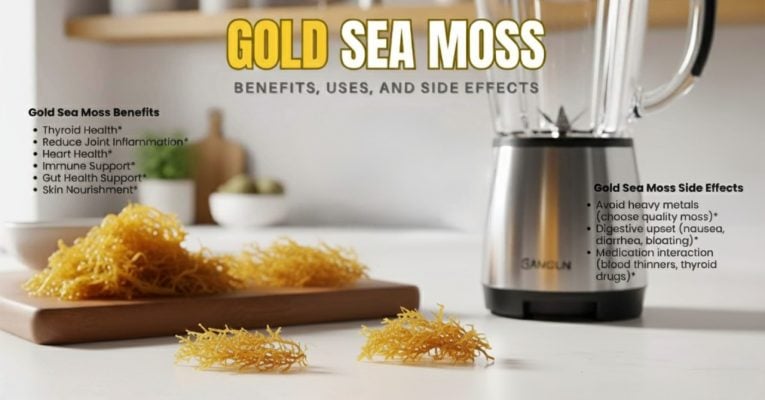
Gold Sea Moss: Benefits, Dosage, Safety Warnings & Gel vs Capsules
What is Gold Sea Moss? Gold sea moss is a specific type of marine algae,...
Oct

Purple Sea Moss: Nutrition, Health Benefits, Risks & How to Use It?
Purple sea moss is a nutrient-rich superfood used for centuries. As its popularity grows, it’s...
Jul
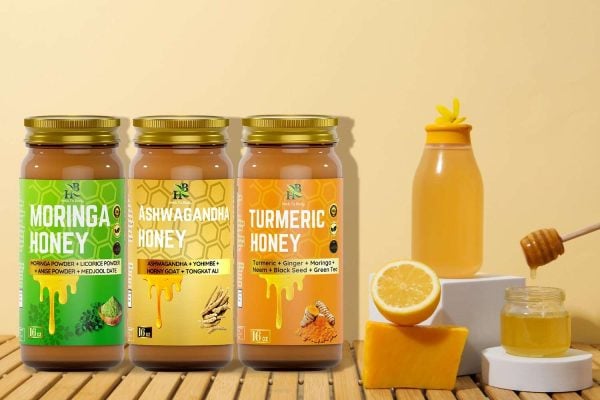
Raw Natural Honey Infused with Herbs: Unlocking Wellness with Herb To Body’s Herbal Honey Line
Raw herbal honey infusions are quickly becoming a staple for health enthusiasts – and for...
Mar
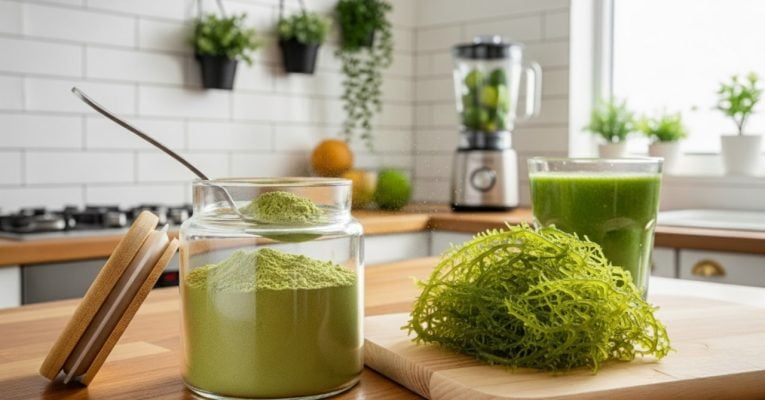
How to Make Sea Moss Powder: Guide to Benefits, Risks and Use
In the YouTube video titled "How to make sea moss powder | St Lucia", the...
1 Comment
Feb

How To Make Sea Moss Gel Proper Way – Benefits, Uses and Recipe
Making sea moss gel from scratch provides a more natural and inexpensive alternative to store-bought...
1 Comment
Jun
Sea Moss – What is it? How to use it?
Quick Answer Sea moss is a type of red algae that grows along the Atlantic...
Jan