


Soursop

Plant Overview of
Soursop
plant overview
Soursop is the common English name for Annona muricata L., an evergreen tree in the custard-apple family. The name applies to the tree, its fruit, and — in the supplement trade — most often to its dried leaf.
shopping soursop – four varieties
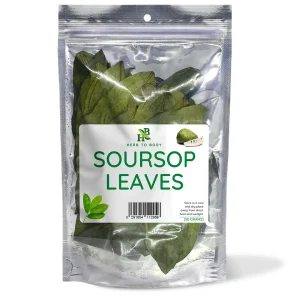 Soursop Leaves – 50g, 4oz and 1lb Price range: $9.99 through $29.99This product has multiple variants. The options may be chosen on the product page
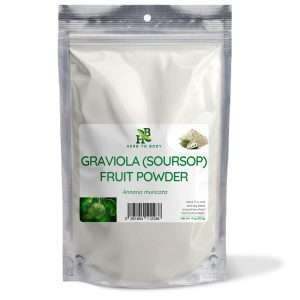 Graviola (Soursop) Fruit Powder – 4oz and 1Lb Price range: $10.99 through $26.99This product has multiple variants. The options may be chosen on the product page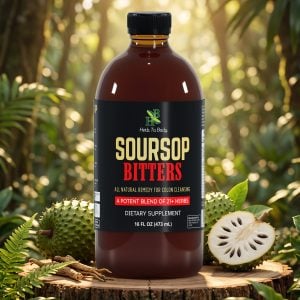
 Soursop Bitter 16oz$28.99
Herbal Insight Update

How to Take Soursop Bitters: Dosage, Timing & What to Expect?
plant overviewshopping how to take soursop bitters: dosage, timing & what to expect? – six...
How Long Does Soursop Bitters Take to Work?
plant overviewshopping how long does soursop bitters take to work? – six varietiesAcai Berry PowderRated...

Soursop: Complete Guide to Benefits, Leaves, Powder, Bitters & Uses
plant overviewshopping soursop: complete guide to benefits, leaves, powder, bitters & uses – six varietiesAcai...

Soursop Leaf vs. Soursop Bitter: Which is Better for Your Body?
plant overviewshopping soursop leaf vs. soursop bitter: which is better for your body? – six...

How To Make Soursop Tea: Benefits, Side Effects and Uses
plant overviewshopping how to make soursop tea: benefits, side effects and uses – six varietiesAcai...
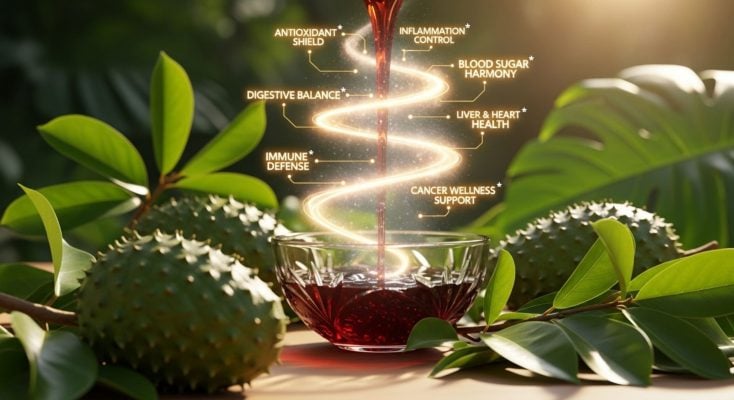
Soursop (Graviola) Bitter Benefits & Side Effects: Is It Right for You?
plant overviewshopping soursop (graviola) bitter benefits & side effects: is it right for you? –...
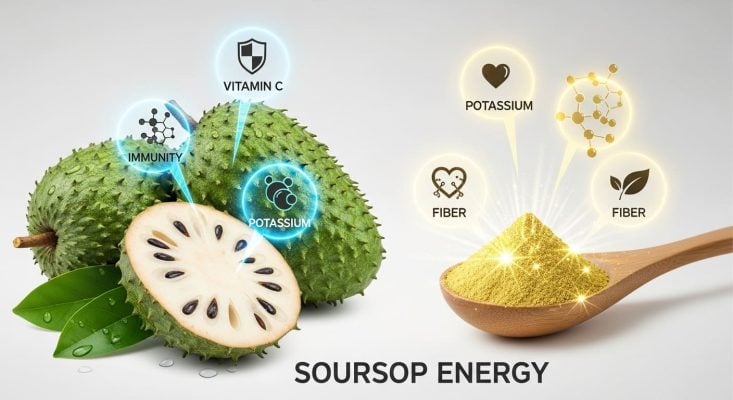
The Complete Guide to Soursop Fruit Powder (Graviola): Benefits, Uses, and Safety
plant overviewshopping the complete guide to soursop fruit powder (graviola): benefits, uses, and safety –...

Health Benefits of Soursop Leaves Powder: What They’re Good For and How to Use?
plant overviewshopping health benefits of soursop leaves powder: what they’re good for and how to...
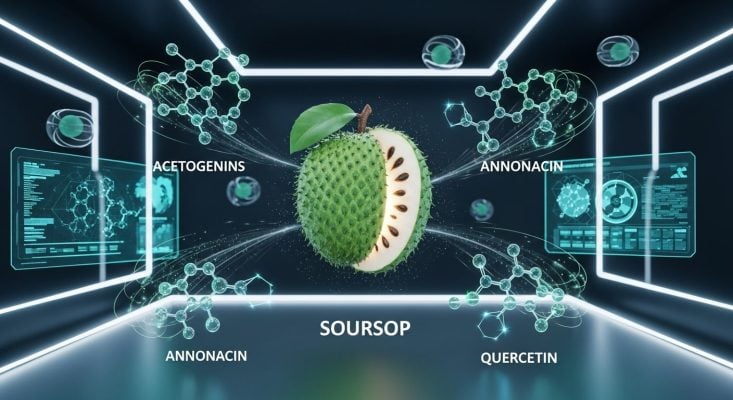
Graviola (Soursop): Benefits, Dosage, Uses & Safety Guide
plant overviewshopping graviola (soursop): benefits, dosage, uses & safety guide – six varietiesAcai Berry PowderRated...

15 Traditional and Research-Noted Benefits of Soursop Leaves
plant overviewshopping 15 traditional and research-noted benefits of soursop leaves – six varietiesAcai Berry PowderRated...
What Soursop Is?
Soursop is the common English name for Annona muricata L., an evergreen tropical tree in the flowering-plant family Annonaceae. The name may refer to the tree, its fruit, or a preparation made from a particular plant part.
In commercial products, “soursop” may refer to fruit pulp, leaf, seed, bark, root, powder, tea, juice, or extract. A product listing should therefore identify the plant part and preparation instead of using only the word “soursop.”
The accepted botanical name is Annona muricata L. Linnaeus published the species in Species Plantarum in 1753. The “L.” following the binomial is the standard author abbreviation for Carl Linnaeus. The IPNI name record for the species is 14308-2. [pubchem.ncbi.nlm.nih]

Species and plant part
The botanical name identifies the species, but it does not identify the material being sold.
For example, these are different product materials:
- Annona muricata leaf.
- Annona muricata fruit pulp.
- Annona muricata seed.
- Annona muricata bark.
- Annona muricata root.
- Annona muricata extract.
These materials may differ in their chemical constituents, processing requirements, intended use, and safety considerations. A complete product specification should state the botanical name, plant part, form, origin, and processing method.
Soursop, graviola, and guanábana generally refer to the same species in English-, Portuguese-, and Spanish-language commerce. “Graviola” is widely used in Portuguese, while “guanábana” is widely used in Spanish. Common names can vary by region, so the botanical name remains the most reliable species identifier.
Source[pmc.ncbi.nlm.nih][powo.science.kew]
Taxonomic classification
Rank | Classification |
Order | Magnoliales |
Family | Annonaceae |
Genus | Annona |
Species | Annona muricata L. |
Some data also place the species in the subfamily Annonoideae and tribe Annoneae. Intermediate taxonomic ranks can vary between classification systems, so product documentation should prioritize the accepted binomial and plant part.
The fruit is typically green, ovoid to heart-shaped, and covered with soft, pointed projections. The pulp is white and fibrous, and the fruit contains numerous dark seeds. The epithet muricata refers to the rough or studded appearance of the fruit surface.
Botanical synonyms
Historical botanical literature and trade records may use older names for Annona muricata. Synonym lists can differ between taxonomic databases and may be updated as nomenclatural records are reviewed.
Examples of names associated with Annona muricata in taxonomic databases include:
- Annona bonplandiana Kunth.
- Annona cearaensis Barb.Rodr.
- Annona macrocarpa Wercklé.
- Annona mexicana Lodd.
- Guanabanus muricatus (L.) M.Gómez.
- Historical infraspecific names involving Annona muricata var. borinquensis and Annona muricata f. mirabilis.

Common names
Reported names include:
Language or region | Common name |
English | Soursop |
Portuguese | Graviola |
Spanish | Guanábana |
French | Corossol |
Filipino | Guyabano |
Indonesian and Malay | Sirsak; durian belanda |
Vietnamese | Mãng cầu xiêm |
Thai | Thurian thet |
Common-name usage varies by country. Some names may also be used loosely for other Annona species in local markets. For purchasing, labeling, and structured product data, use the botanical name together with the plant part.
References
- Royal Botanic Gardens, Kew. “Annona muricata L.” Plants of the World Online.[powo.science.kew]
- International Plant Names Index. “Annona muricata L.” Name record 14308-2.[pubchem.ncbi.nlm.nih]
- Raclariu-Manolica AC, Bakhiya N, Hirsch-Ernst KI. “Risk assessment regarding the use of Annona muricata in food supplements.” EFSA Journal. 2020;18(Suppl 1):e181112. doi:10.2903/j.efsa.2020.e181112.[pmc.ncbi.nlm.nih]
- Champy P, Höglinger GU, Féger J, et al. “Annonacin, a lipophilic inhibitor of mitochondrial complex I, induces nigral and striatal neurodegeneration in rats: possible relevance for atypical parkinsonism in Guadeloupe.” Journal of Neurochemistry. 2004;88(1):63–69.[pubmed.ncbi.nlm.nih]
- French Agency for Food Safety, Afssa. Opinion on the risks associated with consumption of corossol and its preparations. 2010.[anses]
- U.S. Food and Drug Administration. “Label Claims for Conventional Foods and Dietary Supplements.”[fda]
- U.S. Food and Drug Administration. “Structure/Function Claims.”[fda]
- Federal Trade Commission. “Health Products Compliance Guidance.”[ftc][ftc]
- Google Search Central. “Creating Helpful, Reliable, People-First Content.”[developers.google]
- Google Search Central. “Spam Policies for Google Web Search.”[developers.google]
Related species
Soursop may be confused with other members of the Annonaceae family:
- Annona squamosa is commonly known as sugar apple or sweetsop.
- Annona reticulata is commonly known as custard apple or bullock’s heart.
- Annona cherimola is cherimoya.
- Atemoya is a hybrid involving Annona cherimola and Annona squamosa.
- Asimina triloba is the North American pawpaw. It belongs to the same botanical family but to a different genus.
A common name such as “custard apple” is not sufficient for reliable identification because it may refer to different species in different markets.
Buying and identifying material
A supplier specification should include:
- Accepted botanical name: Annona muricata L.
- Plant part: leaf, fruit, seed, bark, root, or another stated material.
- Form: whole, cut, powdered, dried, tea, juice, or extract.
- Extract details: extraction solvent and ratio, where applicable.
- Country or region of origin.
- Processing and drying information.
- Lot number and certificate of analysis.
- Botanical authentication method, where available.
Dried Annona muricata leaves are generally described as obovate to elliptic, glossy on the upper surface, paler beneath, and approximately 5–18 cm long and 2–7 cm wide. Floristic descriptions also report a short petiole and visible secondary veins.
Visual inspection is only a preliminary quality check. Color, texture, aroma, particle size, and leaf shape cannot by themselves confirm the identity or purity of a powdered or heavily processed product. Suppliers should use appropriate quality-control procedures, such as microscopy or validated analytical testing, where suitable.
Seeds are a separate plant material and should not be assumed to be interchangeable with leaf or fruit. If a product specification requires seed-free leaf or fruit material, the supplier should document the relevant manufacturing and quality-control process.
Safety and responsible use
Annona muricata and other plants in the Annonaceae family contain annonaceous acetogenins, including annonacin. Some research has raised concerns about the potential neurotoxicity of certain preparations and constituents. (Source: pmc.ncbi.nlm.nih)
More on Soursop

Phytochemistry & Active Compounds of Soursop
Soursop isn't just a tasty tropical fruit—it is like a tiny green factory! Different parts of the soursop…