

Fenugreek Herb

Trigonella foenum-graecum
Fenugreek
plant overview
Fenugreek (Trigonella foenum-graecum) is an herb native to the Mediterranean and western Asia. Its maple-scented seeds are traditionally used in curries, spice blends, teas, and pickles, while its leaves are enjoyed as a culinary herb. Fenugreek contains dietary fiber and naturally occurring plant compounds.
shopping fenugreek herb – two varieties
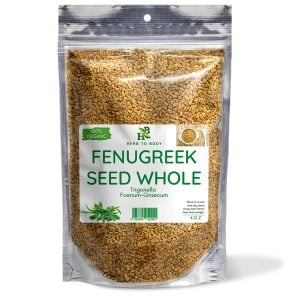 Organic Fenugreek Seed Whole (Methi) – 4oz and 1lb Price range: $4.99 through $9.49This product has multiple variants. The options may be chosen on the product page
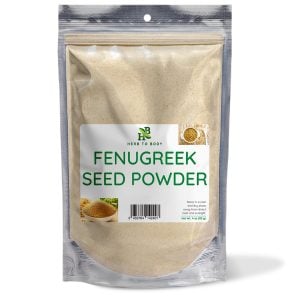 Fenugreek Seed Powder – 4oz and 1lb Price range: $6.99 through $12.99This product has multiple variants. The options may be chosen on the product page
Herb Insight


Quick Facts
| Botanical name | Trigonella foenum-graecum L. |
| Family | Fabaceae (legume family) |
| Plant part | Seed |
| Also known as | Greek hay, Greek-clover, hilbah (Arabic), mentulu (Telugu), hu lu ba (Chinese), Methi. |
| Botanical synonyms | Foenum-graecum sativum Medik.; Trigonella tibetana (Alef.) Vassilcz. |
| Forms we sell | Whole seed, powder |
| Origin | India |
| Key constituents | Mucilage, trigonelline, 4-hydroxyisoleucine, diosgenin, protodioscin, sotolon |
| Identity marker | 4-hydroxyisoleucine (USP Herbal Medicines Compendium identity limit), together with the botanical name and plant part |
| Taste and aroma | The seeds smell and taste like maple syrup |
| Conservation status | None known |
01. Botanical Overview
Fenugreek (Trigonella foenum-graecum L.) is an annual plant in the legume family, Fabaceae, native from Iraq to northern Pakistan and grown for its seeds and leaves. Carl Linnaeus named it in Species Plantarum in 1753.
The plant grows up to 60 cm (about 2 feet) tall. Its leaves are alternate and trifoliolate, with three obovate or oblong leaflets 1.5 to 4 cm long and 0.5 to 2 cm wide. Solitary pale yellow to whitish flowers, 12 to 15 mm long, form in the leaf axils.
The fruit is a slender, slightly curved, sickle-shaped pod 5 to 19 cm long, ending in a 2 to 3 cm beak. Each pod holds 10 to 20 small, hard, oblong-rhomboid seeds, 3 to 5 mm long and brownish to olive green.
The plant has been cultivated since antiquity and is now introduced in about 75 areas across Europe, Africa, western and central Asia, the Indian subcontinent, China, Fiji and the US states of California and Maryland.
02. Plant Identification
Distinctive features
- Three-part (trifoliolate) leaves with obovate or oblong leaflets.
- Long, slender, sickle-shaped pods with a pointed 2 to 3 cm beak.
- Small, hard, angular seeds, 3 to 5 mm long, yellow-brown to olive green.
- A strong, sweet, maple-syrup-like smell, especially from the seed.
Look-alikes and confounding materials
The USP Herbal Medicines Compendium monograph for Trigonella foenum-graecum seed lists “None known” under Potential Confounding Materials. Fenugreek is not to be confused with blue fenugreek (Trigonella caerulea), which Kew treats as a separate species, or with fennel (Foeniculum vulgare), an unrelated plant in the carrot family, Apiaceae. Common names overlap, so the botanical name together with the plant part is the reliable identifier.
03. Habitat and Range
Fenugreek is native to Afghanistan, Iran, Iraq and Pakistan and grows mainly in the temperate biome. It has been cultivated since antiquity, and the first written record dates as far back as 4000 BC.
It grows in open areas and is fairly drought resistant, suiting moderate or low rainfall of 500 to 700 mm a year. It prefers well-drained, fertile loams or sandy loams with a pH of 5.8 to 8.2 and is not adapted to heavy clay. In warm climates it is grown as a cool-season crop, and in temperate areas as a summer crop.
Fenugreek is grown as a crop across the Indian subcontinent, China and western and southeastern Asia, with small-scale growing in Europe and North America. It is widely cultivated in India in particular, and Herb To Body’s fenugreek is sourced from India.
04. Cultivation and Harvesting
- Propagation: grown from seed sown 1 to 2 cm deep, 7.5 cm apart within the row and 20 to 45 cm between rows. Seeds germinate in 4 to 5 days.
- Harvest timing: plants mature 3 to 5 months after planting, and the seeds are collected in autumn.
- Plant part harvested: the ripe seed. Leaves and young shoots are also clipped as a vegetable, which lets the plant regrow for later cuttings.
- Drying: for seed, the plants are uprooted and hung upside down to dry in a warm, shady place.
- Storage: store in an airtight container away from light, heat and humidity (Herb To Body whole seed label).
- Conservation: fenugreek is a widely cultivated crop, with no known conservation or CITES listing.
05. Constituents
- Mucilage: a soluble fiber that makes up roughly 20% to 27% of the seed.
- Protein: about 25% of the seed; measured values vary between studies.
- Trigonelline: an alkaloid, reported at about 0.38% of the seed.
- 4-hydroxyisoleucine: a free amino acid found in the seed.
- Diosgenin and protodioscin: steroidal saponins; diosgenin is reported at about 1.7% (PROSEA gives 0.5% to 2%).
- Flavonoids: including quercetin, luteolin and vitexin.
- Sotolon: the aroma compound behind the maple-syrup smell.
- Essential oil and fat: essential oil in trace amounts (about 0.015%) and fat at about 6% to 8%.
Amounts vary with variety and growing conditions.

The USP Herbal Medicines Compendium monograph for Trigonella foenum-graecum seed (Final Authorized Version 1.0) sets an identity limit of not less than 0.2% 4-hydroxyisoleucine, calculated on the dried basis, used together with the botanical name and plant part.
06. Traditional Use
Traditionally used in Herbal Medicine to help stimulate the appetite (Health Canada, Natural Health Products Ingredients Database, Fenugreek oral monograph).
Health Canada’s fenugreek monograph also lists these traditional uses:
- (Traditionally) used in Herbal Medicine (as a digestive tonic) to aid digestion
- (Traditionally) used in Herbal Medicine as a nutritive tonic
The European Medicines Agency’s EU herbal monograph on fenugreek seed states: “Traditional herbal medicinal product used for temporary loss of appetite.” It adds that this use is “exclusively based upon long-standing use.”
As a food, fenugreek seed is used as a spice, and the leaves and young shoots are eaten as a vegetable.
These historical uses do not establish that fenugreek can diagnose, treat, cure, or prevent any disease.
07. Safety and Responsible Use
- Food amounts: fenugreek is believed to be safe for adults and children in the amounts commonly found in foods (NCCIH).
- Digestive effects: diarrhea, nausea and other digestive tract symptoms are possible (NCCIH). The EMA monograph lists flatulence, diarrhoea and dizziness as possible undesirable effects.
- Allergy: fenugreek can cause allergic reactions, including serious ones (NCCIH). The EMA monograph lists hypersensitivity to fenugreek, peanut, soya and other plants of the Fabaceae (legume) family as a contraindication.
- Pregnancy: NCCIH states fenugreek is not safe during pregnancy in amounts greater than those found in food. The EMA monograph does not recommend use during pregnancy and lactation, or in women of childbearing potential not using contraception. Health Canada advises asking a health care practitioner before use if you are pregnant.
- Breastfeeding: little is known about safety in amounts greater than food amounts (NCCIH). France’s food safety agency, ANSES, advised in 2025 against food supplements containing fenugreek for pregnant or breastfeeding women, noting that trigonelline, a constituent of the seed, passes into breast milk.
- Children and teens: the EMA monograph states that use under 18 years has not been established because of a lack of adequate safety data.
- Blood sugar: “Large doses may cause a harmful drop in blood sugar” (NCCIH). The EMA monograph advises close monitoring of glycaemic control in people treated for diabetes, and Health Canada advises asking a health care practitioner before use if you have diabetes.
- Medicines: talk with a health care provider before use if you take any medicine (NCCIH). LactMed notes that fenugreek can interact with warfarin, a blood thinner, to cause bleeding.
- Sprouting seeds: in 2011, EFSA identified a lot of fenugreek seeds imported from Egypt and used to produce sprouts as the most likely link between E. coli O104:H4 outbreaks in Germany and France. EFSA advises not to eat sprouts or sprouted seeds unless they have been cooked thoroughly.
- Maple odor: sotolon can give urine, sweat and possibly breast milk a maple-syrup odor (LactMed).
08. References
- Royal Botanic Gardens, Kew. “Trigonella foenum-graecum L.” Plants of the World Online.
- Royal Botanic Gardens, Kew. “Trigonella caerulea (L.) Ser.” and “Foeniculum vulgare Mill.” Plants of the World Online.
- International Plant Names Index. “Trigonella foenum-graecum L.” IPNI. Species Plantarum 2: 777 (1753).
- USDA Agricultural Research Service. “Trigonella foenum-graecum L.” GRIN Taxonomy.
- USP Herbal Medicines Compendium. “Trigonella foenum-graecum Seed” (Proposed for Comment, Version 0.2).
- Health Canada. Natural Health Products Ingredients Database monograph: Fenugreek, Trigonella foenum-graecum, oral. May 29, 2026.
- European Medicines Agency. European Union herbal monograph on Trigonella foenum-graecum L., semen, Revision 1. Adopted 24 November 2021.
- NIH National Center for Complementary and Integrative Health. Fenugreek: Usefulness and Safety.
- NIH, Drugs and Lactation Database (LactMed). Fenugreek. Revised July 15, 2026.
- ANSES. Opinion 2025-SA-0064 on a fenugreek seed powder food supplement forANSES. Opinion 2025-SA-0064 on a fenugreek seed powder food supplement for breastfeeding women. November 6, 2025.
- European Food Safety Authority. EFSA publishes report of its Task Force on E. coli O104:H4 outbreaks in Germany and France. July 5, 2011.
- PROSEA. Trigonella foenum-graecum. Pl@ntUse.
- Bakhtiar Z, Hassandokht M, Naghavi MR, Mirjalili MH. Variability in proximate composition, phytochemical traits and antioxidant properties of Iranian agro-ecotypic populations of fenugreek. Scientific Reports. 2024;14:87.
- Chevallier A. Encyclopedia of Herbal Medicine. Fenugreek, pp. 277 to 278.
Product disclaimer
For educational purposes only. This information has not been evaluated by the U.S. Food and Drug Administration. It is not intended to diagnose, treat, cure, or prevent any disease. Consult a qualified healthcare professional before making changes to your diet or using herbal products, especially if you take medication or have an existing health condition.